Since 1998
Pretty much this whole Pizza Hound thing has been about mystery and the joy of discovery. It has been about seeking out delicious pizza, but also about learning about the people and places in all corners of Chicago. While on the one hand outwardly focused, the process has often been, on the other hand, honestly, conducted in a bubble. The routine of anonymous trips in and out neighborhoods and towns (some familiar and some not) arriving to look around, pick up an order, chat a bit (if at all), then leave to enjoy the pizza at home, can be pretty effective to a degree. All the while we endeavor to be friendly, pay attention, and observe, leaving the drive home and next day to wonder about where just quickly slipped in and out. But as one might guess, this process does not always work entirely well. Sometimes we leave with more mystery than discovery. For so long, we’ve tried to understand one of our favorite destinations, Hegewisch, merely through these glimpses. Instead, the neighborhood always left us slightly perplexed, leading us to rely on the same cliches of isolation and insularity that writers have applied to the community for years. Then one day we had a strong suspicion we had no idea what we were talking about.
We had to do something about that feeling because Pudgy’s is the pizza that started this whole thing, and its place in Hegewisch made it an ultimate destination. Like most of the communities Ernie and I have visited, we’re not from Hegewisch and we’ve never lived there. We’ve studied it and thought about it a lot. We’ve read a few books and articles about it, too. But in the few of those that are out there, most of the time Hegewisch is presented on the periphery of the story, not at the center, which left us feeling like we didn’t really know what the neighborhood was all about.
There may be reasons for that. Honestly, despite your best intentions, Hegewisch, has a way of reminding you that you are an outsider. Insularity and isolation are not completely off-base. Maybe that isolation from the rest of Chicago does help define it. Maybe residents are guarded from dealing with all those academics who traveled there in the 1970s and 1980s to examine the devastating effects of steel industry’s shocking decline–and the lack of positive results that came from all of those studies. It could be that Hegewisch is really just a small town like any other that isn’t used to visitors without an agenda; a community that only appears in literature and Google searches because of its presence within the Chicago city limits. Or just as likely it’s from an ingrained culture of hard work and modest successes, where there’s not too much that impresses you, especially not a North Sider showing up for pizza. “Don’t you have that up there? O-kaay…” We get that.
So, from time to time, we kind of thought we weren’t. . .welcome.
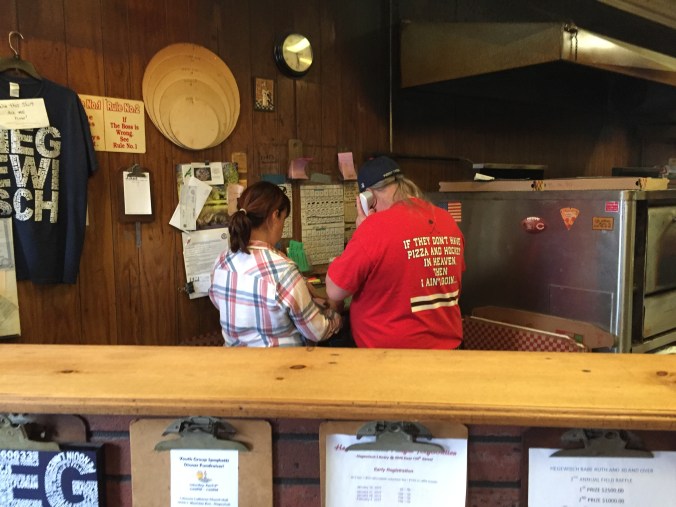
Or maybe we were wrong.
Even when we felt like outsiders, we always saw signs that Hegewisch is the kind of place that if you tried, stayed, and actually proved that you gave a damn, a special world would be revealed to you. Just talk to someone who grew up in the community and truly loves it, and you’ll realize it can be a friendly welcoming place where the people are justifiably proud of their history. We were lucky enough to do just that.
But it took us awhile to get to that point.

It’s hard to know where to begin with Hegewisch. If you aren’t from there, then there’s a good chance you’ve never heard of it (which seems to be a theme expressed in almost everything written about the neighborhood over the last 130-plus years–when something is written at all). If you didn’t grow up there, there’s a good chance you mispronounce its name, too (“wish,” not “wich”). But it is also hard to know how to understand Hegewisch. The weight of the Second City, perhaps, makes doing so seem more important than trying to get at the heart of any one of the thousands of America’s small towns. And when the questions start, they really never stop: Where? Why is it there, so far from the world-famous skyline and the neighborhoods that so many people know as the city? It’s not downtown, it’s. . .uptown? Wait. . .we’re still in Chicago?
Do you see it? Near the center of the map? Between the two big lakes, just north of Burnham and Cal City?
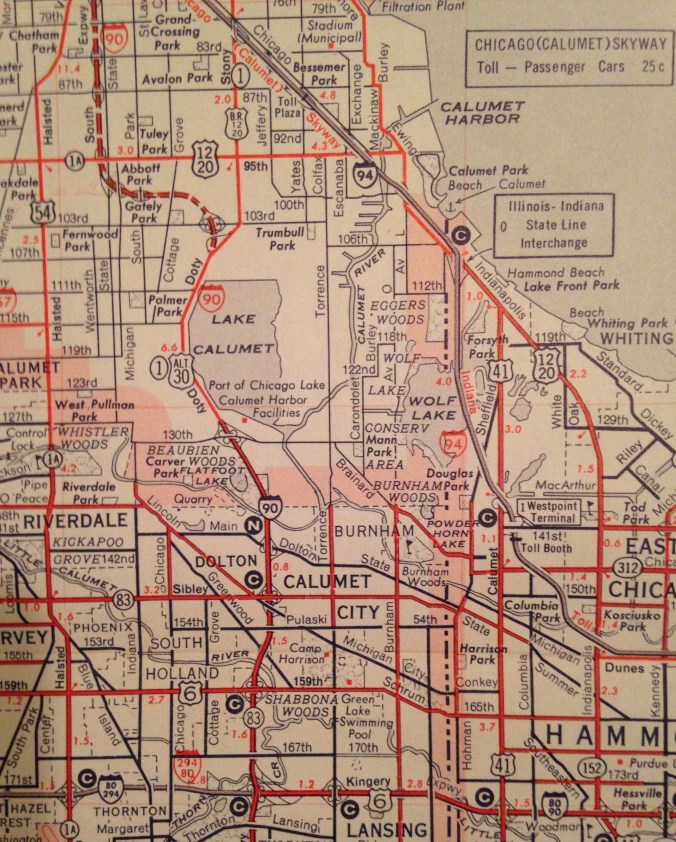
Source: Bulk Petroleum Co. Chicago and Vicinity travel map. Rand McNally & Co. c.1950s.
Surrounded by lakes, rivers, marshes, active and dead industrial sites, railroad tracks, highways, other Chicago neighborhoods, independent Illinois cities, and even the Indiana border, Hegewisch is about 16.5 miles from the tourist hordes that pack the Loop and the Magnificent Mile on a daily basis. It is–with South Chicago, South Deering, and East Side–one of the four relatively-distant major communities that make up the traditional Southeast Side, a place where the emergence of great industrial factories brought numerous different ethnic and religious groups that have mixed for decades and decades, building their own institutions and communities within the communities. But even in that section of the city, Hegewisch has always been something of an outlier. The furthest south and the most secluded of all the neighborhoods, Hegewisch was for a long time perhaps the least diverse neighborhood in that section of the city, resisting demographic change longer than many parts of the region, too. Despite this, in the last decade and a half Hegewisch has evolved, though at a pace relatively slow compared to the shifts seen in other urban neighborhoods in Chicago. Very few places in the urban form of the Midwestern metropolis–a place were neighborhoods are in a constant state of flux, where major changes commonly occur from decade to decade, year to year–have exhibited such a tension between change and stasis, making it difficult to know whether the theme Hegewisch’s existence is one of consistency or exactly the opposite.
So, is it an independent small town, or an urban community within Chicago, south of the Skyway?
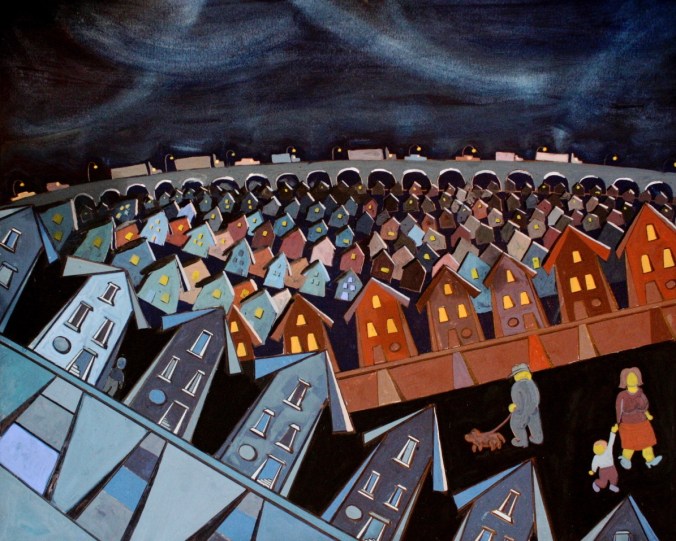
“Hegewisch (Chicago Neighborhood Under the Skyway).” Courtesy Michael McGinley.
The first time Ernie and I headed to Hegewisch and to Pudgy’s was a few years ago. Previous trips to Southeast Chicago had been made to enjoy unique crunchy fried tacos at the now-shuttered Mexican Inn on the East Side and doughnuts at the Calumet Bakery in South Deering. Quick trips had been made to farther south to Hegewisch before, too. We found a quiet small community that gave us more questions than answers, but you could say we were smitten, due in no little part to the fact that Hegewisch had a lot of local pizzeria options at that time. There was Pucci’s, Doreen’s, Mancini’s, and a place called Pudgy’s. Pucci’s was the first pizza place we had seen in the neighborhood, so that was our original choice for our first pizza in Hegewisch. We kept thinking about one of the other places, though. Pudgy’s. . .something about that one. What a perfect name. How on Earth could the pizza not be fantastic?
So, by time the Pizza Hound and I had made our first trip to Hegewisch specifically for pizza in our 1999 white Ford Escort, we had adjusted course toward Pudgy’s. We had a good feeling about it. And while we had managed to locate Hegewisch and Pudgy’s on a map, we still had to do some careful planning to get there. If we hadn’t, we may have never made it. Difficulty and even mishaps have long been part of the traveling-to-remote-Hegewisch narrative.
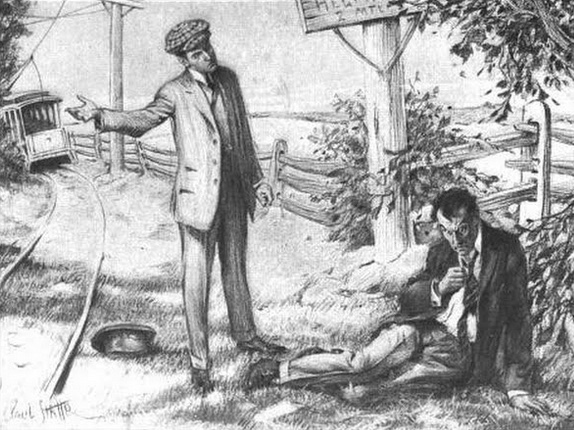
Source: Collier’s, November 8, 1913.
We just needed to get away, so we took a long casual Saturday afternoon drive that turned into night by the time we completed our journey. We didn’t have much money, either, so we had to dig through the record collection to fund the trip. (Goodbye, original copy of Voices of East Harlem.) Now, we could have just flown down the absolutely manic Dan Ryan, then taken the exit at 130th Street and headed east to Torrence and Brainard avenues, but of course we like to make our pizza trips in dramatic fashion. So, we drove through the hustle and bustle of downtown, then hopped on the relatively docile Lake Shore Drive. After Hyde Park and Jackson Park, we drove through the mid-rise apartments and former motels of the South Shore neighborhood, and once we hit 79th Street–the beginning of South Chicago and the traditional Southeast Side–we continued on South Shore Drive through South Chicago past numerous two- and three-flat houses, some storefronts, and a church or two, including St. Michael the Archangel, a former Polish parish that provided a then-unrecognized clue to the history and culture of our ultimate destination. We can’t remember if the new extension of Lake Shore Drive was open at the time–the part that hurtles you through the old U.S. Steel South Works site in South Chicago along the lakefront–but nevertheless we continued the way we had in past trips. And with a few turns, we crossed a bridge over the Calumet River and ended up on on Ewing Avenue, a main drag on the East Side.
The great Skyway Doghouse is on Ewing, and Phil’s Kastle, a diner that’s home to delicious hamburgers, is just around the corner on 95th Street. From there, the famed Calumet Fisheries is about a quarter-mile to the west. We kept heading south on Ewing, though, traveling beneath the massive Chicago Skyway, the namesake for the hot dog stand we had just seen, passing the main location of Pucci’s as well as a number of East Side storefronts. While expressing nuanced differences, it still essentially felt like we were in a neighborhood of Chicago, though far removed from where we had been just about fifteen minutes earlier. Pedestrians were still fairly common, and there were a lot of cars, too. Traffic can really back up on the main thoroughfares during certain times of the day. The Indiana border was very close, fittingly, just to the east down Indianapolis Avenue. We stayed in Illinois, though, and at 106th Street we made a right and headed west until we hit Avenue O, where we headed south to begin the last leg of our trip.
A former tavern at 106th and Avenue O? Look at those rounded windows! Turn left at the corner store. . .
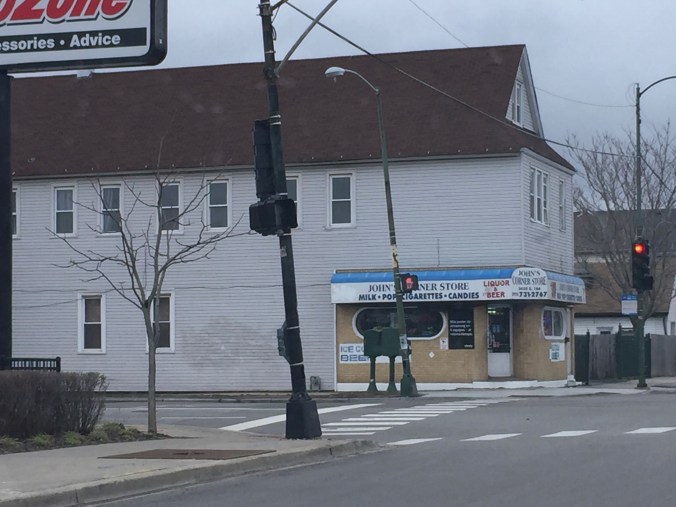
Are you still with us?
We ask, because to get to Hegewisch, you probably really have to know where you are going. Either that or you are just incredibly lost. You probably won’t find a sign directing you there, and locating it on a map might prove unfruitful.
A closer look at our map. . .Hegewisch is not listed. See that triangle in middle? Right around there.
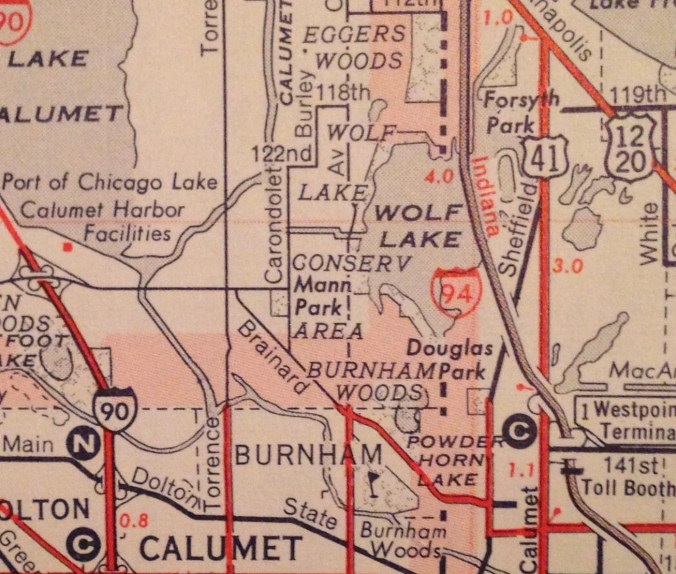
Source: Bulk Petroleum Co. Chicago and Vicinity travel map. Rand McNally & Co. c.1950s.
There just aren’t very many roads that lead directly there, either. The Southeast Side is full of hidden passages, though. If you look closely enough, you can find the one that serves as the pathway to your destination. Avenue O is somewhat like that. It passes many tidy bungalows, some of the cutest in Chicago, in fact.
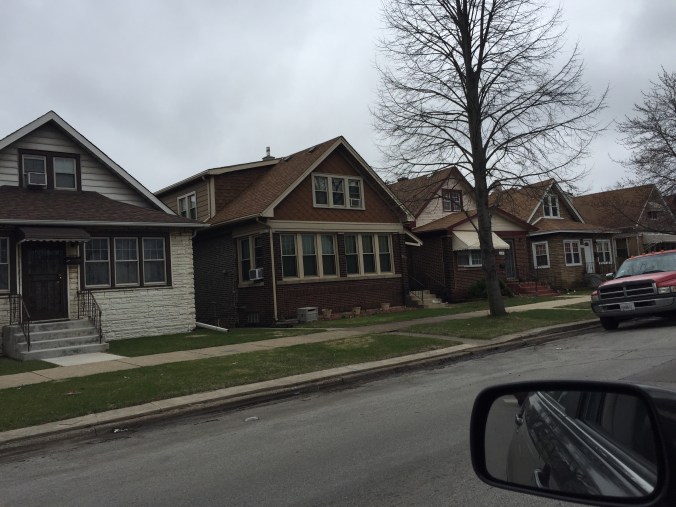
Rows and rows of them.
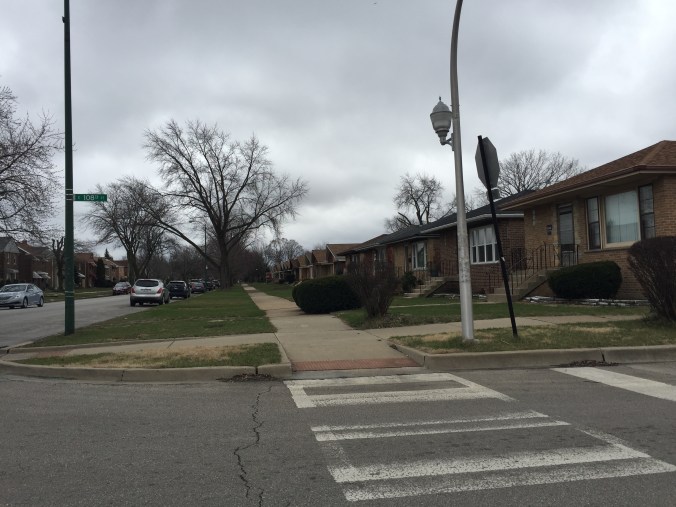
We then passed George Washington High School and a sign for the First Savings Bank of Hegewisch, though we weren’t yet to our destination. We also saw a newer suburban-style development with a large new grocery market, a couple of fast food restaurants, and a handful of other stores. Interestingly, a rusted, decaying industrial building can be found just across the street to the south, contrasting with the strip mall, big box development that is often rather busy. Two versions of America, facing one another.
But the biggest shock is on the western side of Avenue O. There’s a stark emptiness to behold. Not so much empty, per se, but noticeably lacking something. . .something that was once there.
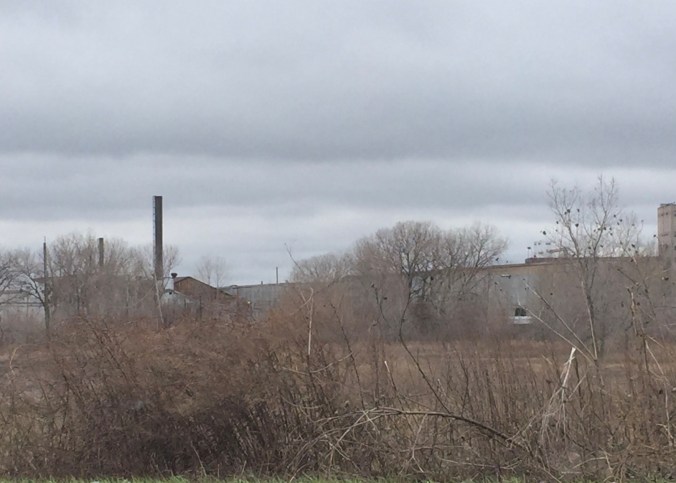
Rather than more rows of single-family homes or a peaceful nature scene to admire, one cannot help but note what was once there for so long. The gigantic lot is somewhat overgrown, marshy-looking with a number of interspersed trees. Some of buildings in the distance once housed several large industries. Currently, the site may be home to some active business establishments during the day–just a fraction of what was once there–but in the dark of night it can look a little frightening. In the distance stands a few lonely buildings. So lonely that my friend once quipped that there could be some guy sitting in a chair, tied up, with a light bulb just above, all the while being interrogated by a mob boss or secret government agent.
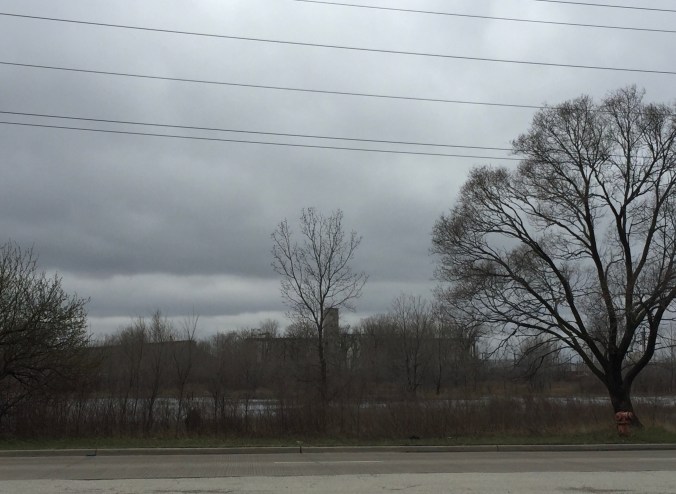
Just before 116th Street, a faded, dirty sign reads “LTV Steel.”

At this point, we were not yet to the main part of Hegewisch, but no doubt many residents of Hegewisch traveled to this site for work. Or at least some of their ancestors did after they left their homes in Europe, Mexico, or the American South just a couple of generations ago. Despite the grueling work that was once done at this site–and despite its relative emptiness now–for about a century it was considered by many to be a jumping off point to a better, brighter future. We would even meet someone special who would say he thought those days would never end. They did, though, and today, the lot is a fading reminder of what once was. . .a scar that has not fully healed.
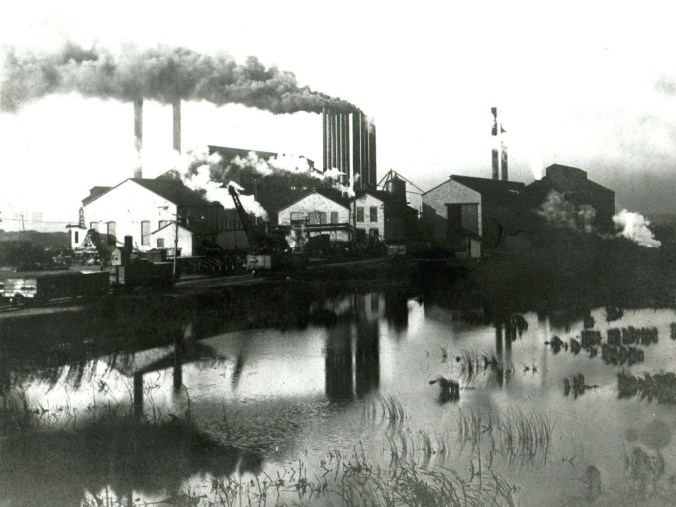
Republic Steel in an early incarnation as the Grand Crossing Tack Co., 1902. Courtesy Southeast Chicago Historical Society.
It is also the site of one of the most infamous days in labor history. LTV for much of its existence was known as Republic Steel.
Courtesy Southeast Chicago Historical Society.
In 1937, after the Congress of Industrial Organization’s (CIO) Steel Workers Organizing Committee spearheaded the Little Steel strike, police confronted sympathetic marchers on the Republic Steel property. Tensions ran high and violence ensued.

Courtesy Southeast Chicago Historical Society.
Ten marchers lost their lives and many more were injured. The event, dubbed the Memorial Day Massacre, garnered nationwide news coverage as well as the attention of Congress. Previously suppressed film footage confirmed the marchers’ account of the bloody events.
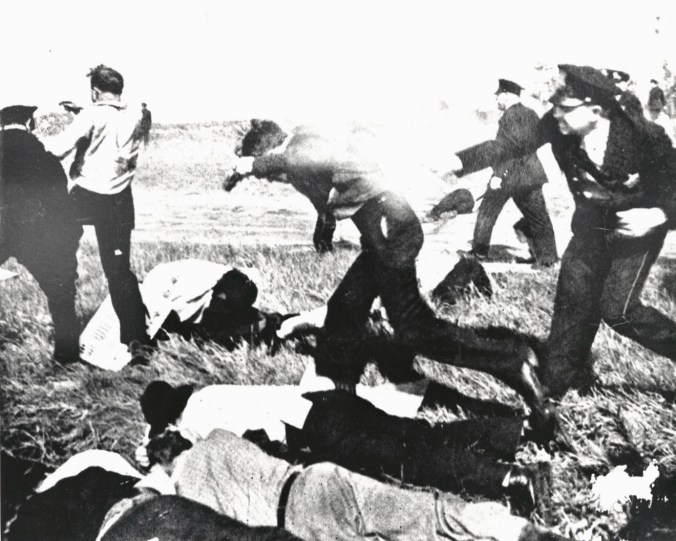
Courtesy Southeast Chicago Historical Society.
A steel sculpture commissioned by Republic Steel, once located on the mill site near Burley Avenue, sits at the corner of Avenue O and 117th Street. Though it has ten metal bars–ostensibly to honor the ten victims–the company claimed they actually represented the four cardinal directions and the six steel districts. Just a half block south, a plaque honors the strikers–“martyrs – heroes – unionists”– that were killed that day by name, leaving no doubt to its intentions.
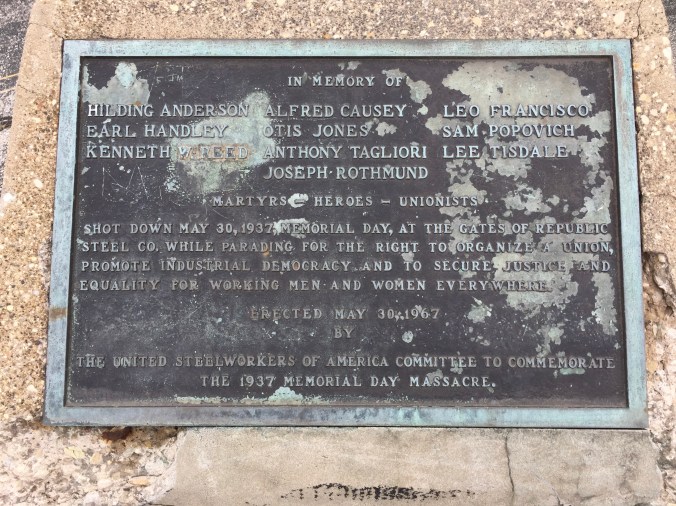
The massacre was not forgotten locally–it was even fictionalized to critical acclaim in Meyer Levin‘s novel, Citizens–and its memory played a large role in labor/management relations in the following decades. Ceremonies were held each year to commemorate the bloody event.
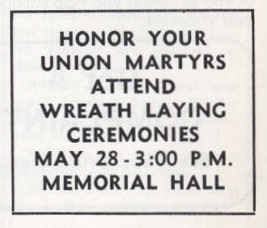
Courtesy Southeast Chicago Historical Society.
The Steel Workers Organizing Committee was a precursor to the United Steelworkers of America (USW). Local 1033, just one of several union locals representing workers in the region, served the Republic Steel rank and file until the mill’s closure.


The leadership of Local 1033 published newsletters to the members updated on current issues facing the union.
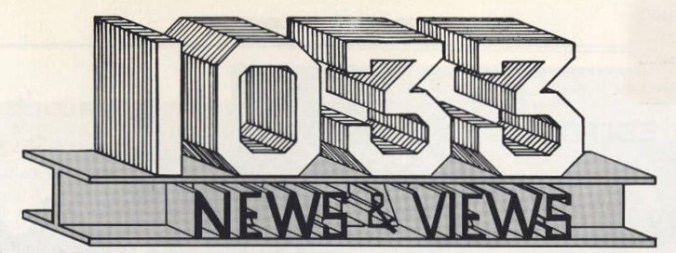
Courtesy Southeast Chicago Historical Society.
Never forgetting the massacre, union members were often prepared to strike if workplace demands were not met.
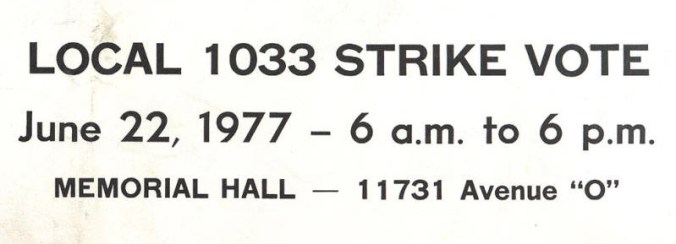
Courtesy Southeast Chicago Historical Society.
In the 1960s, the view from Republic Steel entrance sign looked much different than today.

Source: Republic Reports, November 1967. Courtesy Southeast Chicago Historical Society.
With the steel industry thriving, a new union hall was dedicated.
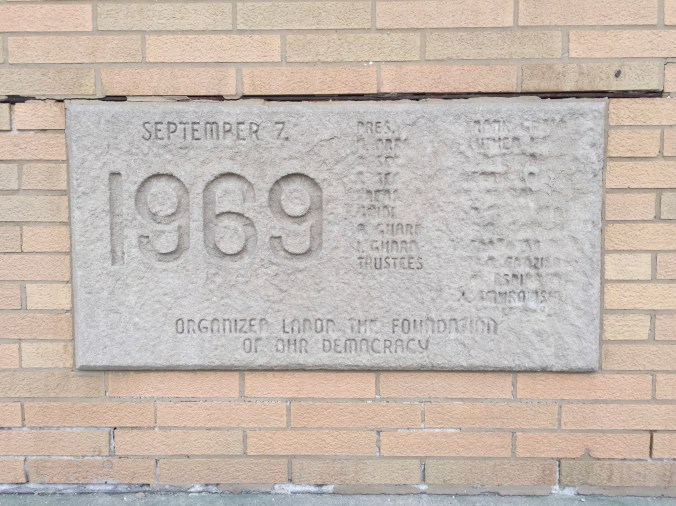
Through many economic ups and downs, overtime and occasional layoffs, steel mills like Republic could be depended upon for employment and stability for generations.

Courtesy Southeast Chicago Historical Society.
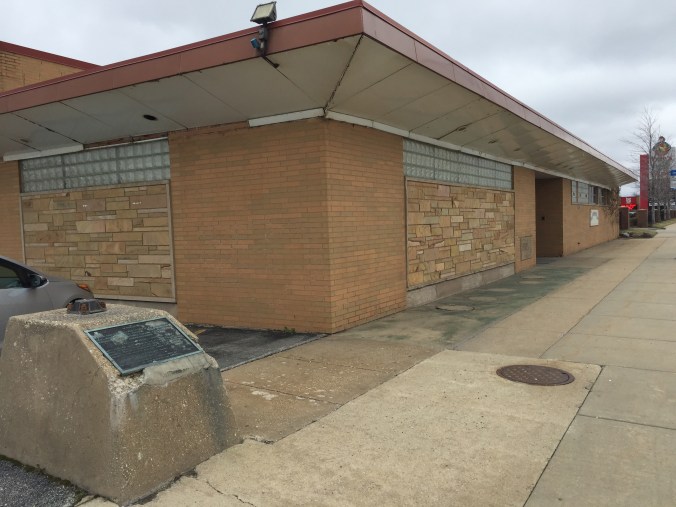
But by the early 2000s, all the mills in Southeast Chicago were gone. The building still stands, but with no steel to produce, there’s no need for steelworkers to meet. A church now occupies the building. The solemn marker remains, easily missed as drivers fly down Avenue O. Nevertheless, the history of local steel production is essential to understanding the economy and culture of Southeast Chicago, including Hegewisch. As a testament to this, retired steelworkers still meet in the church hall once a month.
If we didn’t keep going, we may have mistakenly concluded that we had reached the end of Chicago, because here the city doesn’t blend into a suburb as it does in many of its other corners; it just kind of fades away. Or does it? Did we pick the wrong hidden passage? We must have made a wrong turn at some point, right? Was the mythical Hegewisch really down the road at all? We kept going, knowing it was worth it. At one point, we saw an automotive parts manufacturing plant on the right with a number cars surrounding it showing that industry is still alive on the Southeast Side. But on the left, we saw an indication of the area’s even longer history: the William W. Powers State Recreation Area which, along with other nature preserves point to area’s distant past–and present–as a natural wonderland. The prehistoric Lake Chicago covered the area about 13,000 years ago, as the glaciers of the ice age receded. The area was still completely covered by the waters of Lake Michigan just 1,100 years ago. As recently as a century ago, much of the land where this lonely section of Avenue O is located was covered by Hyde Lake, a body of water just to the west of Wolf Lake (and a cause for some fun exploring). When streetcar service lines connected Hegewisch to South Chicago and the East Side, the tracks had to be built over the water.
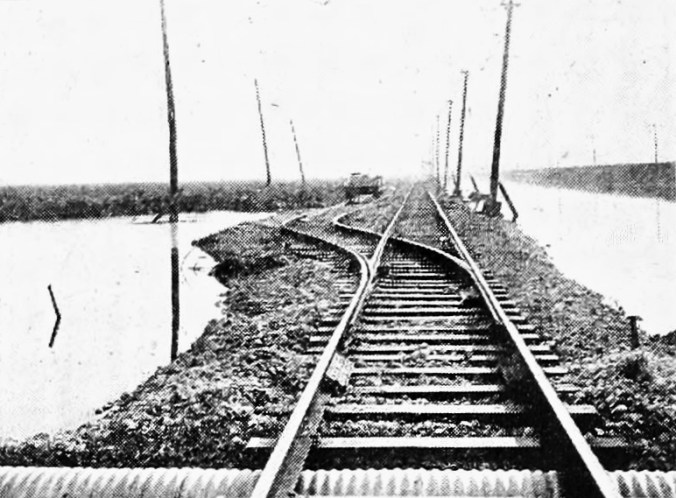
“Hegewisch extension, on Brainard Avenue, looking south from about 125th Street and showing construction through the marsh.” Source: Electric Railway Journal, January 4, 1919.
There’s a bit of curve around 126th Street that you notice when driving the route, but the bottom two-thirds of yellow line provides a rough idea of today’s current Avenue O.
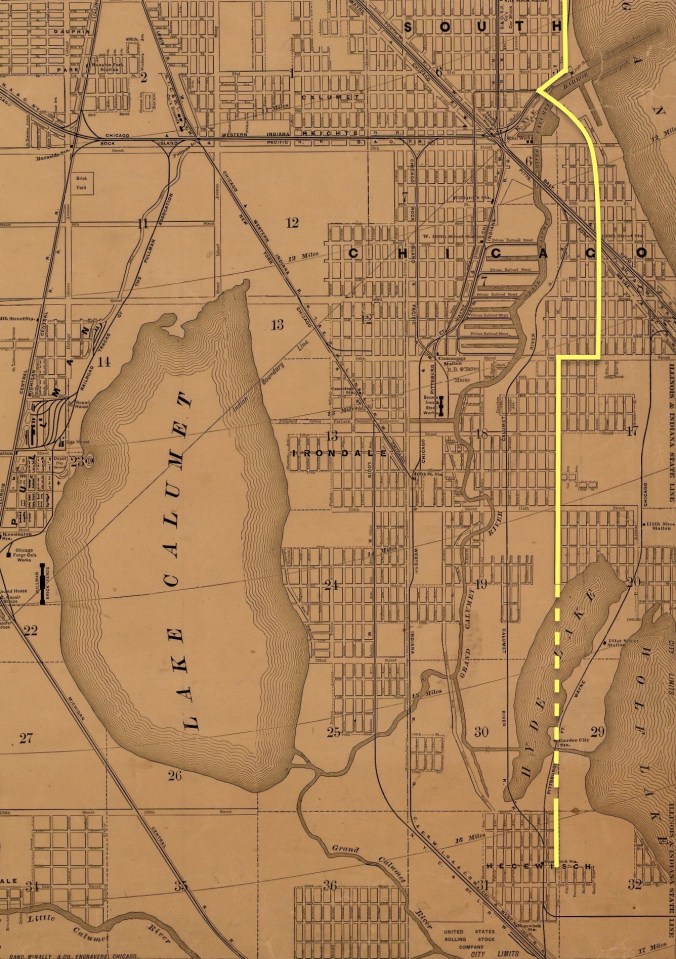
General Route of Today’s Avenue O. Source: Rand McNally’s Standard Map of Chicago, 1892. Map Collection – University of Chicago Library.
But the glow from the Indiana Tollway as well as heavily polluting factories and refineries from the other side of Wolf Lake reminded us of how tainted the environment of the Calumet Region has become in just a relatively short century and a half. There are large slag heaps over just to the west of Avenue O, too, where Republic steel used to dump its waste. Many on the Southeast Side are working to restore and appreciate the natural ecosystem. While the days of industry in Southeast Chicago have left a major imprint on the region’s identify, in the great scheme of things, the days of steel may just be a blip.
Then after miles and miles we traveled from the North Side (and what seemed like many more). . .small, tidy homes appeared, one after another.
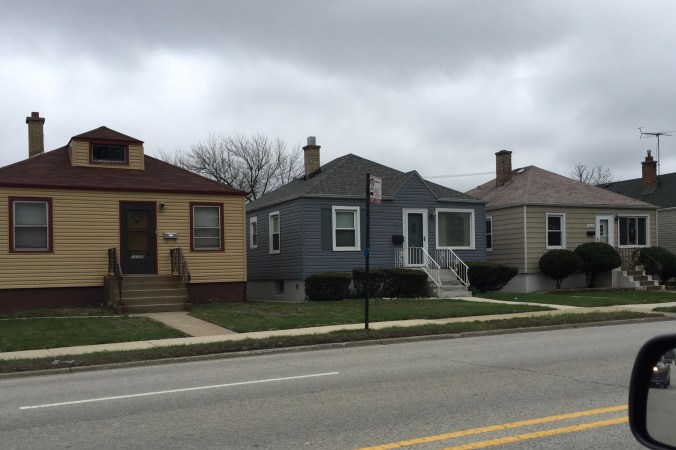
We made it. Hegewisch was real.

And we were quickly reminded why we had been looking for this place for so long. Honestly, though, if had not carefully planned out our route or made a wrong turn, we may not have found Hegewisch this time at all.
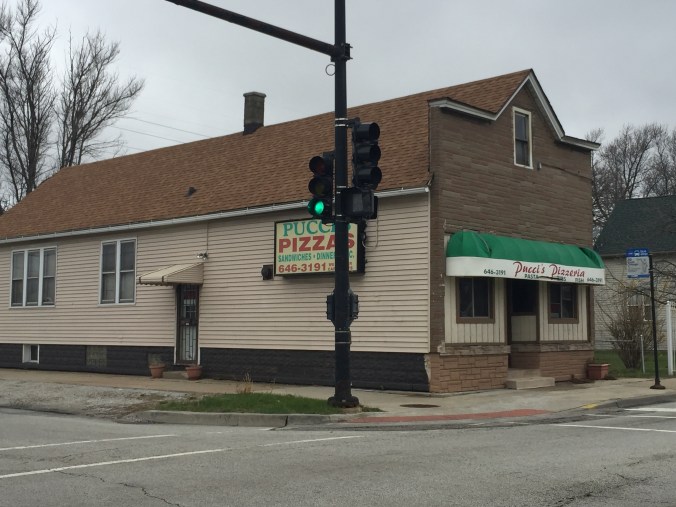
We turned right on 133rd Street, right after Pucci’s, a place that in retrospect, did more for us to wonder about pizza and history throughout the city than any other thing. It is also a place, we would learn much later, that would help connect the history of pizza in Hegewisch to its present. If we remember correctly, it was still open on one of our first visits to the neighborhood. Sadly, by the time of our official pizza trip, Pucci’s had been shuttered for good. Perhaps two locations were unsustainable in the area. Its closure served as a subtle reminder that parts of the Southeast Side had been open for business, often thriving under the industrialized economy of the twentieth century. They had held on for so long, in many cases years after many large industries had left or closed. Then, with little fanfare, they slowly faded away.
Just like in other parts of the city, we saw lines of houses on a strict grid and the occasional Chicago Transit Authority bus stop sign. But when we crossed those railroad tracks, it was like entering Small Town, America circa 1950.
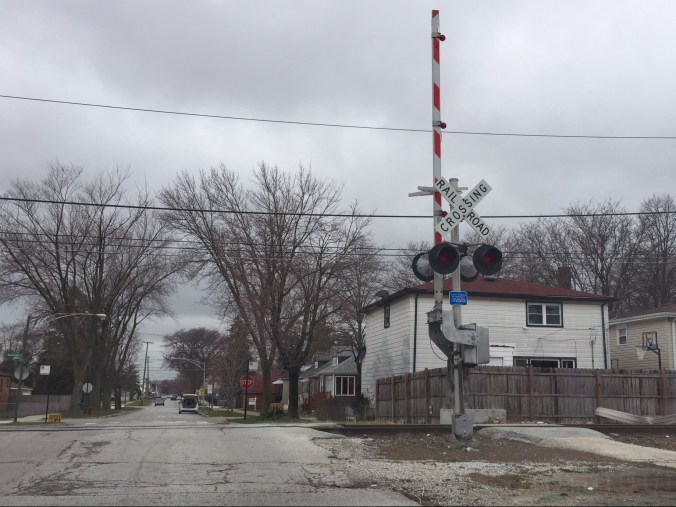
Those little idiosyncrasies make the history and character of Hegewisch unique enough to be worthy of a closer look.
✶ ✶ ✶ ✶
The history of human settlement in and around the area of present-day Hegewisch is relatively short. It was only a thousand years ago that Lake Michigan receded from the area, leaving wetlands that were used for hunting, fishing, and trade routes by American Indians of the Potawatomi nation. Some have suggested that Father Jacques Marquette actually camped between the Grand Calumet and Little Calumet rivers at Hegewisch in the winter of 1674-75 rather than doing so on the portage between the Chicago and Des Plaines Rivers (the exact location, however, remains a matter of debate). The Potawatomi left the area in large numbers after the signing of the Treaty of Chicago in 1833. Around the same time, Chicago, then a small village, incorporated as a town then as a city a few years later. Its subsequent growth led to the incorporation of surrounding areas, including the town of Hyde Park, which included the not-yet-founded area of Hegewisch, in the 1860s. As recalled by Henrietta Gibson, her father, David Combs purchased an inn and a farm in the early 1850s along a stagecoach line in Hyde Park’s far southeast corner. Well into the 1850s, she recalled a playing with Potawatomi children in the area. Later in that decade, rail companies looking to connect various cities to the growing Chicago market used immigrant labor to construct railroads through the area, setting the stage for the area’s development in the coming century and a half.


Recognizing the advantages of the natural waterways and the opportunities offered by rail lines in Southeast Chicago, a number of heavy industries built factories in the area. One of the them was the United States Rolling Stock Co., a railroad car manufacturing firm. In 1883, Adolph Hegewisch, president of the company, commissioned the purchase of land in the far southeast corner of the Hyde Park township right at the Indiana border that included the Combs farm. There, at the meeting point of railroads a new car factory was built, replacing the company’s factory located on Chicago’s Lower West Side at Blue Island and Robey (now Damen) Avenues (the factory’s location is often erroneously listed as Blue Island, Illinois). He envisioned a town that would be a regional center of industry.
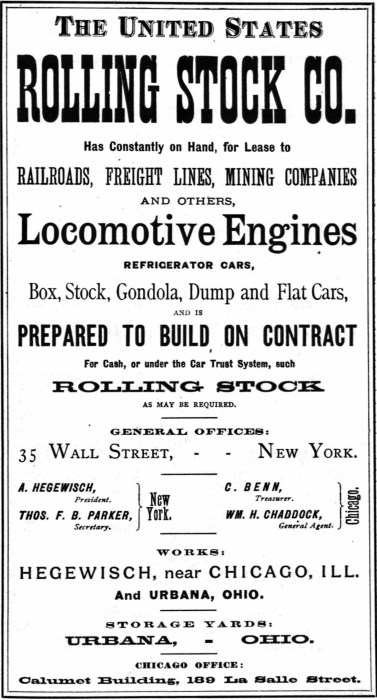
The car works for the United States Rolling Stock Co. were planned clearly before their construction. Wood-working, erecting, and painting shops, as well as a car truck shop, a blacksmith shop, an engine repair shop, and a machine shop, where iron work was done, were each important facets of the factory. Various cranes, pits, lathes, furnaces, and specialized machines were used throughout the works, and rail lines connected different shops. There was also a foundry divided into three sections: a wheel foundry, a general foundry, and a brass foundry. The U.S. Rolling Stock facilities also included offices and a drafting rooms. Thus, the factory provided numerous opportunities for different types of work for those with specialized skills and for those who possessed no prior experience whatsoever alike.
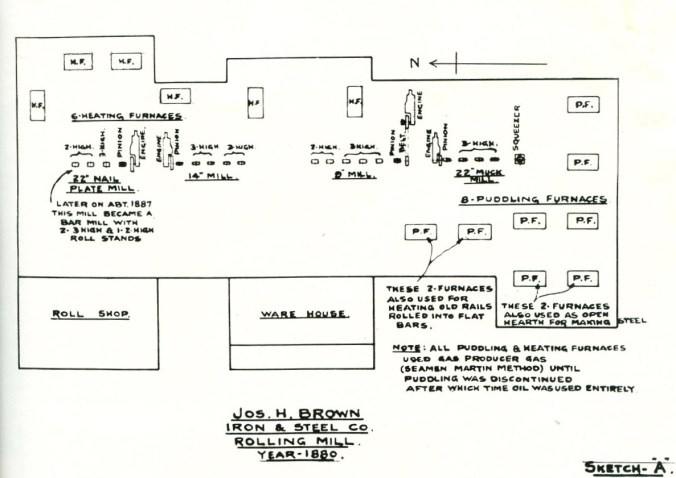
Just eight years earlier, in 1875, Joseph Brown built the first heavy industry, a steel mill about four miles north of the Rolling Stock Co. works.
Source: Wisconsin Sparks, June 1947. Courtesy Southeast Chicago Historical Society.
Brown’s mill eventually evolved into Wisconsin Steel, one of the most important employers in the region.

Courtesy Southeast Chicago Historical Society.
Other large industries soon followed, particularly more steel mills.


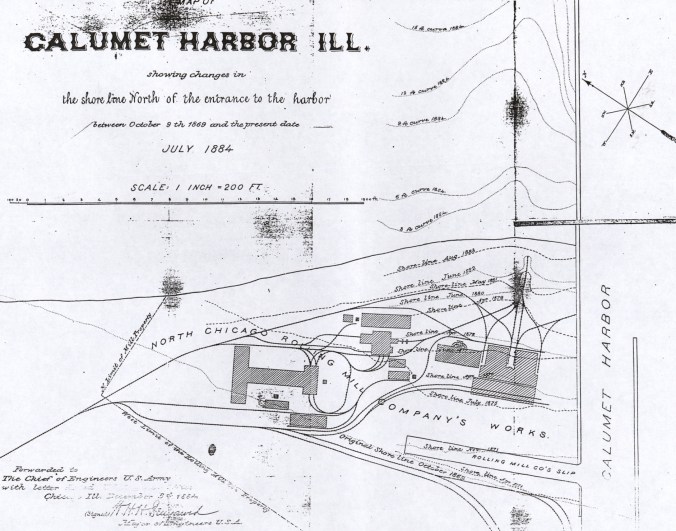
In 1880, the North Chicago Rolling Mill Co. built their South Works steel mill in South Chicago along Lake Michigan north of the mouth of the Calumet River.
Courtesy Southeast Chicago Historical Society.
The South Works mill became the largest employer in Southeast Chicago, and was later owned by Illinois Steel, then Carnegie-Illinois Steel, and finally U.S. Steel.
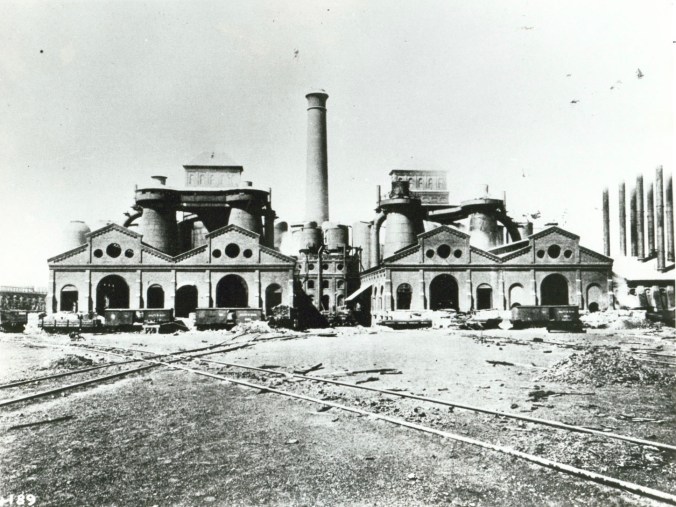
North Chicago Rolling Mill South Works Blast Furnaces. Courtesy Southeast Chicago Historical Society.
More steel mills and foundries would be built in the next few decades, including Grand Crossing Tack Co., the future Republic Steel. Iroquois Furnace Co., later Iroquois Steel, and Youngstown Sheet & Tube after that, opened a facility in South Chicago in the 1890s, as well.
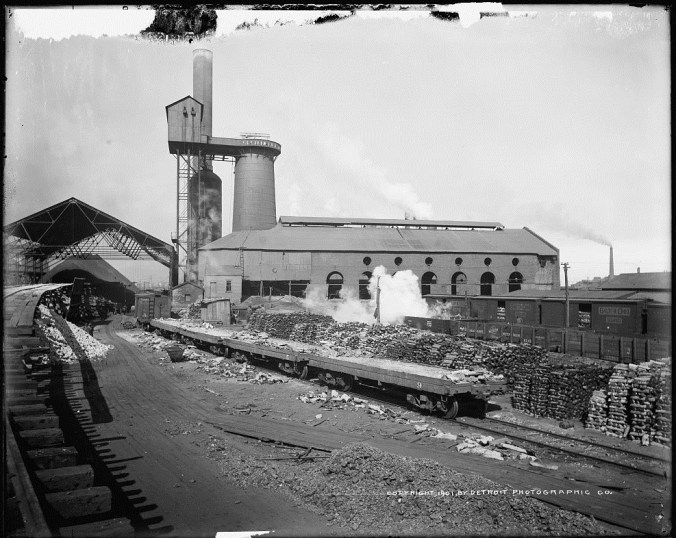
Iroquois Smelter, South Chicago, 1901. Source: Library of Congress.
Industrialists also built mills across the state line, including Inland Steel in East Chicago and, by the early 1900s, U.S. Steel‘s Indiana Steel, or Gary Works. The region surrounding Hegewisch and the Rolling Stock factory showed signed of becoming an industrial center, where hard, dangerous labor was a way of life.
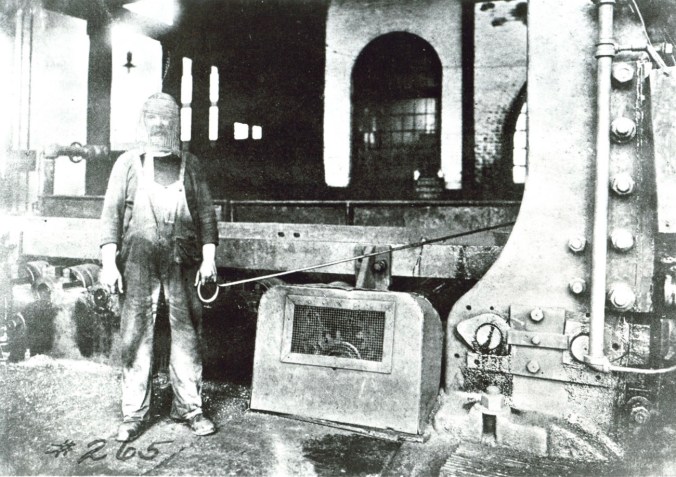
Worker at Illinois Steel, c.1890. Courtesy Southeast Chicago Historical Society.
Many of the factory’s workers were immigrants who came to Hegewisch to build a better life for themselves. Recognizing an opportunity to provide workforce stability for his factory and profit on real estate, Adolph Hegewisch purchased acreage north of the factory site with the intention to build and sell houses to his factory workers, which he predicted to be numbered in the thousands. Thus, Adolph (sometimes listed as Achilles) Hegewisch’s subsequent namesake town intentionally rose from the Calumet marshes as a workers’ community in the vein of the nearby–and more famous–Pullman. Unlike Pullman, where the Pullman Car Company exerted tight control over local housing, workers in Hegewisch typically owned their homes.
Adolph Hegewisch’s Hegewisch Land Co. tasked the real estate firm of Bogue & Hoyt, with the physical development of the Hegewisch community. Bogue & Hoyt was previously responsible for subdivisions in the Kenwood and Woodlawn sections of the Hyde Park Township, and, later, another industrial subdivision near the Grant Locomotive Works in Cicero. Preparing for service-sector economic development that would accompany new workers and residents, South Chicago Avenue, the main commercial street in the newly-platted community, would be paved at no cost to new home buyers.

Many of the earliest lot owners came from other parts of Chicago, and some stayed for the rest of their lives. The first lot owner in the Hegewisch plat, John Harris, moved to the section from Pullman when the area was mostly swampland. Harris and his wife reportedly often tied their daughter, Irene Harris Frishkorn, the first child born in the community, to a tree with a rope so she would not get lost the marshy wilderness. Harris, who was listed in early directories, lived in the community until he was 84 years old. (Hammond Times, January 5, 1940) Still, some residents moved in and out of Hegewisch relatively quickly, not showing Harris’s lifelong commitment to the town. Adolph Hegewisch did not, however, live locally. Instead, he called New York home, a fact that fit with the local community’s ideal as a perfect home for the common workingman.
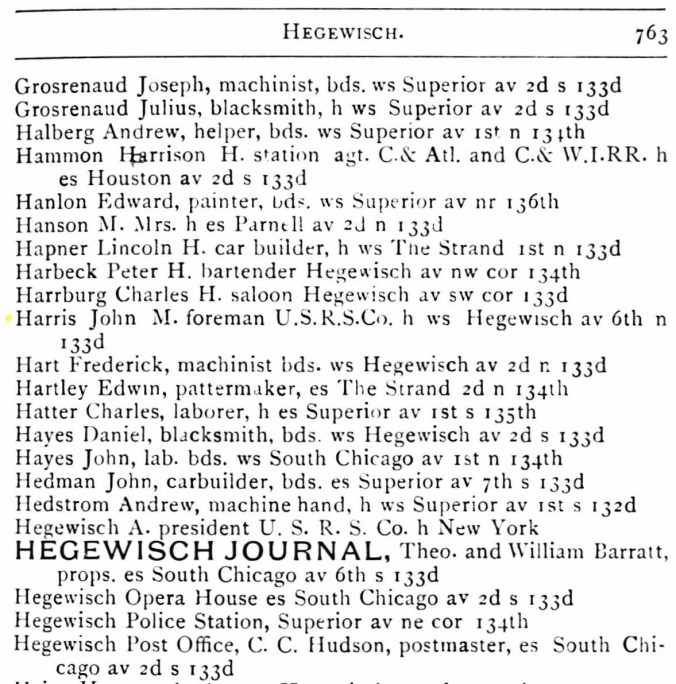
Source: The Hyde Park Directory, 1889. R.R. Donnelly & Sons, Chicago.
Many of the street names listed in the 1889 directory changed in the following decades. Superior is now Burley Avenue. Hegewisch Avenue became Ontario and, later, Brandon. South Chicago Avenue, after a few years as Erie Avenue, received its current name, Baltimore Avenue, in 1913. The Strand referred to the entry to Hegewisch for Ernie and me, today’s Avenue O.
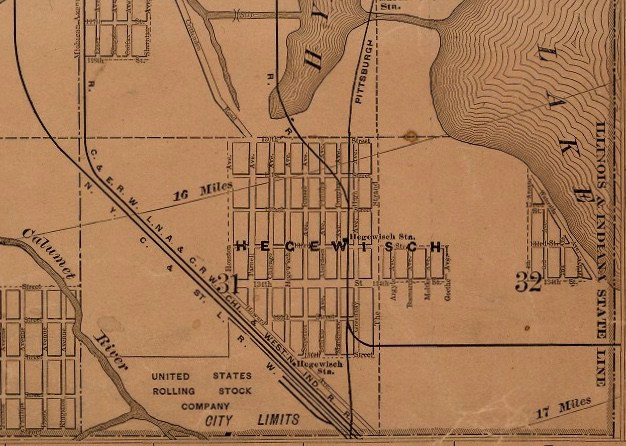
U.S. Rolling Stock Co. located south just across railroad tracks. Source: Rand McNally’s Standard Map of Chicago, 1892. Map Collection – University of Chicago Library.
Settlers in the late 19th century came from many countries, and included many German, Irish, and Swedish residents, with each group building or supporting churches. Germans founded Trinity Lutheran Church at 132nd and today’s Burley Avenue in 1887. St. Columba was founded in 1884 as territorial Catholic parish that was often associated with the Irish Catholic community. Local Swedes founded Lebanon Lutheran in 1896. Hegewisch also included Poles, Serbs, Slovaks, Croats, Czechs, and among others. Despite the diversity of new residents coming mostly from Europe, the community failed to reach Adolph Hegewisch’s population projection of 10,000 people within two years, and his dreams of constructing two grand canals never materialized.
The U.S. Rolling Stock Co., through some headache-inducing corporate ins and outs due in part the Hegewisch factory’s initially unspectacular business performance, was purchased in the early 1900s by the Western Steel Car Company, a subsidiary of the Pittsburgh-based Pressed Steel Car Co. Keeping the names straight can get pretty exhausting, though one researcher, Eric A. Neubauer, has managed to sort it out. Nonetheless for decades the car factory located on the southwestern edge of Hegewisch between Howard (later Brainard) Avenue and the Calumet River and later known simply as Pressed Steel provided jobs in one form or another for thousands of local residents and helped define the culture of the community.
In 1889, just six years after the founding of the town, the huge, rapidly growing city of Chicago annexed the Hyde Park Township, which included the very young and quiet community of Hegewisch.
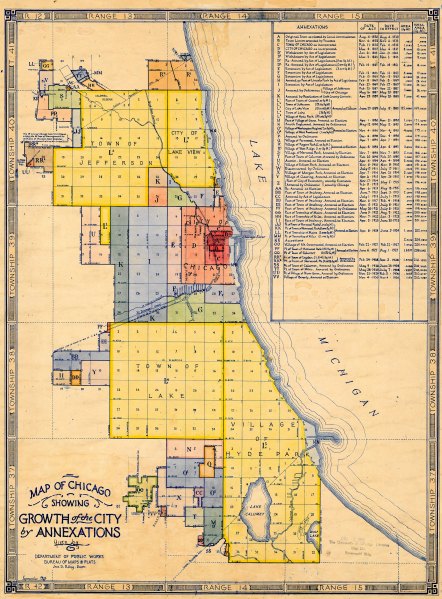
Hegewisch annexed as part of the Hyde Park Township, at bottom right in yellow. Source: Map of Chicago Showing Growth of the City by Annexations. Map Collection – University of Chicago Library.
Without the factory, the Hegewisch likely would not have been founded, making the town’s orderly development seemingly a secondary concern at first. But soon enough residents of Hegewisch demanded better services, especially after the town was annexed by Chicago. They felt particularly neglected by the city at the same time the neighborhood was experiencing economic success in the early 1900s. The community, just as today, was rarely recognized. Most Chicagoans did not know where it was nor had ever heard of it, so why should they do anything to help it?
The remoteness of Hegewisch was a common theme expressed by residents and observers of the community. One reporter’s description of arriving in Hegewisch in 1905 highlighted the mystery and eventual second guessing that occurred while traveling to the area located so far from busy, densely-populated central Chicago and bustling surrounding neighborhoods. “When the train finally leaves the Englewood station the passenger knows he is really on the way to Hegewisch.” Englewood itself was several miles from downtown. To get to Hegewisch, one had to travel much farther south. “Glimpses of pretty suburbs, clubhouses, and spacious training grounds claim his attention as the train gathers speed,” continued the reporter. “Great manufacturing establishments pass before his vision on either side, and the train is at last on the open country. On both sides of the tracks in the ditches formed by the overflow of Calumet lake hundreds of mud turtles are sunning themselves on logs in a dreamy manner. Just as the passenger is beginning to wonder if by any chance he is one the wrong train, or has been carried beyond his station, the train stops, two people get off and make for the nearest saloon.” (The Inter Ocean, September 17, 1905)
“This is Hegewisch.”
While that description may have been written over 110 years ago, we found that it can still be remarkably accurate. As the reporter notes, a local “gazes with curiosity at the pilgrim from the city and goes to sleep again.” We’ve encountered that look a few times! So, Hegewisch changes. But it also does not.
Those that came to work and live there, like John Harris, often stayed for a lifetime. Visitors, like the reporter, only stayed only briefly.

That reporter may have never made his brief visit to the community had it not been for a local resident who had “put it on the map.”

That resident–by far the most well-known early resident of Hegewisch–was light heavyweight boxing champion Oscar Nielson, famously known as Battling Nelson.
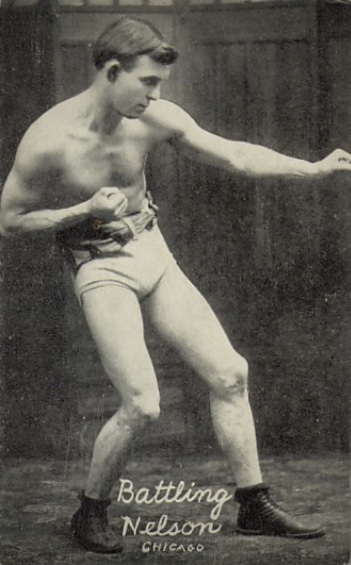
A Danish immigrant born in 1882 who came to Hegewisch after a stop in Oshkosh, Wisconsin, Nelson worked cutting lake ice as a boy, and later as a meat cutter at George H. Hammond Meat Packing Co. across the state line in that company’s namesake community, Hammond. He achieved initial fame after defeating a seemingly-unbeatable opponent in circus sideshow and quickly became one of the fiercest–most famous–fighters in America. His thrilling adventures across the country were followed closely by the press, with reporters often highlighting his home base, Hegewisch.

Postcard view of Hegewisch circa 1900. Courtesy Southeast Chicago Historical Society.
Throughout regular articles detailing his exploits, the press–locally and nationally–repeatedly referred to Hegewisch as “Hegewisch, Ill.” In his autobiography published in 1908, Nelson highlighted–and even exaggerated–early outsider impressions of Hegewisch that have persisted. “In fact I was togged up like a real fighter, even though I was an unknown and from a place called Hegewisch, Ill.,” Bat, as he was often called, wrote of an early fight in Sioux Falls, South Dakota. “‘Hegewisch, Illinois!’ exclaimed the Master of Ceremonies. ‘Where in the world is that located?'” Nelson even published his book in Hegewisch, Ill., not Chicago. (Two thorough books detail Nelson’s career and connection to Hegewisch: The Nelson-Wolgast Fight and the San Francisco Boxing Scene, 1900-1914 by Arne K. Lang and Battling Nelson, the Durable Dane: World Lightweight Champion, 1882-1954 by Mark Allen Baker.)


Source: Lake County TImes July 6, 1908.
Hegewisch stood above all Nelson’s other geographic connections–be it Oshkosh, his first home in America; Hammond, where he previously earned a living; the numerous towns across the country he visited as a fighter; or even his native Denmark–in shaping is personal identity. As Nelson writes in his autobiography, “Enthusiastic writers have been wont to call me “the PEERLESS DANE,” “the DURABLE DANE,” etc.” But jettisoning his ethnic heritage in favor local loyalty and fame, he writes, “This is all very nice, but I am simply Battling Nelson, of Hegewisch, Illinois, a champion boxer, that’s all.”
Hegewisch may have been known for the construction of rail cars–and now for its famous son–but greater acclaim seems to have stuck with another car-producing town, nearby Pullman. The histories of Hegewisch and Pullman are linked not only by that common industry but also the ambitions of their respective founders. Both towns were intended to perfect the company town concept. Despite the company’s mutual long work days and the fact that the Calumet River, marshland, and the sizable Lake Calumet created significant travel barriers, there apparently was some degree of common interaction, and even rivalries, between the two blue-collar communities. Shop and club teams competed against one another, as they did other with teams based in industries across the region, in sports such as baseball and football. For instance, baseball teams from various foundries and and mills competed in the Inter-City Industrial League.
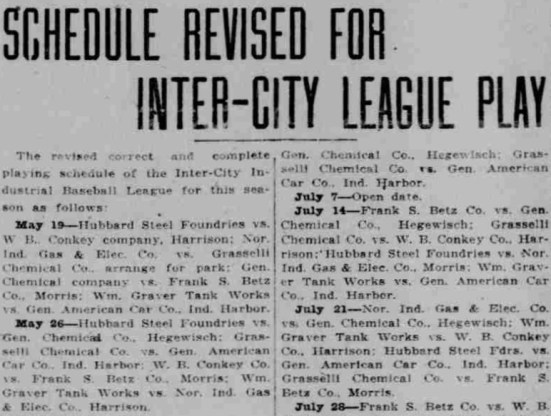
Source: Lake County Times, May 15, 1917.
An incident in 1902 highlighted connections and tensions between the two communities, both of which were by then remote neighborhoods of Chicago. Nelson was apparently about to put fighting behind him–even telling his father he would strongly consider quitting–but neighborhood pride got in the way during a night out on the town with friends. As he tells it, “The crowd usually hangs out at Dad Knight’s bar.” According to his mother, he never smoked or drank, and was more interested in investing his earnings than having fun. But if he wanted to socialize, avoiding taverns altogether was likely quite difficult. “Just as we went in the door two fellows were having an argument. One of them was from Pullman, where they make the sleeping cars. In Hegewisch we have the largest car works in the world, but we only make working cars, such as flat cars, freight cars, etc.” Were there perceived class differences between the Pullman and Hegewisch communities? Workers in Pullman made “palace cars,” after all. “The Pullman fellows think they have something on us because they make fancy cars, and there is always an argument about which is the better town.”
Despite this recollection, we’re not really sure how in 1902 a guy from Pullman ended up in a Hegewisch tavern without some effort. This map from 1897 shows the aforementioned barriers, and no direct rail line between the communities, much less a passenger one. Streets only provided a roundabout route, and many of them weren’t in passable shape. The lake, years before major dredging operations there, was relatively shallow, possibly allowing for boat travel, but that would only take a person part of the way. Nelson described Pullman as “just six miles away,” but it may as well have been much farther.

Source: New Map of Chicago Showing Location of Schools, Street Car Lines in Colors and Street Numbers in Even Hundreds, 1897. Map Collection – University of Chicago Library.
A map from 1904 (not shown) didn’t show an easy connection, either, but by at least 1912, the Chicago Lake Shore line crossed the marshes and Calumet River. That was about a decade after Nelson’s fight in Pullman, though.
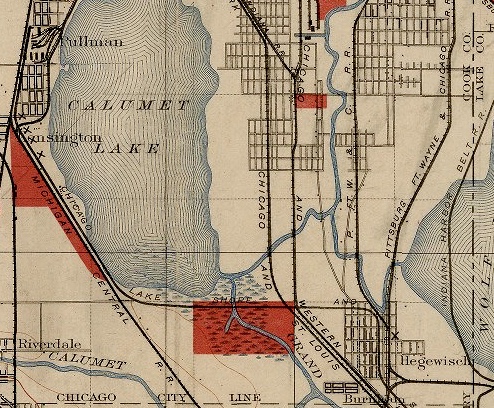
Source: Map Showing Railway Transportation Conditions, 1911, Map Collection – University of Chicago Library.
Also in 1902, McCormick and Deering reaper company merged with three other firms to create International Harvester. Meanwhile, that same year, International Harvester took over Joseph H. Brown’s original steel mill north of Hegewisch in Irondale (which had previously changed hands a few times), and began producing steel exclusively for the company’s factories, including the one in West Pullman that employed about 1,400 workers. Many residents of Hegewisch would work at the mill, now named Wisconsin Steel, and create somewhat of symbiotic relationship between the two areas on opposite sides of Lake Calumet.
Some residents of the Pullman/West Pullman/Roseland area were connected to Hegewisch through work. During his days as a football star, Minnie LaForest lived the Pullman area and played for the Pullman Thorns, among other teams, in the first two decades of the twentieth century, but he worked at Western Steel in Hegewisch. And some who lived in Hegewisch worked elsewhere in the region, including for the Pullman Company. For instance, a different, younger Oscar Nielsen from Hegewisch (also of Danish descent) worked for the Pullman Company at the beginning of World War I.


So despite the physical travel barriers, the communities were at least aware of one another, and movement between them did occur, even if, in 1902, interaction was a little less common than just a decade later. “‘Maybe you do make the best cars,’ said the fellow from Hegewisch, ‘but you can’t fight over there,'” Nelson writes. Quickly, the argument escalated and soon a fight was scheduled between Bat and a fighter from Pullman named Frank Colifer. Bat’s father, who had once opposed his son fighting, got worked up and fully supported his son taking on the fight.
“I had to fight for the honor of Hegewisch, and the fellow who was boosting me patted me on the shoulder and said: ‘Now bring on your fancy Pullman fighter!'” Fancy, huh? A jab at one’s masculinity, or was this another instance highlighting subtle class distinctions being made between the two communities? At a crowded barn next to a saloon in West Pullman, the fight commenced. Workers from Pullman cheered for their man, and all the workers from Hegewisch–the now-united “Danes and Swedes” who populated much of Hegewisch at the time and were reportedly often at odds with one another–pulled for Nelson. As Nelson punched his way to victory, “the Hegewisch crowd was crazy with joy.” Pullman, in this instance, may have been silenced. So far, though, that community is winning the battle of historical recognition, first as a Chicago historic district, then as a state historic site, and most recently as a national monument. Hegewisch has none of those distinctions.
Just a year after the publication of his autobiography, Nelson again created a bit of controversy when a teacher invited him to a West Pullman school to speak. The invitation came from the school’s principal, who had previously taught Nelson at Henry Clay School in Hegewisch. The principal, however, did not inform the superintendent and school board president, both whom were shocked by the prospect that a pugilist could be directly influencing impressionable children, possibly causing an outbreak of fistfights. Despite their fears, Nelson reportedly recommended that the children learn to box but they should not bully others, and they definitely should not pursue the sport as a career. “And don’t smoke, chew or drink if you want to grow strong and keep healthy,” Nelson said to the children. “Take lots of exercise, too, and whatever you do, try and be the best at it.” With this motivational language, one can only wonder how Nelson would have been received had he been a hero of Pullman instead of Hegewisch.
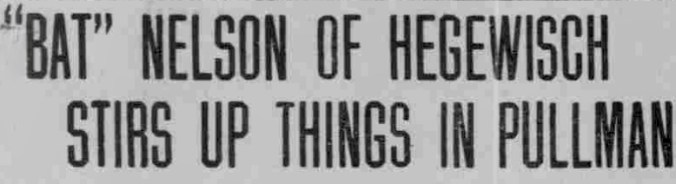
Source: Lake County Times – November 2, 1909.
Just a few years later, Hegewisch and Pullman began playing one another in football. Eventually, their interaction was so common that they were once accused of conspiring with one another to beat the rival East Chicago Gophers, one of the league’s standout teams. An accusation was made that the Hegewisch team was “loaded” with five players from the Pullman team to beat the mighty Gophers, who had completed a number of recent seasons undefeated. The offended Hegewisch coach refuted the claims somewhat, stating that two of the replacements did indeed play for the Pullman team, but they were only added because two players for Hegewisch were out sick or injured. As for the three other accused players, they did not belong to the Pullman team and had not played for the Pullman team. . .that year. “[A]ltho,” manager Joseph Powell wroted, “they all played with that team last year,” and have been permanent members of the Hegewisch team for the entire current season. In this instance, the two car company towns were sticking together.


Most articles written about Hegewisch during its first three decades of as a town repeated common themes, some of which linger today. One common theme expressed by both residents and outsiders who visited was the dichotomy of a community moving both upward and nowhere at all at the same time. Hegewisch was an established settlement with a large factory and locally-based workforce, but by the early twentieth century it had had a hard time attracting the same type of investment seen after the building of the Adolph Hegewisch’s facility. Other factories did not immediately follow the founding industry to the town as had been predicted, resulting in population levels that failed to meet his original expectations. This slow growth likely did little to attract the attention of Chicago lawmakers, and as the town instead grew slowly, conditions of the former wetlands improved even slower. “Hegewisch has been patient for twenty-three years, which is about the length of time the town has been in being. At that time the great railroad car shops were built, which gave the town an excuse for existing, and started the advance guard of building and loan associations on their preliminary raid. They did with Hegewisch that which has happened to many embryo towns.” (Inter Ocean, September 17, 1905)
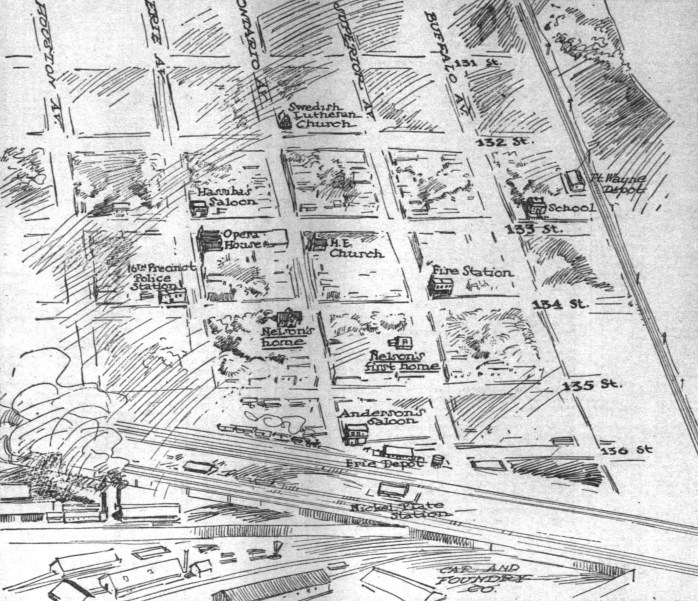
“Bird’s eye view of Hegewisch.” Source: The Inter Ocean, September 17, 1905.
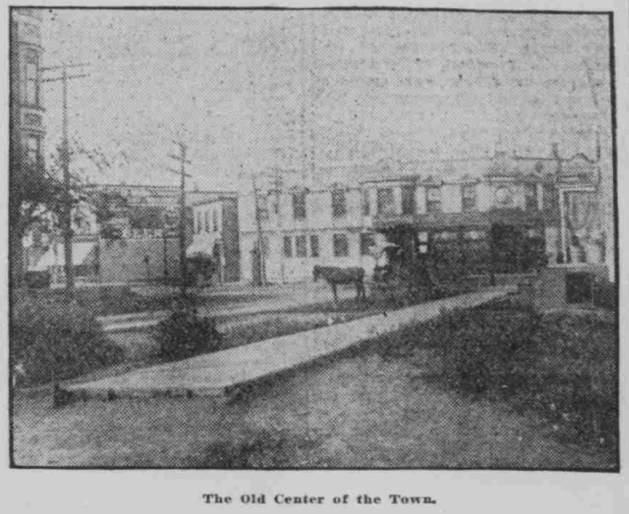
A number of houses were quickly built to meet the high demand, but services and amenities that would make the community livable were of secondary concern. “Homes purchasable on on the installment plans sprung up by hundreds and were disposed of to the thrifty mill operatives. A few wooden sidewalks were built, and are there today. The roadbeds were slightly elevated, leaving plenty of space beside the walks for the waters of Calumet lake, the river, and other bodies of water as an overflow.” Due to this water, ducks “have since become domesticated, the hundreds of ducks which dwell contentedly adjacent to and beneath the sidewalks seem to be part of the town. Swimming gracefully up and down or floating with the gentle current they are at peace.” There are a few large trees, too.
Sidewalks were still made of planks and the streets were unpaved, but 22 years after Hegewisch was founded, things were looking up. In 1905, as has been the case throughout Hegewisch’s existence, “[the] modest cottages of the inhabitants are fairly well kept up.” Bat Nelson was buying up real estate with his earnings, too, and local businessmen were “planning to take advantage of the sudden fame of the town,” with a huge celebration in Nelson’s honor. Furthermore, “according to reports, there is now more building going on in the the town than in the past fifteen years.” The $10,000 department store being built across from the opera house probably may have had more to do with national economic trends–the panics of the 1890s were over–but no doubt many residents connected Nelson’s success to the success of Hegewisch.
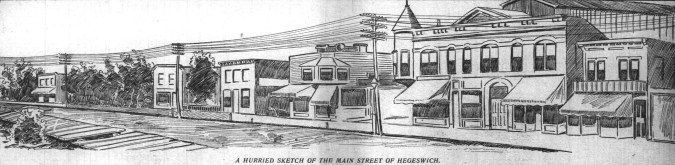
Source: The Inter Ocean, September 17, 1905.
At this time, about 4,600 people lived in Hegewisch, with most men working in the local factories. Western Car and Foundry employed about 1,500 people, while another car plant, the Northwestern Car & Locomotive Company, employed a smaller, but still large number of people. The General Chemical Company, a producer of sulfuric acid that was located on today’s Carondolet Avenue north of Hegewisch at the Calumet River, employed a large number of people, as well.
But despite the economic turnaround, they just couldn’t get Chicago’s city hall to pay any attention. “‘The trouble here is,’ said E.M. Skinner, a well known grocer, ‘that the city has never done anything for our streets, and it doesn’t make any difference what administration is in, we don’t cast enough votes to make it an object of the city to do anything to fix up the town. The people here are prosperous, but we can’t get anything done, and that is the reason the town seems to be in such bad shape. It is not our fault.'” (The Inter Ocean, September 17, 1905)
Comprised of a population similar to a small town and with most of the labor force employed by local factories, the isolated Hegewisch was very quiet during most hours of the day in the early 1900s. And it was certainly far from a police officers’ haven that it would become in the mid-twentieth century. The patrol was so dull that some officers deemed it a punishment, while others stationed there enjoyed the quiet.


The old Hegewisch police station, located the northwest corner of 134th and Erie (today’s Baltimore Avenue), and torn down years later, fit the neighborhood well, as we would find out: it was a former saloon. It was often confused for one, too, which isn’t surprising considering there were reportedly 21 in the neighborhood at the time. The saloon’s old ice box had been converted into a storage facility for police records, and the old billiard hall was now a cell.
The force had a total of six individuals, each of which lived in Hegewisch with their families. It was a lonely job that included a lot of hanging around, with patrols spread out throughout the day. In 1905, just as over a century later, officers made very few arrests.. The Chicago Tribune even ran story entitled “Studies in Police ‘Still Life’ at Hegewisch, Where an Arrest Is an ‘Event.'”

Source: Chicago Tribune, January 29, 1905
Apparently, not much happened throughout the day. Hegewisch, “the dullest place in the world,” said a police lieutenant, was “so lonesome and you can still hear your hair grow.” These comments prompted another officer–one who had worked in Hegewisch for the last 19 years–to say “lonesome but good.” Those who knew Hegewisch best, defended it.


Despite being a curiosity to outsiders, some local thought the state of Hegewisch police department was unacceptable. A year and a half after the Tribune article was published, Nelson, increasingly active in local affairs, headed a committee of citizens that demanded that local Alderman Pat Moynihan work to give the neighborhood paved streets, electric streetlights, a street car system, improved school buildings, a clean water supply, incentives for new industries, and, as the article stated, “A real police station, with real policemen.” The tavern-turned-police station was yet another example of Hegewisch’s second class status.
Opinions expressed just a couple of years later confirmed the neighborhood’s disconnection with Chicago, especially how the city failed to fully provide Hegewisch with essential services. Even the town’s recent economic success had not improved day-to-day living conditions to a great extent. Contemporary reports highlighting squalid, dangerous, and unhealthful surroundings reflect Progressive era values, as does the urgent call to fix them. An article in the Lake County Times published August 20, 1907 pointedly addressed conditions in the town in true muckraking fashion, deriding local environmental conditions, the lack of services, and the apparent apathy and “total lack of public spirit” of the town’s citizenry. Deriding the local indifference, the article noted that eight of eleven people “were either unable or unwilling to inform a stranger as to the location of the postoffice.”
But, of course, they misspelled the town’s name. Or maybe it’s a “clever” pun?

Source: Lake County Times, August 20, 1907.
As the “beggar suburb of Chicago,” the article highlights the tension with it’s massive overlord. “The casual observer [. . .] would think the citizens of this community would rise up in their wrath and seceed [sic] from the city that has gobbled it up, sloughs, cinder roads, houses and all, and then set up an independent government. The average man would refuse to pay taxes to a city that neglected a portion of its citizens to the extent that Chicago neglects Hegewisch.”
Source: Lake County Times, August 20, 1907.
Sanitation was a critical issue. There were no sewers, too-prevalent water in sloughs was stagnant, and housewives dumped their dirty water in front of their houses, all of which contributed to an inescapable fly and mosquito problem.
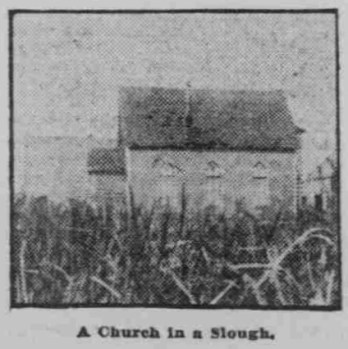
Source: Lake County Times, August 20, 1907.
Despite making good wage, “[. . .] the average citizen of Hegewisch is putting up with conditions that are simply revolting.” The three to four thousand people of Hegewisch, the writer suggested, were so used to being neglected that many had “lapsed into a state of indifference from which it appears they will never recover.”

Source: Lake County Times, August 20, 1907.
But, true to the spirit of Hegewisch would express throughout its history, saloons thrived. “[The] most prosperous places in the city are that saloons, and that with the exception of the department store, all of the best business blocks are occupied by saloons.” This last assertion can be confirmed by directory listings, as the five digit addresses of local taverns often ended with “00,” “01,” “58,” or “59,” the corner numbers. Two other defining features of Hegewisch’s historical character were evident, too: the concept of hard work and, previously noted by the police, the town’s sleepiness. “The men are all working. This is proven by the fact that the streets, which are practically deserted during working hours, are crowded with the employes [sic] of the big car shops soon after the whistle blows.” Hegewisch is a lot like that today. You notice a little more buzz around 4 or 5 p.m. when everybody gets off work for the day, then it gets quiet again as people head home.
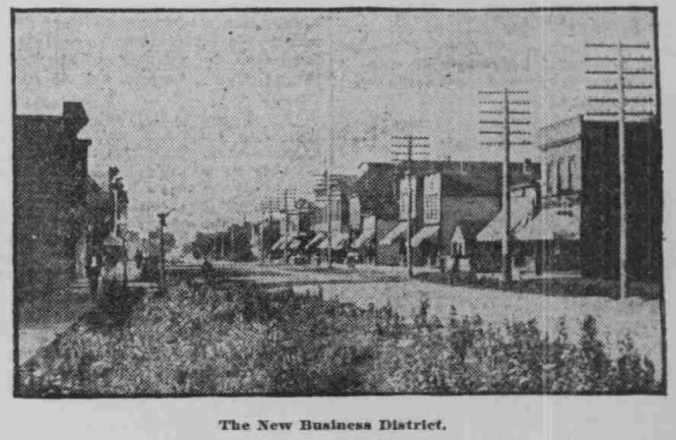
Source: Lake County Times, August 20, 1907.
Despite its problems, the article served as an optimistic call to arms. “[In] spite of the fact that the town has been considered the end of the earth in Chicago [. . .] the town has forged ahead and is as prosperous as any city in the Calumet Region. New residences are being built, the streets are thronged with people, [and] the business houses are thriving [. . .]” the article continued. “Some day, however, there is to be a reckoning with Chicago.” Streets will be built up, predicted the writer, rail lines will connect to the central city, marshes will be drained, and the “city with its industries will be one of the manufacturing centers of the Calumet region, and Hegewisch, the beggar city, despised and shunned, will come into its own. The dreams of its one staunch friend, its favorite son, Batling Nelson, will come true.” Nelson wrote of his defeat of “Jack the Slugger” O’Neil in 1904 that, “I, of course, won the affair by a Hegewisch block, which means a mile.” Was he referring to the poor conditions of the Hegewisch streets? Business leaders hoped Battling Nelson’s success could change that.
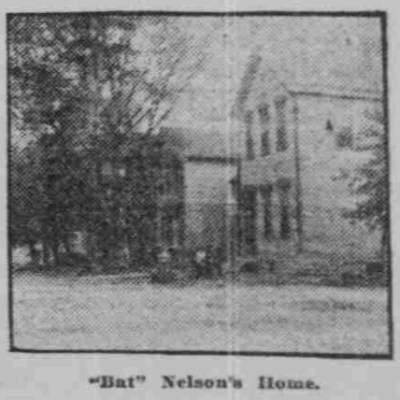
Source: Lake County Times, August 20, 1907.
This boosterism likely did not hurt Nelson’s real estate interests in the community, either, as he acquired many local properties with his winnings, no doubt making him even more popular. In 1906, at the age of 24 , and reportedly already owning $30,000 worth of real estate in Hegewisch, he was elected president of the Hegewisch Businessmen’s Association. “Instead of undertaking to elevate the stage, or striving to become prominent in politics, he has devoted his attention strictly to the upbuilding of the material interests in Hegewisch.” He would fight for Hegewisch, and “he was only a lightweight, in a professional sense,” the article stated. “In a business sense he is the heaviest weight that Hegewisch cares to boast of at present, and he has already marked out a line of policy which stamps him as a far seeing promoter of those things which make for prosperity.” (The Inter Ocean, July 11, 1906)
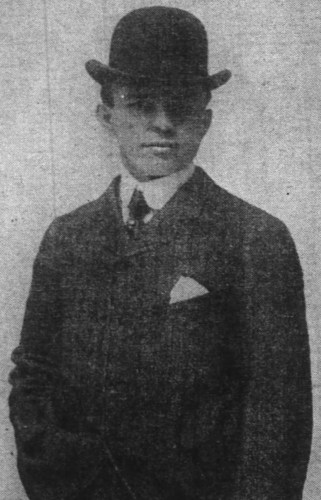
Source: The Inter Ocean, September 17, 1905.
Nelson reportedly would “have maps printed showing Hegewisch as the great railway center of the Northwest, and upon which the name of Chicago will appear, if it be mentioned at all, in small letters. But his efforts will not be directed against the mother city, as the mother city is not really a rival of Hegewisch. We take it that Battling Nelson will devote himself to the task of crushing Gary in its infancy.”
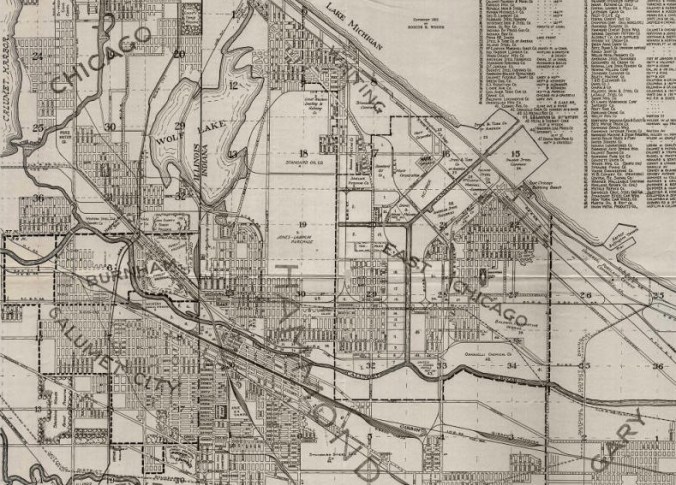
Source: Industrial Map of the Calumet Region of Indiana & Illinois, 1925. Indiana Historical Society.
Gary, a company town similar to Hegewisch, was reportedly projected by U.S. Steel to house 50,000 to 75,000 people, with the company’s Gary Works to be its central industry. “Yet it will be handicapped from the beginning, because Hegewisch is already on the ground,” the article stated. “Hegewisch is in Chicago, if only on the edge of it, and Hegewisch enjoys the advantage of water and rail communication sufficient to place it in the front rank of the world’s greatest industrial cities.” Not long ago, the article concluded, Hegewisch was known primarily as a duck hunting destination. But with Bat Nelson leading, “it is only in the dawn of its history.” Gary, however, would quickly take the lead, and by some measures, hold it for decades.
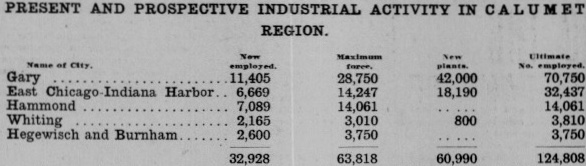
Source: Lake County Times, April 17, 1912.
Despite the article’s claim that Nelson did not have his eye on politics, it appears that he actually did to some degree, at least locally. In fact, just two years later, in 1908, he attempted to mount a campaign as a Republican to unseat Moynihan as one of alderman of the 8th ward. Likely not a coincidence, this move into local politics occurred in the same year that his Hegewisch-lauding autobiography was published.
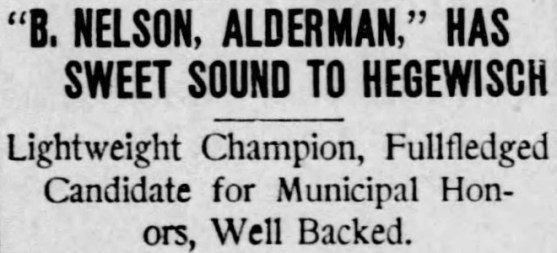
Source: St. Louis Post-Dispatch, November 29, 1908.
Nelson was popular, but Moynihan had supporters in the press, too. One cheerful article entitled “Here’s To Hegewisch” detailed how Hegewisch was “outgrowing its Cinderalla-hood.” The community soon would finally get modern improvements such as a sewer system and a new road connecting to Chicago thanks to the alderman. While it briefly noted Nelson, it claimed that “Alderman Moynihan seems to be the generally accredited philosopher, guide and friend of heretofore neglected Hegewisch. He is the fairy godmother who by a few waves of his wand has changed the gloom of the swampy settlement into a bright atmosphere of hope and pride.” (Lake County Times, November 1, 1907) After leaving the city council in 1909, Moynihan would effectively serve as the Republican boss of South Chicago and Eighth Ward and, after restructuring, the Tenth Ward into the 1920s.
Hegewisch would get to keep its name, too, which it almost lost entirely when several railroad companies chose to name a local train depot “Burnham.” Offended by this effective removal of the town’s identity, Nelson himself wrote to Pennsylvania Railroad officials in protest. “If I advertised myself as coming from Burnham the big bugs across the pond would think I was a pink tea fighter,” he later stated. “Burnham is a soft name. It suggests mild blue eyes and yellow curls.” (Lake County Times, March 20, 1907) Eventually, the Hegewisch name that Nelson had fought so hard to champion returned in 1907, but the flippant attempt to remove the town’s civic identity likely put many residents on the defensive, helping create a sense of community but also a culture of suspicion of outsiders. The Burnham name appeared on maps as late as 1910, right in the middle of Hegewisch. In retrospect, Burnham seemed to at best draw a parallel between Western Steel and the other more famous car company, or at worst taunt Hegewisch by claiming the local car works for itself: one of the first streets just south of Hegewisch in Burnham was once named Pullman Avenue.
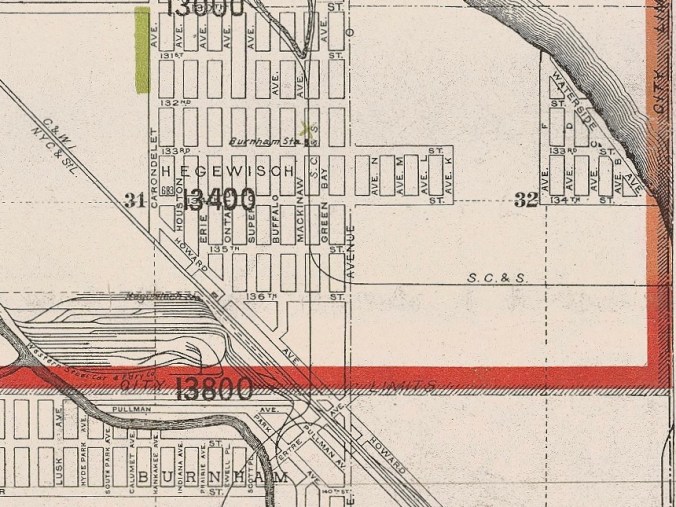
The Burnham station in the middle of Hegewisch, and Pullman Avenue in Burnham. Source: Rand McNally New Standard Map of Chicago, 1910. Map Collection – University of Chicago Library.
Nelson may have made the Hegewisch name famous, but Moynihan’s power and local customs likely kept the champion from mounting a successful campaign for the seat. It’s unclear to us whether or not he actually made it on the ballot. The local Republican ward bosses were also reportedly “perturbed” by his candidacy (St. Louis Post-Dispatch, Nov. 29, 1908). While he was very popular with many business owners, he may have faced opposition from everyday voters to his political stance against the ever-popular saloons that lined Hegewisch’s commercial streets and residential street corners. His platform stood for better schools, more factories and railroads, and improved services, such as the extension of the Chicago sewer system that perhaps Moynihan had yet to deliver. But by taking on taverns, an essential part of life in Hegewisch, he may have picked the wrong battle.


Decades later, in 1978, Barney Kurnik, then president of the Hegewisch Community Committee (and related to the former Kurnik’s Tavern?), lamented how things had changed in the prior decades. “‘There used to be taverns all over this place,’ mused Kurnik, ‘all over the street. Now maybe there’s 28 in the whole neighborhood.'” That said, we wonder if there were actually ever that many taverns in Hegewisch at one time. The 1905 Inter Ocean article about Nelson and Hegewisch claimed that there were 21 in the neighborhood. The 1917 city directory lists at least 16 taverns in Hegewisch. Businesses listed in the restaurant category, may have also qualified as taverns, increasing the number. If one added the taverns along or adjacent to Torrence Avenue in South Deering, the number would spike. A few taverns were located near the millgate at Republic Steel on Burley Avenue, as well. To confirm a number of 42 at one time might require a more thorough analysis.
Taverns are undoubtedly a part of the local culture and history. Their numbers were likely seen as a reflection of local industrial vitality: if industry was going well, then there were a lot of taverns, and if there were a lot of taverns, then industry must have been going well. Nelson and the anti-saloon folks were not only challenging social and cultural customs, many of which had been brought from workers’ countries of origin, but also indirectly threatened the community’s economic well-being. They are also–in discussions of the way things used to be–a part of the local working-class folklore.
Other political currents may have swept Nelson in a direction away from the aldermanic race, as well. One article passively stated that “Nelson had some thought of running for the city council in the Eighth Ward,” but the voices at a local mass meeting put him at the center of a brief secessionist movement. A mass meeting, held November 30, 1908–dubbed “Hegewisch’s independence day” at the “Faneuil hall of the Eighth Ward in an article the next day (Lake County Times, December 1, 1908)–in the town reportedly turned from discussion of the continued lack of services and disconnection from Chicago, to a vociferous call for politically leaving the city altogether and forming a new town.
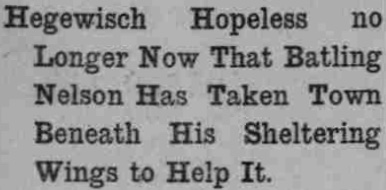
Source: Lake County Times, December 1, 1908.
The people of Hegewisch had reached a “boiling point” and were tired of being “dragged down by the rest of Chicago.” The only way for Hegewisch to achieve its “city beautiful dreams” was to “cut loose” legally. “Chicago has never done anything for this part of the city,” Nelson said to the crowd. “We have no streets, no sidewalks, no sewers, and yet we pay heavy taxes. Let us separate from the city and form a city of our own.” Cheers of “Bat for mayor” and “Bat for us” came from the assembled crowd. “Mr. Nelson was visibly impressed with his becoming mayor,” the article noted, “and in a speech of some length that sounded suspiciously like chapter eighteen of his newest and first book, Mr. Nelson accepted the honors about to be thrust upon him.” A couple of photographs in his autobiography indeed showed him dappered up, possibly ready for a position of importance.

Hegewisch did not secede, and Nelson’s political ascent seemed to stall, particularly when his boxing career plateaued. And as much as he loved Hegewisch, he sometimes had a hard time getting people from out of town to love it as much as he did. For instance, his wife, Fay King, a famous cartoonist, was not impressed with the town at all. The tumultuous short marriage fell apart soon after the vows, which occurred at the Nelson family home in Hegewisch. Apparently, King had no interest in becoming the “queen of Hegewisch” and returned to her home in Denver. This site presents an excellent rundown of their courtship and marriage (if those words could be used to describe their connection), as well as their divorce, all based on newspaper accounts. Mark Allen Baker also details it in his biography of Nelson. He retired from fighting in 1920 and never seemed to reach the same level of popularity that he experienced a decade and a half earlier.

Nelson and Fay King in Hegewisch after their wedding. Source: The Day Book, January 25, 1913. Via Stripper’s Guide.
Hegewisch’s commercial districts became more sophisticated by the 1910s, as storefronts offering a variety of goods and services lined Erie and Ontario Avenues. Grocery markets, tailors, banks, clothing and dry goods stores, drugstores, restaurants, and, of course, taverns all served the working folks of the neighborhood.

Source: Lake County Times, March 2, 1912.
While Erie and Ontario avenues were becoming the primary commercial districts of Hegewisch, the Western Steel factory–the former U.S. Rolling Stock works–remained a focal point of of the community. Businesses, such as a hotel and several taverns clustered near it, each hustling for the workingman’s dollar. Barney Glinski’s restaurant was located on Howard Avenue (now Brainard) just steps from Western Steel.
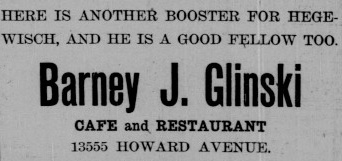
Source: Lake County Times, April 6, 1912.
World events soon shifted the focus away from local issues, however. Following the American entry into World War I, residents of Hegewisch served in the armed forces, many seeing action in Europe. Meanwhile, work continued at the Western Steel factory.

Courtesy Southeast Chicago Historical Society.
With the demand for explosive chemicals high, the General Chemical Co. delayed its expansion plans and, without compensation, turned over its patents and manufacturing processes to the federal government for ammunition production. Now in service of the war effort, large gun shells were produced in the Western Steel factory, as well.
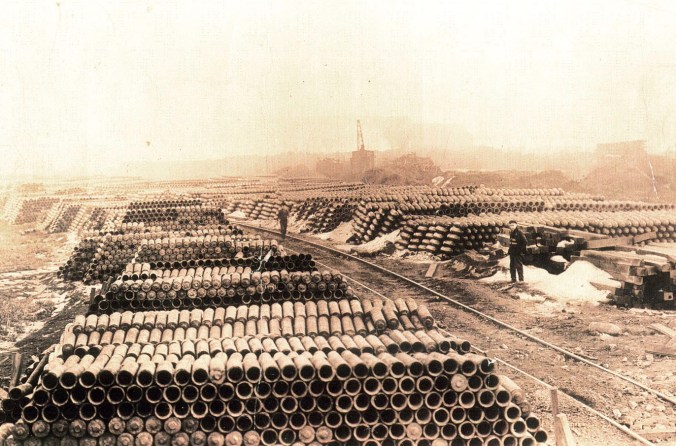
Courtesy Southeast Chicago Historical Society.
By October 1917, the Ryan Car Company, a car rebuilding company that had purchased and taken over the Northwestern Car & Locomotive Company works 1906, had begun hiring women to replace men lost to the military ranks. The initial group of 50 women included some native-born Americans, as well as Irish and Polish immigrants, and received a positive assessment from William M. Ryan, the company president. “They’re fine! Better than men!” he said.
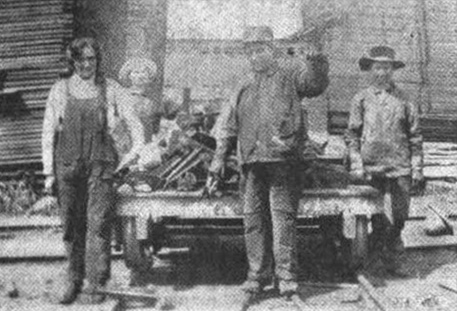
Source: Life and Labor, October 1917.
As primary employers, Western Steel and Ryan Car were both opportunities for stable work, as these two members of the Bokowy family, Jakel and Stanislaw, who came from Tymbark in Austrian Poland. These jobs could help provide them with a stable life and possibly business opportunities for subsequent generations.


The passage of the Immigration Act of 1917 just a few months earlier had placed literacy requirements on new immigrants, and substantially reduced the numbers of people entering the United States from Europe. Still, men from numerous countries in Europe had already entered the country prior to the restrictions and were employed in the Western Steel factory. With them, they brought different languages, religions, and customs.
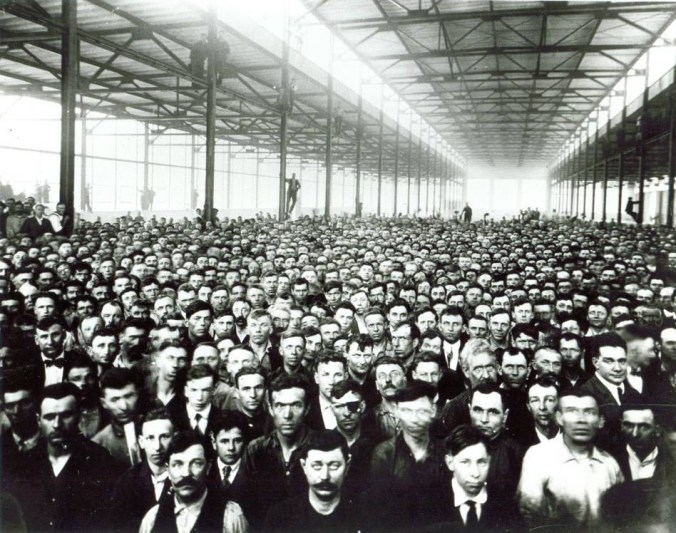
Western Steel workers gather for a bond drive during World War I. Courtesy Southeast Chicago Historical Society.
Despite this diversity, American loyalty was demanded during the war. As the sign notes in the center of the photograph–“Un-Americans are Hun-Americans”–many immigrants were placed under intense scrutiny regarding their nationalistic loyalties.
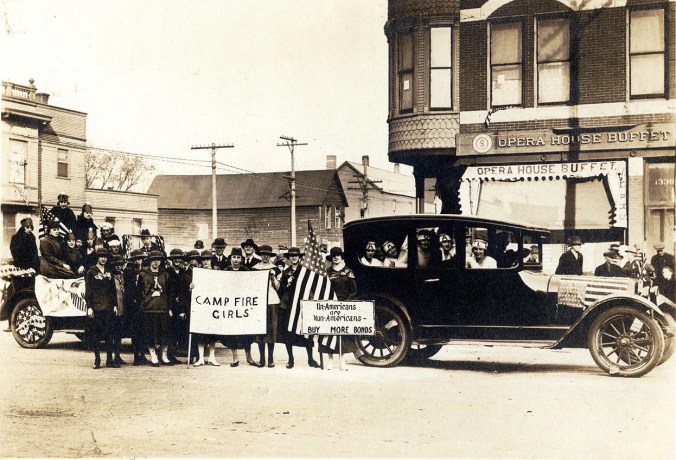
World War I bond rally on Baltimore Avenue at 133rd Street. Courtesy Southeast Chicago Historical Society.
Tensions were high as anti-German through the country. Batting Nelson, having survived a bout with influenza and nearing the end of his fighting career, looked for new paths to relevancy and financial reward, trying unsuccessfully to sell his Nelson Dummy, a punching bag meant to look like the German Kaiser Wilhelm II, to the American military.

Source: The Ring, October 1990.
Even Adolph Hegewisch’s nephew, Adolfo Ernesto Hegewisch, a shipping agent based in New Orleans from Vera Cruz, Mexico, came under suspicion.
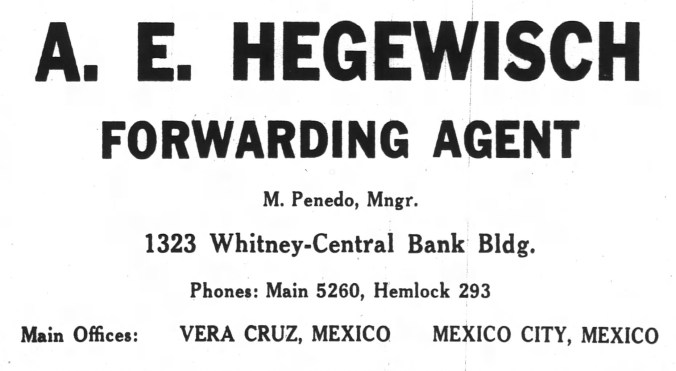
Source: City Directory for New Orleans, 1917.
An anonymous telegram suggested that Hegewisch and his family were secretly German sympathizers.

Source: Investigative Case Files of the Bureau of Investigation 1908-1922. National Archives.
Though the details remain unclear to us, the document even suggests he had some sort of connection to individuals behind the Zimmermann Telegram!

Source: Investigative Case Files of the Bureau of Investigation 1908-1922. National Archives.
A.E. Hegewisch, however, had defenders that vouched for his loyalty to the Allied cause, and the investigation into his affairs had few negative effects. As his uncle faded from public recognition–due in part the early financial troubles experienced by the U.S. Rolling Stock Co.–the related Hegewisch later rose to prominence promoting trade with Mexico.
Once the war was over in late 1918, demonstrated loyalty could prove important, particularly for immigrant factory workers with few, if any, business or favorable political connections.

Armistice Day at Western Steel, 1918. Courtesy Southeast Chicago Historical Society.
Successive laws restricted immigration more and more, stopping the flow of new members of the labor force to and from their home countries. Companies responded in part by sponsoring efforts to assimilate their workers to the American way of life. In one instance, about 100 men, most of which worked at Ryan Car Co., applied for citizenship under the direction of a local Methodist minister, including these men. The caption noted that many of the men “acquired the desire for citizenship while attending the Henry Clay school and the Fegber night school in Hegewisch,” perhaps due in part to the literacy requirements enacted in 1917. Further restrictions made into law in 1921 made meeting the requirements increasingly important, and, in particular, the Immigration Act of 1924, which would severely limit immigration from Eastern and Southern European countries, would make coming to the United States even harder.

Source: Chicago Tribune, February 27, 1922.
The Ryan Car Co. and Western Steel provided stable employment for many people in Hegewisch during and following the war, and even during the brief depression of 1920-21. Ryan employed fewer workers than Western, and the company’s regularly-run classified ad required a higher bar to reach for employment there: prior experience and one’s own tools. Western also looked for skilled workers, but working for the company could be a “good opportunity for men without experience to learn [the] foundry business.” Thus, at places like Western Steel and Ryan Car, a good job could be earned with some or no experience at all. And with hard work, one could possibly earn ticket to a better life for oneself and one’s family. That little American house–in Hegewisch–could get paid off.


But the price of stability could often go beyond hard work and long hours. Work in the car factories could be physically demanding and at times quite dangerous. Injuries were common. Newspapers routinely reported on accidents at the plants, including crushed hands, arms, and feet, resulting in amputations and even death. The Southeast Chicago steel mills, in particular, were so dangerous that different undertaking establishments fought for the lucrative business, locating their structures as close as possible to the mills to outmaneuver competing undertakers. Valley Mould & Iron, a company located 108th & the Calumet River that produced moulds for ingots used in steel production, was known as “Death Valley” because of the foundry’s dirty, smokey, and extremely dangerous working conditions.
The local steel mills provided grueling, though consistent, blue-collar work for residents for the next full century.

Source: Republic Reports, July 1950. Courtesy Southeast Chicago Historical Society.
Mills across the Calumet Region in East Chicago, Gary, Chicago Heights, and Riverdale did so, as well.
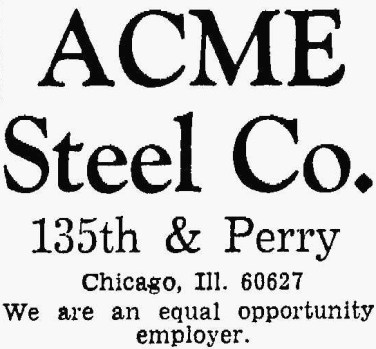
Source: Riverdale Pointer, October 3, 1963.
They all helped define a local culture of hard physical labor, often in twelve-hour shifts, constantly surrounded by the industry’s by-products. Pollution ensured that everywhere one turned, they were reminded of steel. The rivers were increasingly dirty, the air often had a foul smell or was visibly polluted, and slag, a steel waste product, was heaped across the landscape.
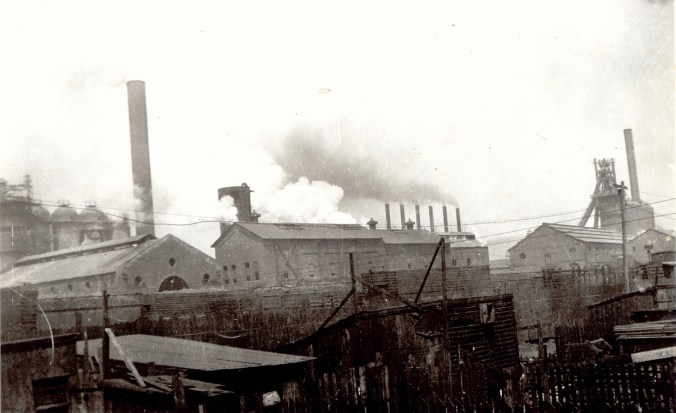
Iroquois Steel Blast Furnace, 1918. Courtesy Southeast Chicago Historical Society.
At the same time, one’s modest, yet comfortable house, yard, and street existed because industries like steel provided workers with the money to pay for them, as did numerous businesses, especially taverns, where workers could find some relief and build upon the social connections first forged by the mutually-shared stress and dangers of the mills. Accordingly, social and religious organizations thrived.
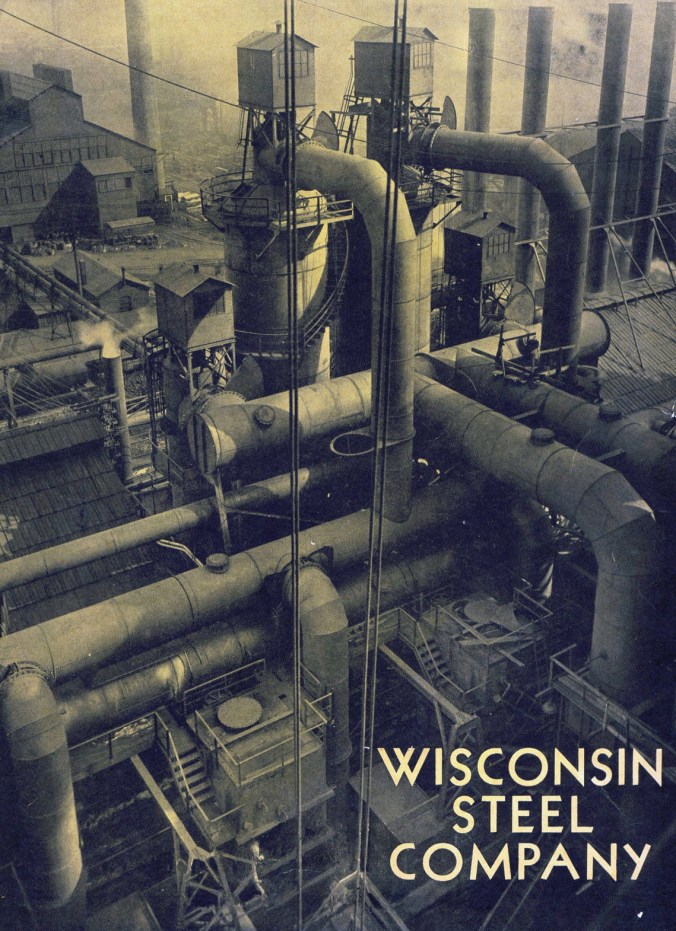
Wisconsin Steel blast furnace. Courtesy Southeast Chicago Historical Society.
The steel mills, in total, employed several thousands workers in any given year. By 1912, Western employed about 2,000 workers, Ryan employed 200, and General Chemical employed about 400 people. (Lake County Times, April 17, 1912) These numbers would fluxuate over the following decades, often reflecting nationwide economic trends, but all the while continuing to define Hegewisch as an industrial community where hard work stood at center of daily life. With few amenities and amusements outside of homegrown celebrations and ubiquitous taverns, workplaces like General Chemical Co., which became a division of Allied Chemical & Dye in the 1920s after a stock takeover, helped define local society and culture.
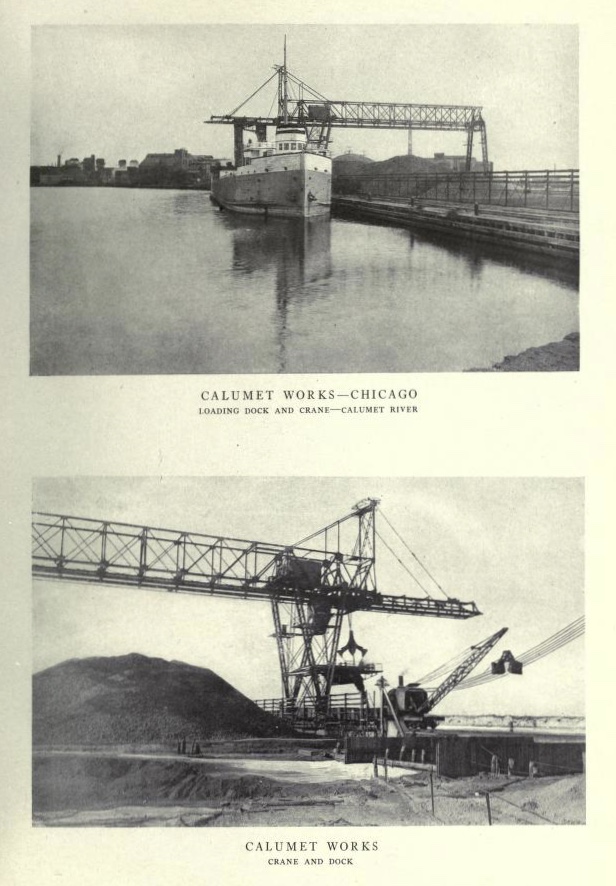
Scenes from the Calumet Works in Hegewisch c. 1919. Source: The General Chemical Company After Twenty Years, 1899-1919.
Street car lines finally connected Hegewisch to South Chicago–and the rest of Chicago–in 1918, making Hegewisch just a little less isolated. However, one technological advancement seen in the photo–the automobile–would eventually supplant the street lines as the most important mode of transportation in the neighborhood and across the country (and help Ernie and me get to Hegewisch).
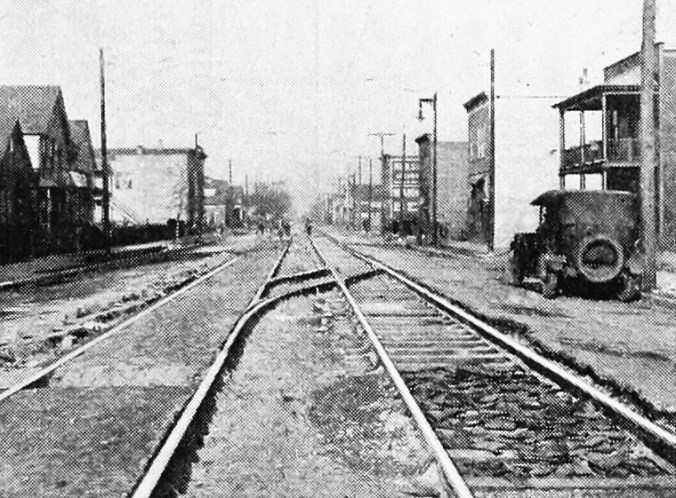
Looking north on Brandon at Brainard – “(end of the line) at Pressed Street Car Works.” Source: Electric Railway Journal, January 4, 1919.
Another notable industry long-located in Hegewisch is the Ford Motor Company’s Torrence Avenue Assembly plant. The plant, more commonly known as the Chicago Assembly Plant, occupies a large tract in the northwest corner of Hegewisch, north of 130th Street and west of Torrence Avenue. Model Ts and Model As were produced there in the factory’s earliest days. Today it’s the Taurus and the Explorer. It has been a major employer in the region since it opened in 1924.
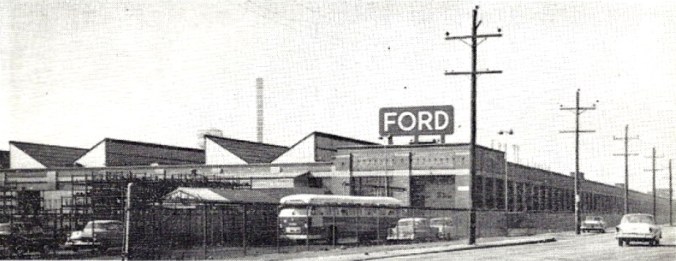
Source: CTA Transit News, September 1958. Illinois Railway Museum.
Right away, Ford had a strong presence in Hegewisch, bordering one large corner of the neighborhood. Hegewisch was surrounded by river, lakes, and marshes, but it was also flanked by industries.
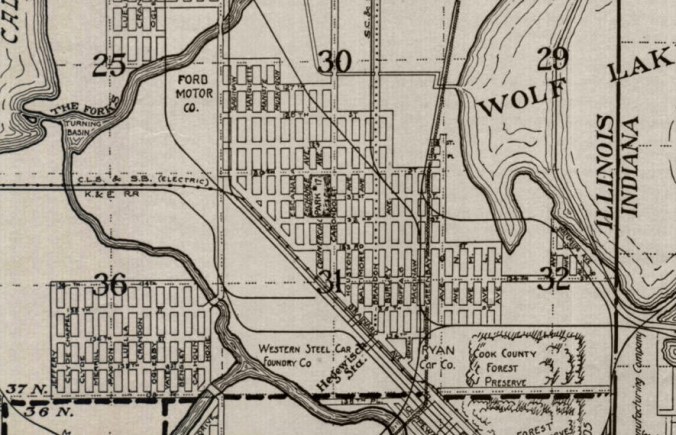
Hegewisch on Industrial Map of the Calumet Region of Indiana & Illinois, 1925. Source: Indiana Historical Society.
Tied to larger economic trends, industries in Southeast Chicago expanded as the American economy boomed. In 1925, Wisconsin Steel constructed a new merchant mill. To meet the demand, the car shops, the steel mills, and the Ford plant brought workers from all over the world, including various states in America. Census listings in 1930 from one hotel located at 13531 Baltimore Avenue showed a lot of men, all white, mostly in their 30s and single, from several states in the union, with a few men from other countries. Almost all listed “Car Shops” as place of employment, with some listing “Steel Mills,” “Automobile Plant,” and the railroad, while a few others were employed in the service industry or at General Chemical.


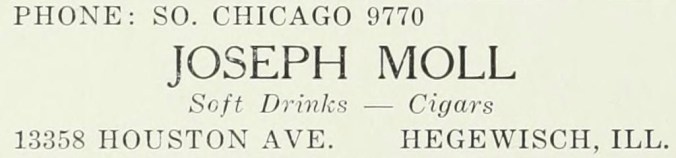
Hegewisch felt the effects of larger political trends as well. Joseph Moll opened a tavern here at 13358 Houston in 1911, but with the passage of the Volstead Act, Battling Nelson got his wish as the production and sale of alcohol was banned. Workers from places like Pressed Steel and the steel mills would have to find refreshment from something other than beer or liquor.
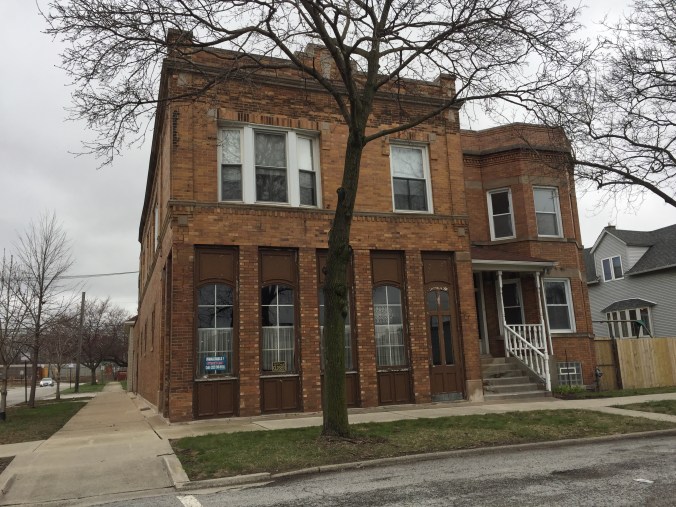
During Prohibition, tavern operators in Hegewisch either evolved or risked losing their businesses altogether. Many evolved into confectioneries or grocery stores. Moll’s replaced alcohol with soft drinks and cigars and later operated as a restaurant run by George Moll.
As pillars of local culture, taverns came back after Prohibition, but the industries that helped support them across the country were hit hard by the Great Depression and Hegewisch felt the effects. With growing competition from automobiles, Pressed Steel ceased rail car production in 1937. Labor tensions mounted, with the Little Steel Strike and the resulting violence at Republic Steel that same year. Ryan Car idled by the end of the decade. As many in the neighborhood searched elsewhere for work. South Deering actually grew by 1,764 residents, a gain of 18%, possibly due in part to Wisconsin Steel’s plans to expand in 1936. Furthermore, workers at Wisconsin Steel did not participate in the major strikes (they were represented not by the SWOC/USWA, but by the Progressive Steelworkers Union (PSWU)), and were often rewarded with same concessions gained by strikes at other plants. The other three Southeast Side neighborhoods, however, posted declines: the East Side lost 326 residents, or about 2% of its population, while the much larger South Chicago lost 1,593 people, or 2.8%. Hegewisch earned the distinction of losing the largest percentage of residents among Southeast Side neighborhoods with a net loss 381 people, or about 4.8%.
Government agencies such as the Works Progress Administration and the Civilian Conservation Corps provided jobs to a number of people Hegewisch not employed by industries during the Depression. In fact, long-neglected local roads were finally improved (to varying degrees of quality) by the WPA, including 130th and 134th streets, each an access point to the neighborhood. Streets north of 132nd Street such as Escanaba, Muskegon, and possibly Burley were also paved by the WPA, as were the lettered Avenues in the western section of Hegewisch, including Avenue O. According to one local historian, the roads were comprised of slabs of asphalt with gravel along the edges instead of curbs. Without the federal government providing temporary employment for local residents, population losses may have been greater during the decade.
Even the beloved local real estate mogul Battling Nelson–“still the king of the people of Hegewisch”–felt the effects of the economic downturn. In 1938, at age 54, Nelson had 12 properties remaining of the 30 he once owned in Hegewisch and across the region, but now his renters had a hard time paying him. “I needed a break when the going got tough,” likely referring to his financial difficulties following the decline of his career and his bout with influenza during the 1918 pandemic, “and I have a feeling for others,” he said of his tenants. “They can pay me when times are better.” (Hammond Times, Feb. 4, 1938) According to sociologists from the University of Chicago, between 12 and 20% over residents in Hegewisch and all of Southeast Chicago were on relief as early as 1933, a few years before the closure of Pressed Steel.
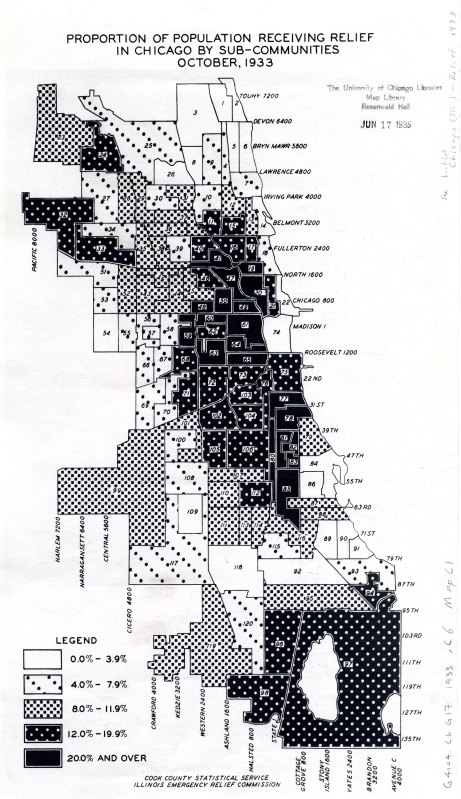
Meanwhile, similar to other communities near the city limits, homeownership rates in Hegewisch were higher than many parts of Chicago. Consistent wages from the steel mills likely contributed to higher homeownership rates, though the idling of Pressed Steel and Ryan Car later in the decade likely dented these numbers. By design and execution, rates of homeownership were higher than rates in Pullman and much of West Pullman
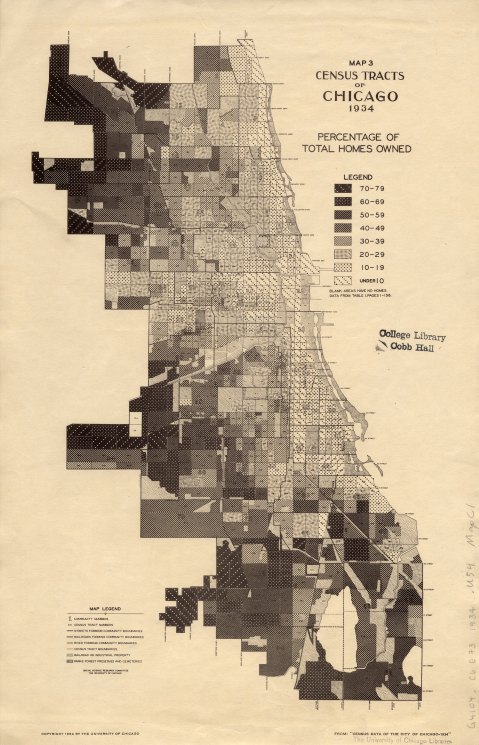
High homeownership rates helped result in a population density that was quite low compared to many areas in the central city. Many houses were two-family flats, but the community’s remoteness also contributed to its low population density. Multi-unit apartment buildings were uncommon in Hegewisch, unlike, as the map shows, areas surrounding Chicago’s central business district.
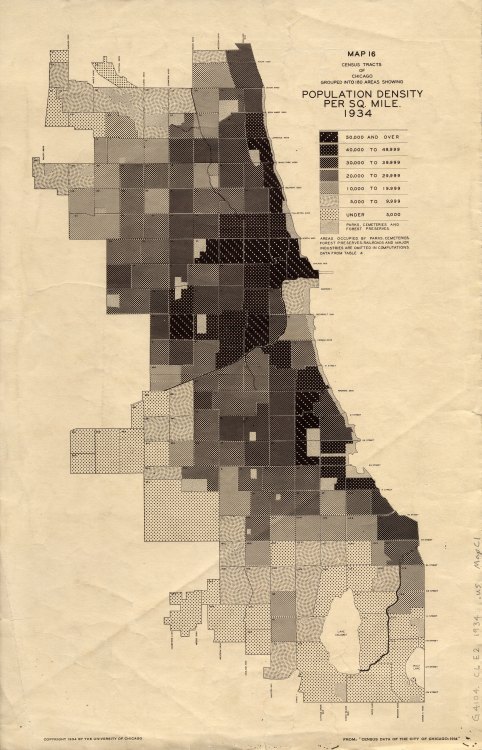
But Hegewisch and Southeast Chicago remained major industrial areas in the 1930s.
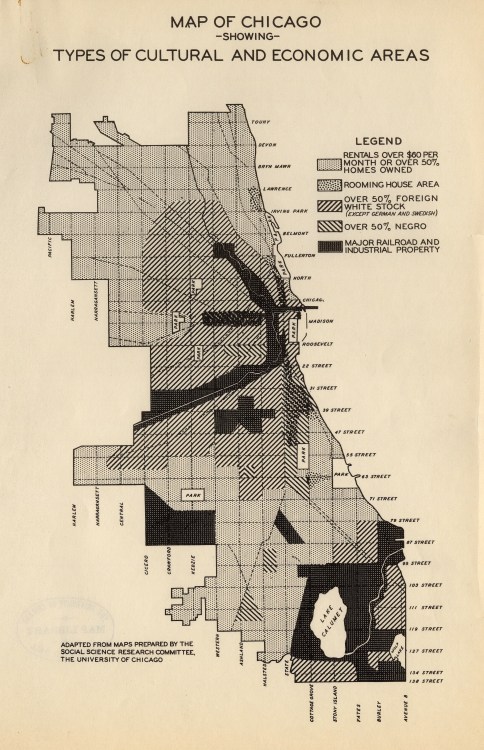
Industry played a defining role in defining daily life–substantially directing its ups and downs. If the nationwide industrial economy suffered, so did the local economy, but if America thrived economically, so did Hegewisch. As reporter Phil Lamar Anderson put it at the tail end of the Depression when economic conditions were improving, “The prosperity and contentment of its inhabitants vary with the ever-changing economic conditions affecting the nation at large because Hegewisch industries are all so closely identified with the American movement–forward.” (Hammond Times, Jan. 5, 1940)
Around the same time–and just a couple of years after the Memorial Day Massacre–Republic Steel constructed a new alloy steel works, an investment that showed the economic viability of the larger industry as well as the corporate commitment to its assets in the community.
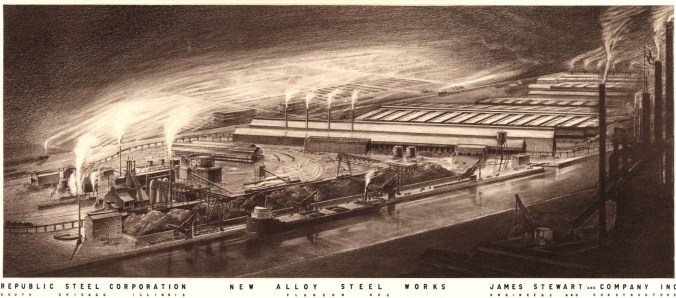
Courtesy Southeast Chicago Historical Society.
Despite the area’s decline in population from 7,890 residents in 1930 down to 7,509 in 1940 (though officials reportedly estimated that 10,000 people lived there), Hegewisch was rebounding. Census records show a diversification of both jobs held by residents of the community and the places they worked. The car shops and the Ford plant were still big employers, with the steel mills appearing to take in a larger percentage of the area’s workers. Workers listed other blue-collar workplaces that included foundry, railroad, oil refinery, soap factory, chain factory, furniture factory, the General Mills plant, canning factory, and even toy factory. Workers from Hegewisch were identified by different jobs within a mill or factory, or by an more specialized trade: machinist, crane operator, pipe fitter, riveter, millwright, car painter, packer, cabinet maker, blacksmith, welder, chipper, chemist, loader, and electrician, to name just a few. Services such as saloons and hotels provided jobs, as did city hall and professional careers. A number of people identified themselves a hotel maid, waitress, cook, tavern owner, housekeeper, nurse, commercial artist, railroad patrolman and firemen, file clerks, and one listed as an investigator employed by city hall. A number of citizens were listed simply as “Relief,” some finding work for the WPA or CCC.
It was also developing its quintessential American small town image. Hegewisch, Anderson wrote, appeared to be “a community of nice homes; a fine social center and playground for the youths; elegant and impressive parochial and public schools; a half dozen churches; a live-wire chamber of commerce; unofficial ‘mayors’ of Chicago’s great tenth ward; and having a name frequently both mispronounced and misspelled.” Over a dozen nice new homes had been constructed in the last year, and things were looking up, making it the best year since the stock market crash of 1929. The prosperity of the community “is seen today with smiles on the faces of its laboring men; business better than in years; new homes recently occupied; and an outlook for the new year that is optimistic.”
Hegewisch was becoming a community with institutions and a history that could be cited as part of its identity. It had long-respected citizens (Alderman William A. Rowan, who served the 10th ward from 1927 to 1942, for instance, as well as a few other longtime residents); a busy business district (Baltimore Avenue); schools (Henry Clay, which about two and a half decades before had replaced the Daniel Webster School, built in 1886); older buildings (such as the original St. Columba); and new ones resembling tracts out in Chicago’s other growing, suburban-like neighborhoods.
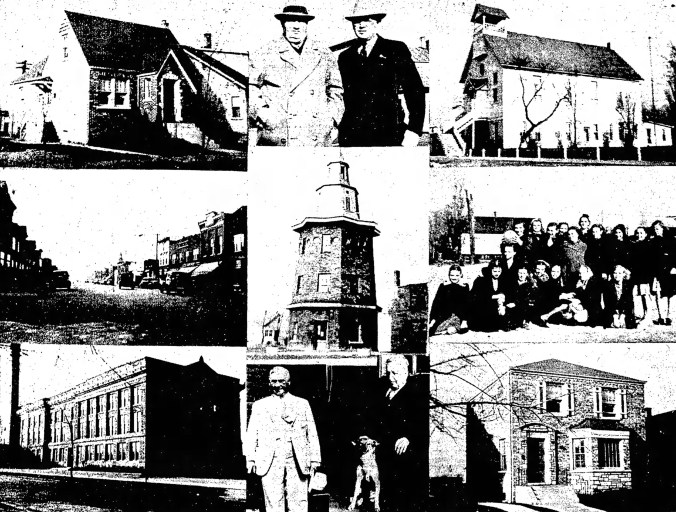
Scenes from Hegewisch. Source: Hammond Times, January 5, 1940.
It is also likely Hegewisch was beginning to develop its image as a “cop neighborhood,” as the home in the bottom right was built at a cost of $8,000 for a police sergeant. Once seen as punishment to be stuck in sleepy Hegewisch, it was now a desirable place for officers to build a nice new house.
And check out Hegewisch’s oldest resident at the time, 84-year-old James Hopkinson, accompanied by his “pet police dog.” Hopkinson, an English immigrant, had run a grocery at 13312 Baltimore Avenue with his wife as late as 1920. According to the 1940 census, James lived as a “roomer” with a Polish family and another Polish boarder in a house on the now-extinct Avenue D in the far eastern section of the neighborhood near the state line. He apparently was a widower, as Maria no longer lived with him. No doubt the companionship of the dog was a sustaining force for him. We wonder if they ever went looking for pizza.
There was good evidence that area industries were taking off. Ford employed about 4,500 workers, some of which, though certainly not all, lived in Hegewisch. Though the Ryan Car Co. closed in or before 1940, General American Aerocoach Company, a subsidiary of Pressed Steel’s then-parent company, General American Transportation, produced buses in Hegewisch Pressed Steel facilities in the 1940s. General Chemical Company and the Iron and Steel Products Co., a scrap business, still provided jobs, as did Republic Steel, Wisconsin Steel, and other mills. By the next year world events would force local industries to refocus production to aid the war effort.
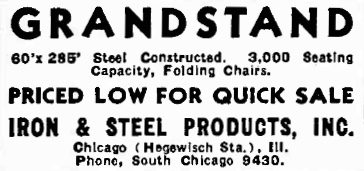
Source: The Billboard, August 13, 1938. Via American Radio History.
As the nation mobilized for World War II, many young men and women from the neighborhood enlisted or were drafted into military service. Lists of local workers now serving in the armed forces were published in the company magazines.


American men registered for the draft, including Battling Nelson, who still insisted he was from Hegewisch.
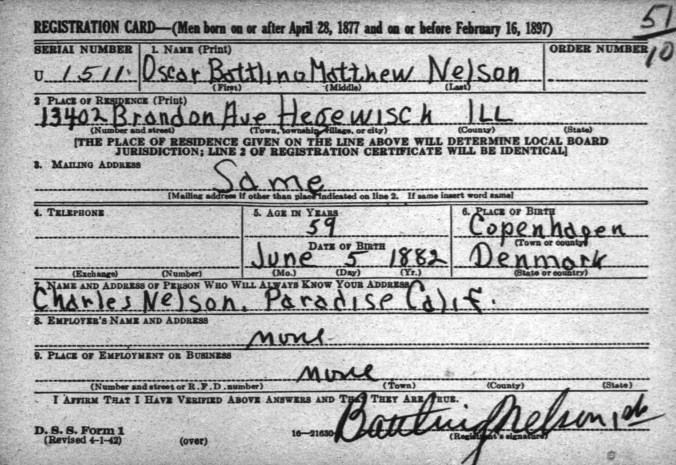
Source: National Archives.
Hegewisch responded industrially, too, with its factories shifting production to war materials. According to historian Charles K. Hyde in Arsenal of Democracy: The American Automobile Industry in World War II, workers at the Torrence plant produced 2,127 M8s and 3,790 M20s, numbers so significant that the Ford Motor Co. became the country’s top manufacturer of light armored vehicles. General Chemical produced oleum, a form the sulfuric acid used in explosives, and several different materials were produced at the Pressed Steel factory. In particular, workers built medium tanks during the war and in the next decade, employing a number of women.
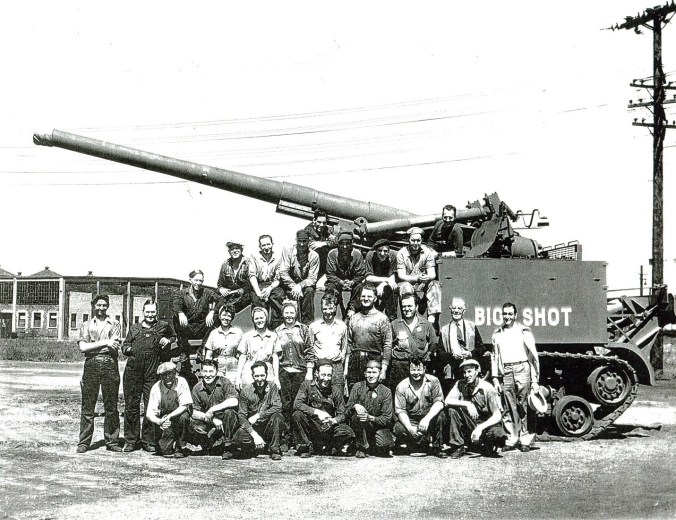
Courtesy Southeast Chicago Historical Society.
The local steel mills such as Wisconsin Steel hired women for jobs on the shop floor, too, a practice generally unusual prior to the war, and rarely seen since World War I.
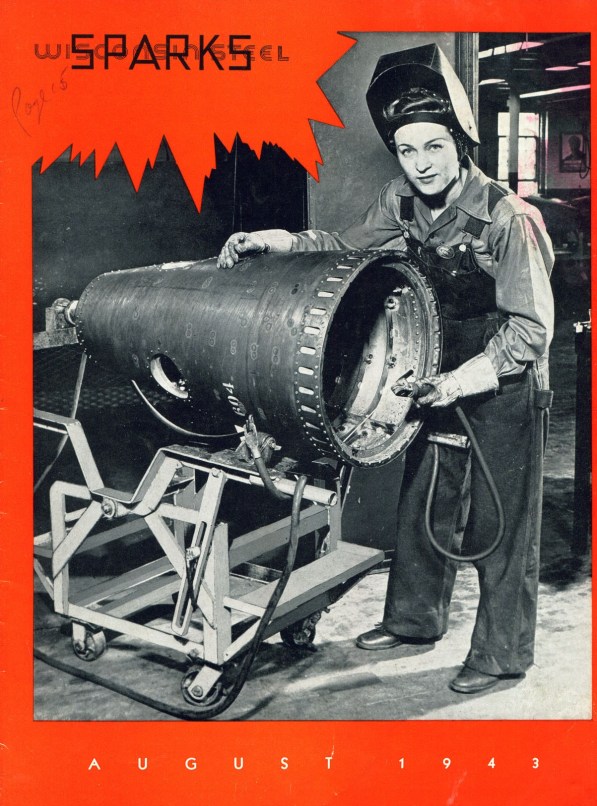
Courtesy Southeast Chicago Historical Society.
According to Charles K. Hyde, Pressed Steel produced a total of 8,648 medium-sized tanks during the war alone, what the company described as “a solid trainload of M-4 tanks every day.”
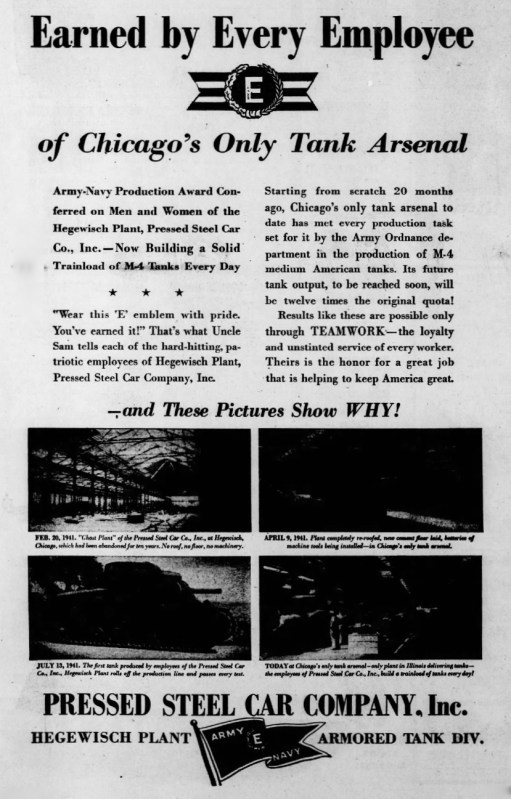
Source: The Pittsburgh Press, September 4, 1942.
In September 1942, photographer Ann Rosener, working for the United States Office of War Information, captured images from Pressed Steel’s wartime production lines. The images, available online through the Library of Congress, provide insight into how the world came came to Hegewisch to work. Descriptions make much of the “old country” origins of the workers and their families–coming from Ireland, Romania, Czechoslovakia, Croatia, Holland, even Germany–but their work to beat the Axis confirmed their loyalties, making them as “American as pork and beans.” An Apache Indian and African Americans were photographed (the latter with a bizarrely ironic caption), as well. Despite the entry of large numbers of women into the workforce during the war, the collection contains no photographs of women working at Pressed Steel.


Rosener’s collection also contains scenes from the homefront, with some Pressed Steel workers at home after their working hours. This man, the son of Polish immigrants, relaxed at home in “his own personal attic sanctum [that] is solid Americana” that was likely located, though unconfirmed, in Hegewisch.

Source: Ann Rosener, Library of Congress.
At the Pressed Steel facility, Michael Kassalo ran heavy machinery producing as many tanks as possible before sending them to the war front. While his immigrant grandparents reportedly clung to their traditional Slavic language and customs, Michael and his siblings were described as “American as the Smiths and Joneses.” Working to the defeat the country’s enemies, workers were like Kassalo were “Americans all.”
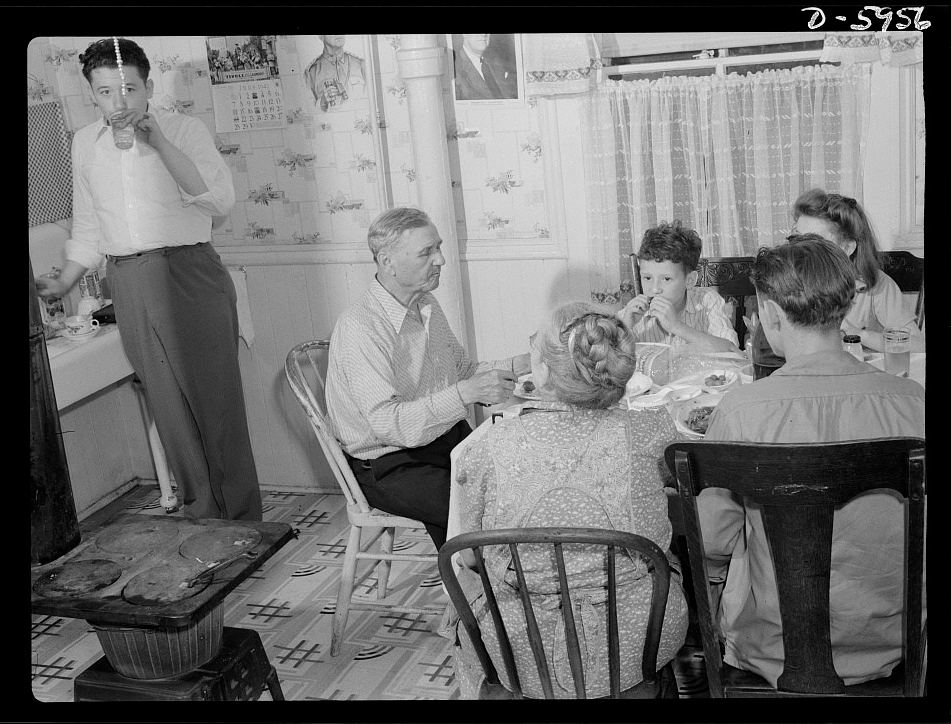
Source: Ann Rosener, Library of Congress.
Despite the war, labor disputes occurred, and unions defended workers’ rights. Local 166 of the UAW represented workers at Pressed Steel.
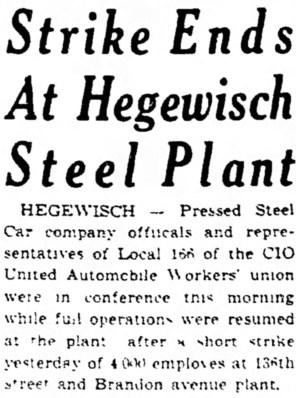
Source: Hammond Times, April 13, 1943.
But by early 1945, the mills were already looking beyond the war. The mills have been dark and dirty, but the world they would help create was slick and exciting.
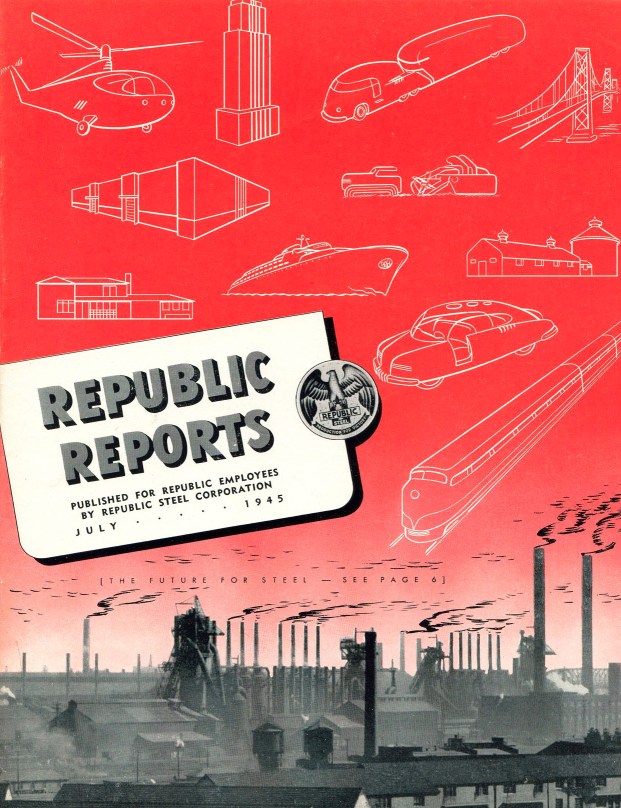
Courtesy Southeast Chicago Historical Society.
Southeast Chicago, though, paid a high price to reach that moment of optimism. Republic Steel lost at least 14 former workers, while Wisconsin Steel alone lost 63. Numerous others from the neighborhoods were killed or injured.

Courtesy Southeast Chicago Historical Society.
After the war, the mills adjusted to peacetime production, and searched for workers to meet new goals.

Sign at Republic Steel entrance, 1945. Courtesy Southeast Chicago Historical Society.
Having a new-found leverage, unions like the United Steelworkers continued to fight for better wages and benefits, participating in steel strikes in 1946 and 1949. That union also became increasingly involved in politics, particularly on the municipal level, most often supporting Richard M. Daley’s Democratic machine.
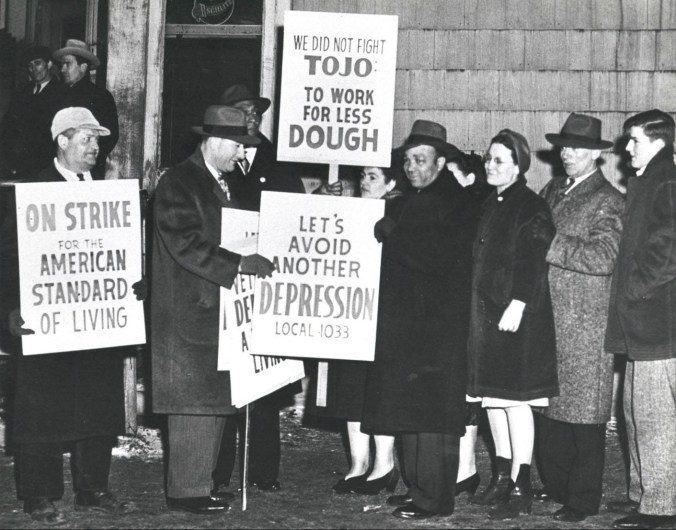
Courtesy Southeast Chicago Historical Society.
Still, Hegewisch did not quickly reverse the population decline it had experienced since the beginning of the Depression. By 1950, the neighborhood lost 367 residents, nearly a 5% drop from 1940 numbers, to a total of 7,142. At the same time, South Deering added over 7,800 residents, the East Side added over 5,100, and the already urbanized South Chicago added 625 residents. Nearby community areas such as Riverdale, Roseland, Pullman, and West Pullman all posted increases in population between 1940 and 1950. Hegewisch was the only neighborhood on the Southeast Side that posted a population decline between 1940 and 1950. Furthermore, Calumet City, Burnham, Dolton, and Riverdale, Illinois all posted population increases, as did nearby cities in Indiana such as Hammond and Gary. (Only nearby Whiting joined Hegewisch in losing a similar percentage of residents, 6.2%; East Chicago, Indiana posted a loss but only of 0.7%.) Because of the centrality of industry in Hegewisch’s history and society, the population losses likely reflect a decline in work opportunities within the neighborhood boundaries, and the availability of work and housing opportunities in other nearby neighborhoods and cities. Australian sociologist Jean Craig (later Jean Martin) conducted field research in Hegewisch in the 1940s, but we haven’t managed to track down any of the writings. It would be interesting to see if these changes are noted in her work.
But following two decades of population losses, the postwar era saw Hegewisch grow–a growth that mirrored American suburbia–but it was not a direct path upward. Heavy industries helped build Hegewisch and make it a desirable place to live for thousands of working-class residents, but they also helped create some uncertainty. Pressed Steel had previously diversified its production lines to meet growing consumer demand, adding electric ranges to its list of products. While maintaining its car business, the company produced 50,000 of its signature Presteline electric ranges in 1947. That same year, sold its electric range manufacturing line and leased the facilities in Hegewisch to Admiral the following year. General American Aerocoach also moved its main production facilities to East Chicago in the late 1940s. By the mid 1950s, Pressed Steel closed its Hegewisch plant.


At the same time, the American economy was experiencing robust growth overall, and relief from the loss of jobs came quickly. In the 1950s, U.S. Steel, whose South Works and Gary Works already were a source of jobs for many people on the Southeast Side, purchased and reopened the old Pressed Steel site as a warehouse, providing a new source of employment for locals for many years. Hegewisch may have lost its founding industry, but the neighborhood persisted and continued to grow for the next two and half decades.
A.E. Hegewisch withstood investigations into his loyalties during World War I and became involved in foreign trade and civic beautification projects in New Orleans for decades. In 1952, he even visited the factory his uncle built. Little is known, however, about what happened to his uncle.

Courtesy Southeast Chicago Historical Society.
Along the with the effective disappearance of Pressed Steel, the successor to U.S. Rolling Stock Co., another event quietly signaled a change in eras of Hegewisch’s history. In 1954, living in near poverty in a North Side hotel, Battling Nelson, seen here with his dog, Taffy, and once the pride of Hegewisch, passed away at the age of 71.
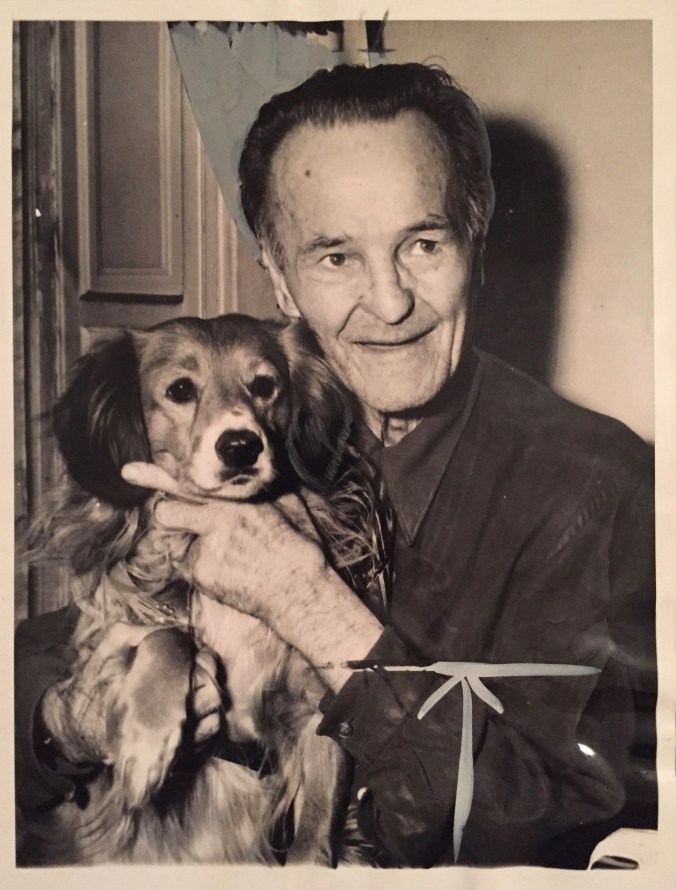
Hegewisch in the 1950s could be described as a growing, but still insulated small town. The community added nearly 1,800 new total residents to reach a population of 8,936 residents by 1960, a 25% increase over the 1950 total. While the numbers do not suggest the same explosive growth witnessed by some neighborhoods and suburbs such as Oak Lawn (which grew by nearly 215 percent between 1950 and 1960), they are significant considering the Hegewisch’s relative isolation. That isolation helped ensure that Hegewisch was far removed the widespread racial tensions gripping parts of Chicago and other American cities. Still, the nearby and also-isolated South Deering experienced turmoil when white residents reacted violently to a black family moving into the community’s publicly-funded Trumbull Park Homes in the mid 1950s. South Deering, unlike Hegewisch, had grown in the 1940s, and continued to grow at slower pace in the 1950s. The incidents occurred just few miles away from Hegewisch, and no matter how isolated the community may have felt, the events certainly occupied a place in the cultural consciousness. And with the positioning of a Nike missile site near Wolf Lake, Cold War anxieties certainly did as well.
Industry and the supporting services thrived in the 1950s. Businesses lined Baltimore and Brandon Avenues, as well as numerous corners at intersections throughout the neighborhood. Industries such as Valley Mould & Iron continued to provided jobs.
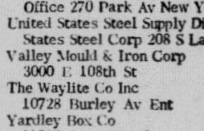
The Ford plant helped meet the increased demand for automobiles coming from across the country as millions of Americans left the central cities for the car-focused suburbs. Republic Steel constructed a seamless tube mill early in the decade, and in 1959 Wisconsin Steel began construction on a new rolling mill.

Courtesy Southeast Chicago Historical Society.
These expansions spurred by strong demand for steel helped ensured that the mills remained stable places of employment for thousands of Southeast Siders. Favorable economic conditions also allowed workers to hold out for better pay and benefits. Accordingly, the United Steelworkers union participated in strikes in 1952, 1955, and 1956, and 1959., the last of which the Tribune noted for its relative calm compared to the violent strikes in past decades.


At the same, General Chemical was doing well.

Source: Industrial & Engineering Chemical Research, December 1947.
All those people working–and aspiring to attain a middle-class lifestyle–meant there was more money for consumer goods like new cars. As a caption reads from “The Story of R.U.B.” in Republic Reports from June 1955, “A busy plant means jobs, pay, and prosperity for employees. Scene showing cars on the Chicago plant parking lot is duplicated in few places outside the U.S.” (Perhaps, the writer’s positive words were an attempt quiet moves toward the strike that would occur in the very next month.) With good growing incomes, many steel mill employees did not need to ride the street car to work; they could instead that their own automobiles.
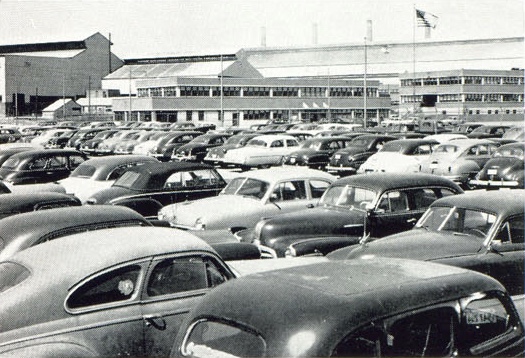
Source: Republic Reports, June 1955. Courtesy Southeast Chicago Historical Society.
There was even more money available for eating outside the home or church. At this time, pizza also started to make its mark on America, including in Hegewisch. In the 1950s, Mama D’s Pizza became a treat for local families and a staple of the business community.

Source: Hammond Times, January 15, 1958.
One could have pizza during a night out at the bowling alley, or with the family after the kids’ baseball game. Hegewisch had transitioned from its early rail- and factory-focused days to one of families, beautiful automobiles, and fun, as seen in footage of the Hegewisch Little League Parade in 1965, uploaded by YouTube user Gerard Dupczak. The American flag, a symbol strengthened by the difficult years of the Depression, World War II, and Korea, flies proudly. The film, taken on a 8mm movie camera, is one of four reels from the 1960s recently uploaded.


Baseball had been a tradition in Hegewisch, going back to at least the town’s first decade, as tracked down by Tony Margis of the Southeast Chicago Historical Society.
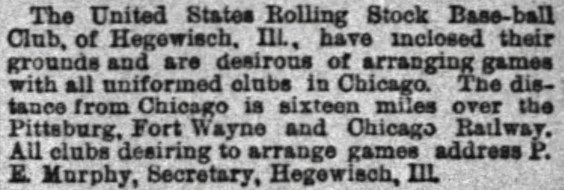
The Hegewisch Grays played teams from a number of nearby cities.
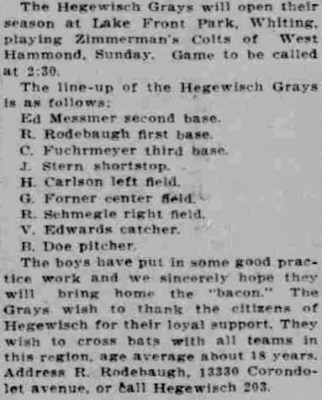
Source: Lake County Times, May 25, 1912.
Softball games were played throughout the region, too.
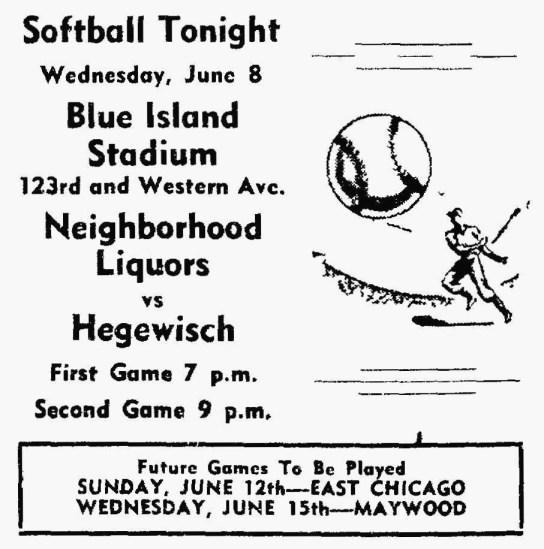
Source: South End Reporter, June 8, 1949.
In Hegewisch, the beginning of the baseball season was a big deal the children in the community. We would later meet someone who sponsors the league and rides in these parades today. No doubt he was part of these parades as a kid, too. did so as a kid, too.
Dress up day around 1964 brought children and their parents out to the local park, Mann Park, for some family fun. There was likely little attempt to accurately honor Potawatomi history and culture, but the 8mm footage uploaded by Gerard Dupczak is nonetheless a beautiful reflection of the era’s pop culture.


More than anything, it shows a typical American small town of the era, not a gritty urban neighborhood or toxic industrial wasteland. While most in the film likely had a home cooked meal that night, surely at least one family wanted to keep the fun going and made a trip to Mama D’s for some pizza.
But by the mid 1960s, world events called again, and Hegewisch sent many young men to fight in Vietnam. Some didn’t make it home. Carmel B. Harvey, Jr., a 1965 graduate of Washington High School whose family lived at the far southern corner of Hegewisch (right by the lumber yard and across from the depot), posthumously received the Medal of Honor for his heroism.
Over the next few years, Hegewisch would send many more young men to the other side of the world. Like Battling Nelson, many of them would not forget the little community on the edge of Chicago. Just like this guy.

He seems like he’d be into pizza, too.

More on him later.
By 1970, the community’s population grew to 11,345 residents, a 27 percent increase over the previous decade. All of this occurred as some neighborhoods in Chicago began to witness huge population losses. While the Second City made its slide to number three in the country in total number of residents in 1980, Hegewisch witnessed some of its most active days, even peaking in population at 11,572 residents. Concurrently, the community’s percentage of foreign-born residents hit an all-time low: 8.3%, significantly lower than the percentage in 1930, which stood at 32.3% of the neighborhood’s population. Hegewisch changed a lot in nearly 100 years.
✶ ✶ ✶ ✶
Today, when you cross those railroad tracks on 133rd Street, you still get that feeling of a classic American small town: single-family homes, and a few two-family ones, with lawns and fences; compact architectural development; a main street (or two) with mom and pop shops, banks, taverns, churches, and restaurants. Despite picking up for a couple of hours around quitting time, the streets have a noticeable quiet. You get the feeling, as many observers have noted, that it is a sleepy community in somewhere in nearby Indiana rather the crowded, bustling city of Chicago . It may have had suburban-like growth in the ’50s, ’60s, and 70’s, but its geographic isolation helped to continue to defining the community as an independent town, rather than an appendage of larger city, just as it had for decades.
In other ways, it doesn’t feel like a small town at all. For instance, there wasn’t just a tavern or two. South Chicago, Slag Valley, and the East Side all have a number of bars, but the proportion seems even greater in Hegewisch. Hegewisch only has about seven or so now, but that’s still high number for a small town, and there are remnants of taverns all over the neighborhood. Was this what the rest of Chicago used to be like?
Furthermore, in this older part of the neighborhood, you can find older two-flat frame houses similar to those in many other parts of Chicago, most located quite close the street. Hegewisch, after all, has two streets lined with businesses, along with corner businesses spaced throughout the neighborhood, just like many other parts of Chicago. Furthermore, some businesses are adorned with Polish surnames like Aniol, Sadowski, and Opyt, while a few newer businesses have names spelled out fully in Spanish.
This dynamic, noticed by other observers, can make outsiders like us very curious. What is this place anyway? Maybe it’s not really strange at all that Hegewisch was also the home of Eugene Izzi, a former steelworker turned crime fiction writer who painted a picture of his upbringing as one full of danger and dread, while also a place where others openly disputed such characterizations, suggesting that growing up in Hegewisch was purely idyllic. Mystery writer Sara Paretsky found somewhat of a middle ground when she gave the heroine of novels, private investigator V.I. Warshawski, a background of growing up in Hegewisch that helped shape her identity. Izzi, however, held on to his negative opinion of the neighborhood (somewhat justified, as his father, who had mob connections and served time in jail, left young Eugene, his mother, and his sisters to be ostracized by some residents) until his mysterious death in 1996.
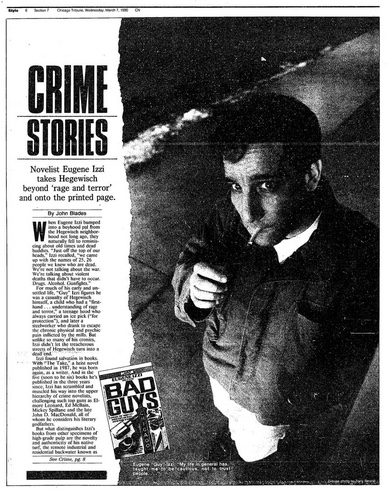
Source: Chicago Tribune, March 7, 1990.
One of the main commercial streets in Hegewisch is Brandon Avenue. It is narrower than the primary commercial street, Baltimore Avenue, and today has fewer storefront businesses and quite a few more houses. A street car ran along Brandon from South Chicago, which likely contributed to the business development there. Street car lines connected Hegewisch to essential workplaces such as Republic Steel to the north and Pressed Steel just to the southwest. Here’s a great photograph from the 1940s of the Brandon-Brainard line as it passes the original Lebanon Lutheran Church, now demolished, at the corner of 132nd and Brandon.
A block south at the corner of 133rd and South Brandon Avenue, we passed the first of several taverns in the neighborhood. The Beacon has been around since at least the 1940s, and the location has been home to a tavern for even longer. As recently as 2012, it opened at 7 a.m. every morning for customers who had just finished work on the overnight shift.
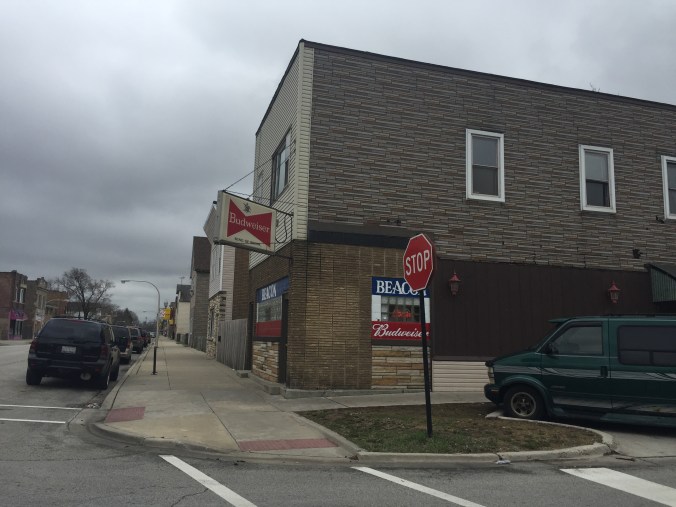
This intersection around 1900, looking west on 133rd, with a few police officers standing in front of today’s Beacon Tavern at left.
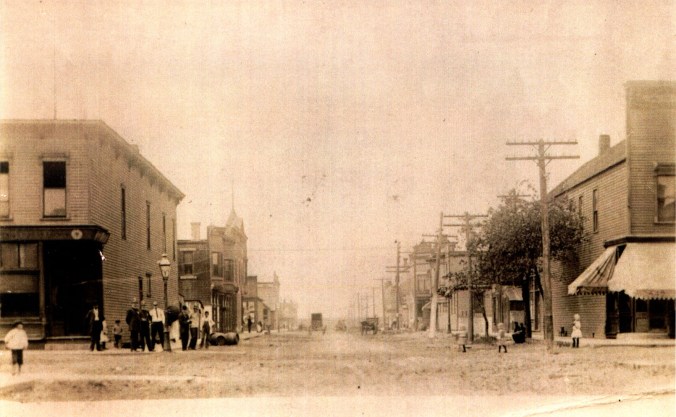
Courtesy Southeast Chicago Historical Society.
Just across 133rd Street from the Beacon Tavern, the former Hegewisch Pharmacy stands with what remains of its beautiful Vitrolite tiles. The community’s name is displayed in a dreamy typeface that looks like it could be spread across the front of a favorite local baseball team’s jersey. Pure Americana.
Heading south on Brandon Avenue, Taqueria El Taquin reflects the growing Hispanic community in Hegewisch. Another Mexican restaurant, Los Cantaritos, is located on Baltimore Avenue.
Mexicans lived in Hegewisch for decades, however, though for many years in small numbers. Mexicans and other Latin American countries faced little and if any legal restrictions from immigration acts of the 1920s, which severely curtailed immigration from Southern and Eastern Europe. During the Steel Strike of 1919, Mexicans and African Americans were recruited by steel companies to fill the resulting demand for labor. Most Mexicans settled in parts of the Southeast Side nearest to the steel mills, such as the Bush next to South Works in South Chicago and the Irondale section next to Wisconsin Steel in South Deering. Some, though fewer, Mexicans settled in Hegewisch and traveled from there to the mills, as did this group of boarders at 13511 Avenue K in 1930. Most of them did not speak any English, but almost all were listed as “Yes” to the question of whether or not they were able to read and write in their own language, which was Spanish. Two Polish men also lived at the residence. One worked in a car factory, while the other worked at the grain elevators located north of Hegewisch near Republic Steel.


Continuing south on Brandon, the aqua blue painted brick of 7 Seas Pet Care Center sticks out gloriously on a street full of muted colors. In business since 1970, 7 Seas started as fish store, then expanded to a wider range of services.

Right next to the 7 Seas building, at 13315 South Brandon, once stood the original home Hegewisch Records, the famed, and now-defunct local music chain. Joseph G. Sotiros started the business as Hegewisch Discount in 1967.

Source: Chicago Tribune, March 18, 1970.
In 1974, the business moved to Calumet City and by then it was known as Hegewisch Discount Records & Tapes.

Source: Chicago’s Extinct Businesses.
By the late 1970s, Hegewisch Records & Tapes had multiple suburban Chicago and Northwest Indiana locations, but the namesake store in Hegewisch was gone.

Source: Blue Island Standard, September 29, 1977.
Nevertheless, Hegewisch Records introduced countless suburbanites to the newest and best rock music for decades.
Most buildings in neighborhood are one or two stories tall, with a few at two-and-a-half stories. The Hegewisch State Bank building stands at the corner of Brandon and 134th Street. Apparently constructed in 1923, despite the “Founded A.D. 1919” inscription, the Hegewisch State Bank failed in 1931 during the Depression.
After the bank’s closure, a building and loan association that operated there, providing home loans for residents of Hegewisch.
By the 1950s, the impressive building housed Blondie’s Lounge, another one of Hegewisch’s many taverns. According one guy who knew Blondie well–we’ll meet him later–the bank’s counter was used as the bar. Blondie’s advertised menu went beyond steak and chicken to include pierogi, which reflected the large Eastern European (particularly Polish) population of Hegewisch, and frog legs, which reflected the wetlands surrounding Hegwisch. The location served as a tavern under a different name up until just a few years ago, as well. And we believe Bat Nelson’s house still stands right across 134th Street.
And Blondie and Ace must have been a little miffed at the newspaper ad men: they got the address wrong! It should have been listed as 13358 Brandon Ave. But we won’t challenge the Hegewisch (and not Chicago), Ill. designation.

Source: Hammond Times, May 10, 1957.
A few doors down and across the street, Hegewisch Cycle & Hobby at 13403 South Brandon Avenue. There are still model old cars in the window, but we’ve noticed the sign falling from neglect over the last few years.

Another visible reminder of the Hegewisch’s big city connection is the official Chicago flag that flies proudly outside of the firehouse for Engine 97 at 13359 South Burley Avenue, a block east of Brandon. In 1888, the newspaper reported that a new “engine house and police station” had been constructed, and it was “neat-looking brick structure of two stories,” likely referring to this building. (Chicago Tribune, Aug. 19, 1888)
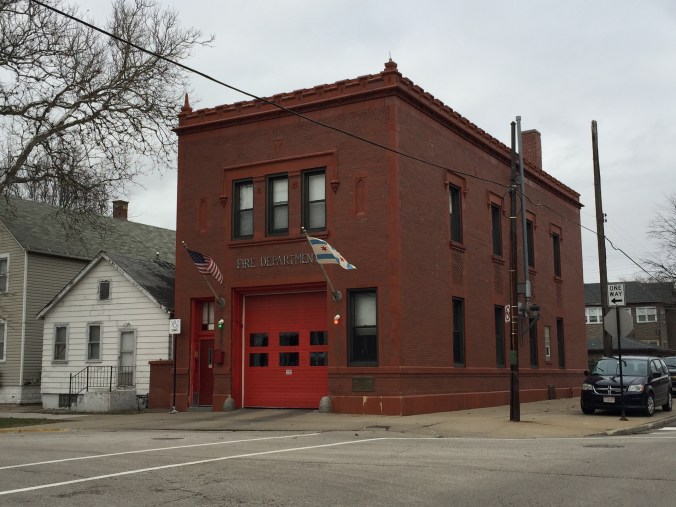
Further highlighting the neighborhood’s disconnection from the rest of Chicago, the Hegewisch fire department apparently was the last in the city to use horse-drawn wagons.
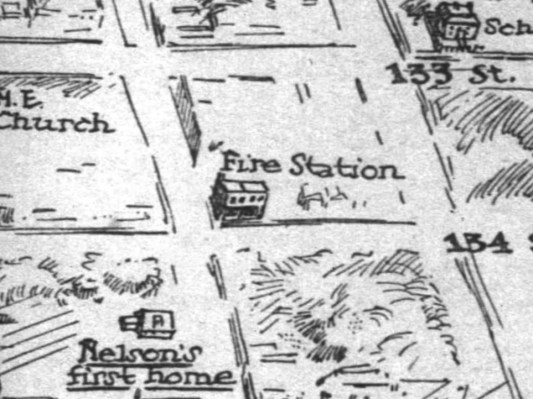
Worker cottages and bungalows dominate much of Hegewisch, but the neighborhood contains a wide variety of housing.
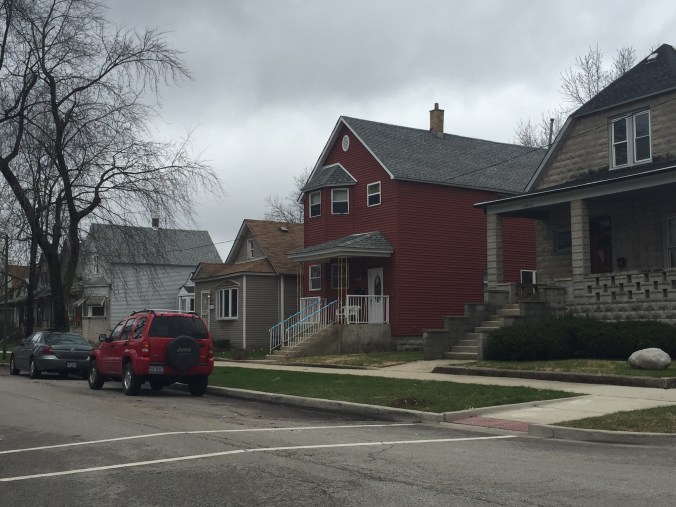
This storefront at 13248 South Houston Avenue appears, based on its design, to have originally used as a residence, though we can’t be sure. Today, its Robert L. Ray’s Hair Salon, a barbershop located in the middle of the neighborhood.

Across Chicago and, in particular, on the North Side, redevelopment increasingly threatens worker cottages, a defining housing type of the city, with extinction. Many remain in Hegewisch, like this one that displays a “Proud Union Home” sign. Despite their widespread decline across the United States, unions, if front yard signs are to be believed, are still alive in Hegewisch.
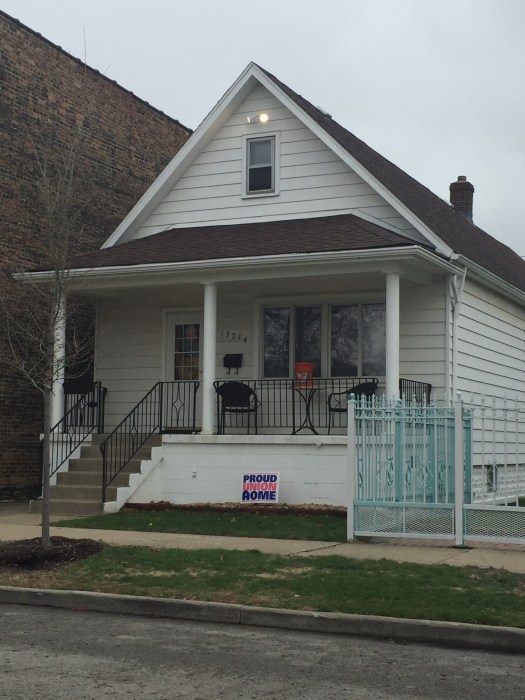
This two-half and a half story home boasts gray asphalt siding, something that is not uncommon in Chicago.

In the early twentieth century, lots were still being filled in. That said, Hegewisch looks fairly similar to this photograph today.
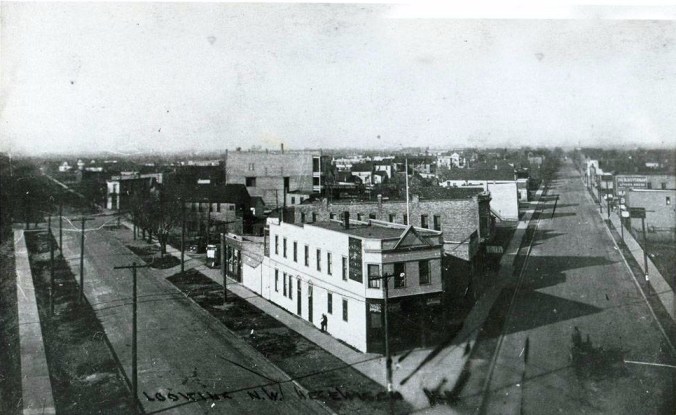
Early twentieth century view of Hegewisch at the intersection of Brainard and Brandon. Courtesy Southeast Chicago Historical Society.
The intersection of Brandon and 135th Street, looking north, today.
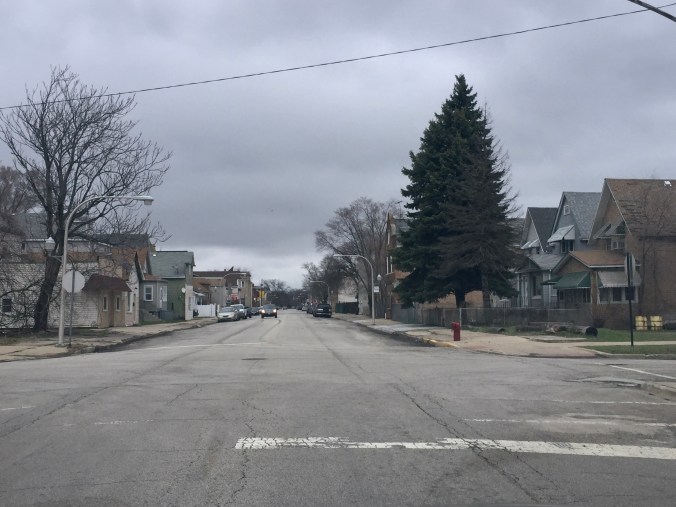
On Brainard, we are reminded that the railroads helped build Hegewisch, making it an ideal place for the location of the U.S. Rolling Stock Company. It has also provided a connection to downtown Chicago, which connects to the rest of the country. The cars produced there were sent on the rail lines that surrounded the community to destinations across the continent. Without railroads, Hegewisch as it is today would likely not exist.
The South Shore Line has served the Hegewisch community for decades, connecting the community to the Loop, as well as parts of Northwest Indiana as far away as South Bend.

Source: Riverdale Pointer, October 3, 1963.
The station stands in the shadows of the old Pressed Steel site. The Hegewisch commuter train station located on Brainard Avenue includes a large lot where workers from Hegewisch and surrounding communities park their cars then ride to their jobs in other parts of the city and region.

One can still take the train north to the Hawks game, too.

Source: Hammond Times, January 15, 1958.
Since the town’s founding, the blue collar heritage of Hegewisch has contributed to the widespread of integration of taverns in the community. Many others have closed in recent decades, but taverns such as South Shore Inn, run by the Ubik family since 1921, remain in business. It makes sense that it is located on Brainard Avenue very near the old Pressed Steel site, where workers could effectively walk across the street before or after a shift. Apparently, Eugene Izzi used to be a regular, stating that the South Shore Inn was where “I did 80 percent of my drinking.”
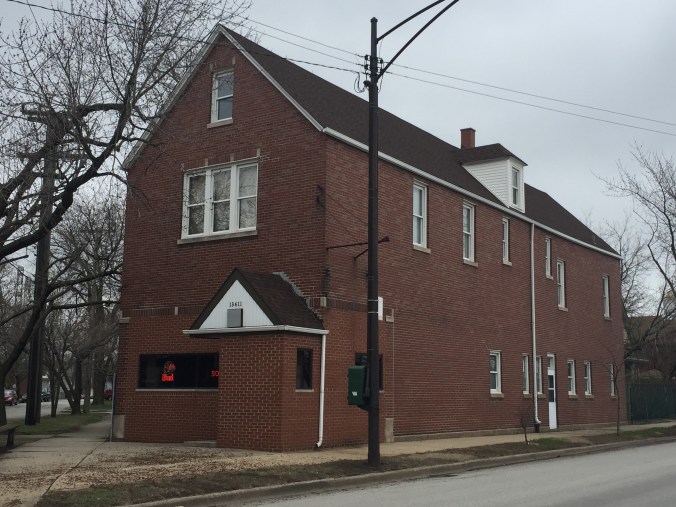
Assumption Greek Orthodox Church, located at 13631 South Brainard, highlights the ethnic and religious diversity of Hegewisch since the community’s founding. The church was founded in 1926.
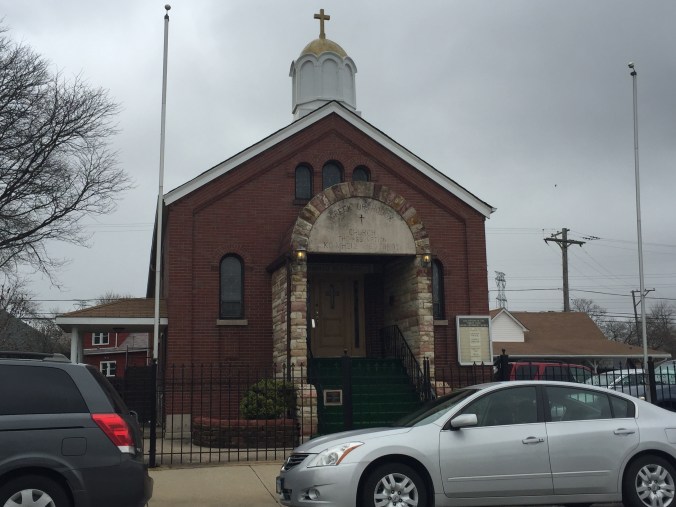
One of the more curious businesses in Hegewisch is the Calumet Harbor Lumber Company. Located on Brainard Avenue at the southern end of the neighborhood, just steps from the site of the old Ryan Car Company works, Calumet Harbor Lumber operates as the only remaining sawmill in the city of Chicago. Opened in 1922 by northern Indiana “pioneer” John Beckman as Hegewisch Lumber and Supply, a company focusing on lumber cut locally in Northwest Indiana and areas south of Chicago, it has been run by the Beckmann family, now on its fourth generation, ever since. The Chicago Tribune stated that the business was a “Loner” and the “Last of 50 of Once in Chicago”. . .in 1964!
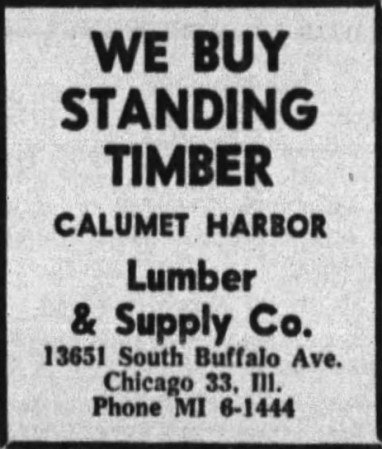
Source: Decatur Daily Chronicle, December 19, 1962.
In many ways, Chicago’s former place as the lumber capital of America has been forgotten. Standardized lumber dimensions such as the two-by-four grew immensely popular in the early decades of the twentieth century as the balloon frame house, a Chicago-based invention, became a dominant housing construction in Chicago and in many cities across the country. (See William Cronon’s Nature’s Metropolis: Chicago and the Great West for great info on how Chicago merchants harnessed the environment–including trees–to build the city and country we know today.)
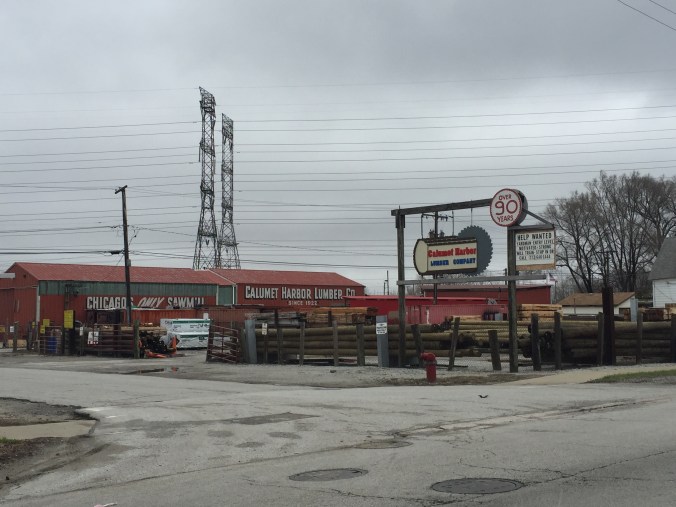
Today, Calumet Harbor Lumber thrives as specialized business, and serves as yet another unique facet of Hegewisch’s culture.
✶ ✶ ✶ ✶
Like many areas of Chicago with a historically-industrialized workforce, Hegewisch had a large number of foreign-born residents or were first-generation Americans. In 1930, 2,552, or 32.3 percent, of Hegewisch’s 7,890 residents, were foreign-born. While other, larger neighborhoods boasted higher raw numbers, only six of the 76 other community areas had higher foreign-born percentages. And like industrial communities such as the stockyards area around Bridgeport and Back of the Yards, Hegewisch was once populated by many people who either came from or possessed Eastern European heritage, and in particular, Polish heritage.
Overall, Chicago has historically housed a huge Polish American community. Poles came to Hegewisch not long after it was founded, but settled there in larger numbers in the first decades of the twentieth century. While not as huge in numbers as Polish communities in other parts of the city such as neighborhoods on the near Northwest and Southwest Sides, the percentage of residents in Hegewisch claiming Polish heritage was substantial.

It was not uncommon to see census listings such as this, as from part of the 13500 block of Brandon in 1930, where most residents are immigrants from Poland or children of Polish immigrants, while living near residents who came from other countries.
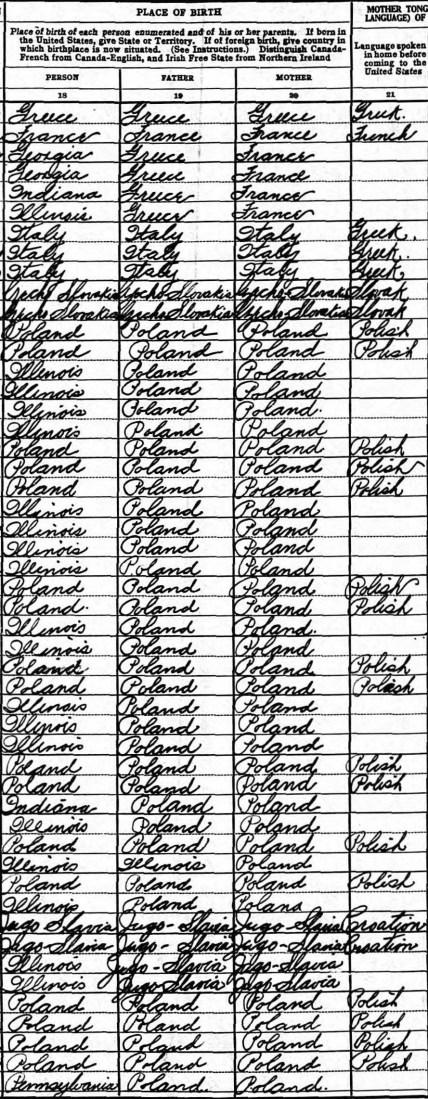
This was common even on the other side of town, as for instance on this section of Avenue M. Is this St. Columba parish?
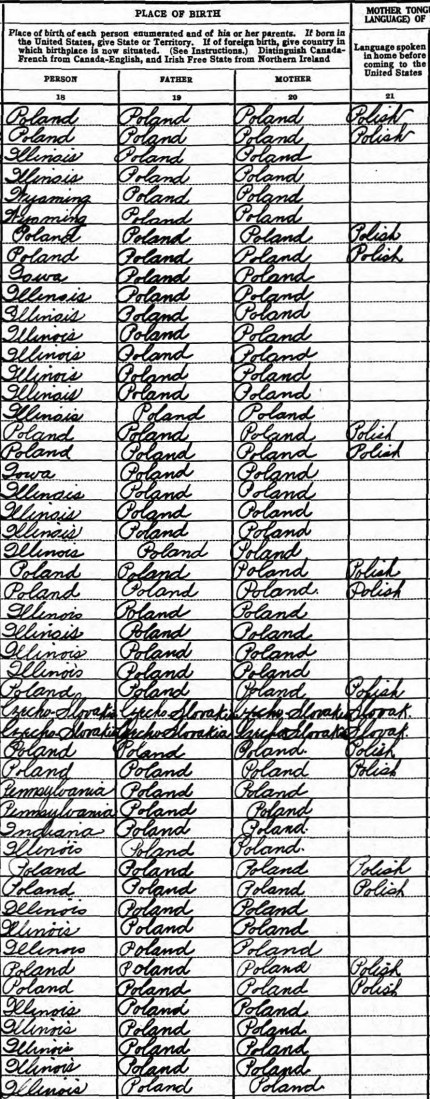
St. Columba was the first Catholic church in Hegewisch in 1884, as a mission of South Deering parish St. Kevin’s. But as the Polish community grew, it looked for a place of its own to worship. Under the direction of St. Columba pastor Father Florian Chodniewicz, St. Florian Catholic Church, opened in its original frame structure in 1905. For many years, a tavern, at one time named Kurnik’s, run by Stanley and Walter Kurnik, stood across the street.
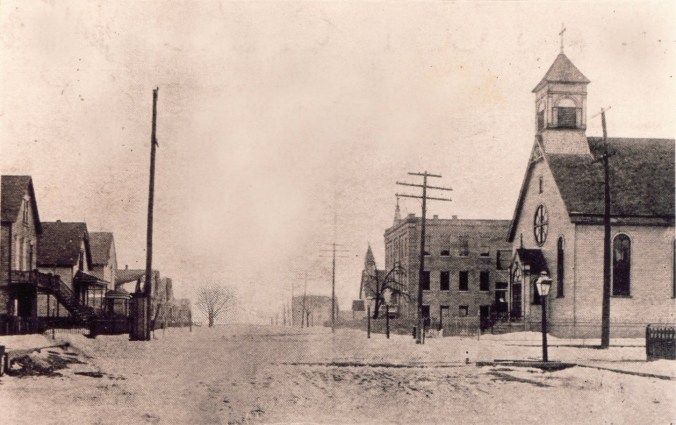
Houston Avenue, looking north, at 132nd Street, with the old St. Florian Catholic Church and school at right. Courtesy Southeast Chicago Historical Society.
Chodniewicz led St. Florian’s for 22 years until his death after being shot by a burglar.

Source: Lake County Times, April 8, 1922.
A much-larger brick structure, the current St. Florian building, replaced the original church in 1927 under the direction of Father Vincent Nowicki. One parishioner claimed that it was the “only church in the world where you don’t have to step up or step down. There’s no steps. You just wheel the coffins straight. Let me tell you that’s good when you’re a pall bearer.” We’re pretty sure that assessment isn’t quite accurate, but if you lived in small a community like Hegewisch all your life, no doubt that type of lore becomes believable and something to be proud of. Showing the diversity of the Polish settlement in Hegewisch, the much smaller St. Hedwig Polish Catholic National Church was founded in 1940 serving that denomination.
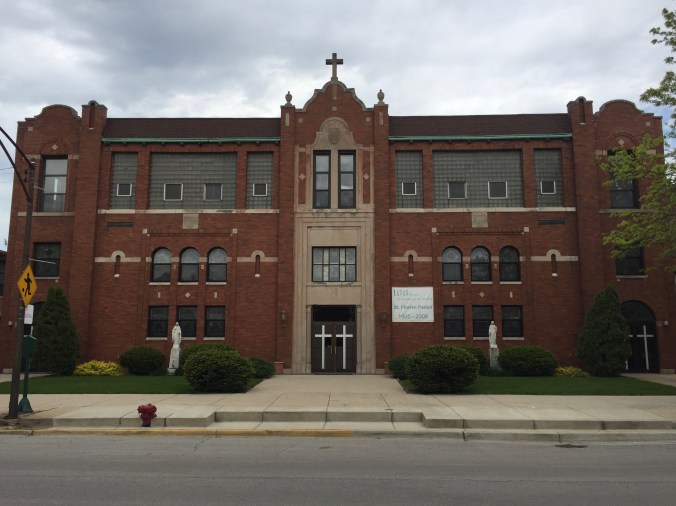
St. Florian today takes up a whole city block. The size of the complex was typical of Catholic parishes in Polish communities across Chicago.
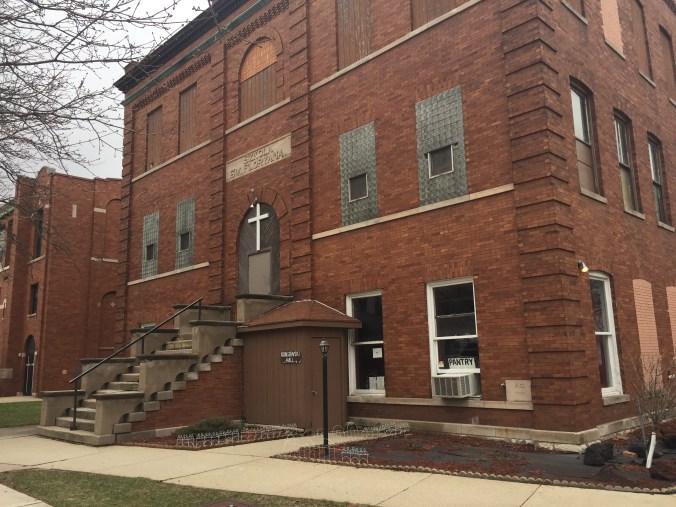
Almost all had elementary schools, and some had secondary schools. Schools reinforced not only religious identity, but also Polish ethnic identity within a world that encouraged assimilation, particularly after the quota-based immigration acts of early 1920s. The original elementary school building, constructed in 1907, is known as Konsowski Hall, named after Father Chester Konsowski. As a report for the National Historic Register stated, “Each parish sponsored hundreds of parish fraternal groups and societies ranging from choirs, and literary and dramatic circles to athletic teams.”
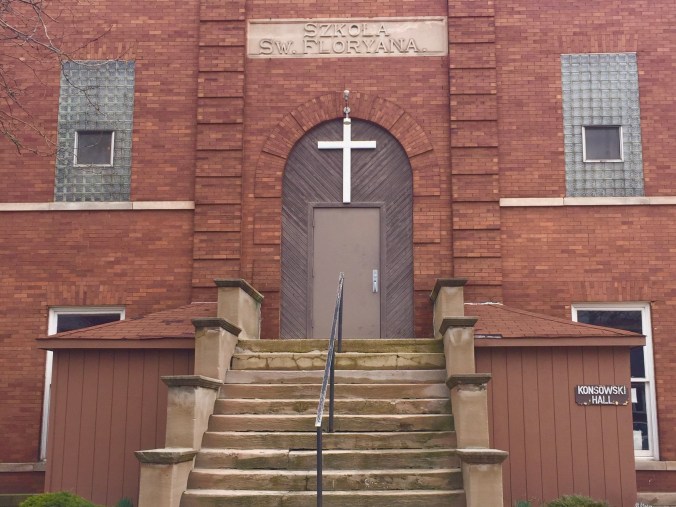
“The Polish clergy and religious orders of women ran hospitals, orphanages, residences for the elderly, and various social welfare agencies. With four Polish cemeteries just outside the city limits, it was said that Chicago Poles were provided with services from ‘cradle to grave.'” (See Ethnic (European) Historic Settlement in the City of Chicago (1860-1930))
Father Francis A. Kulinski served as pastor of St. Florian from 1934 to 1963. Kulinski, the longest serving leader in parish history, was one of only nine total pastors at St. Florian throughout its history. Most In a 1978 profile of Hegewisch in the Tribune, a local resident said of Kulinski, “I’m telling you, during Prohibition he used to hit the gin mills–he knew them all–and he’d break down doors, whip off the collar, and beat the hell out of anyone in there. Used to say you had to be in church.” We’re not sure if this occurred around Hegewisch (Prohibition ended in 1933, and Kulinski didn’t become pastor until 1934), or if its even true. Still, the point was made: you had better listen to Father Kulinski.

Home movie footage taken just months before his death captured his “golden jubilee,” which may have been for his 30 years a the parish’s pastor, or his 50th year as a priest. Kulinski, who served as an chaplain in the Army during World War I, organized food and clothing drives for American soldiers and Polish refugees during the Second World War. He also oversaw the construction of the parish gymnasium, which was completed in 1954.
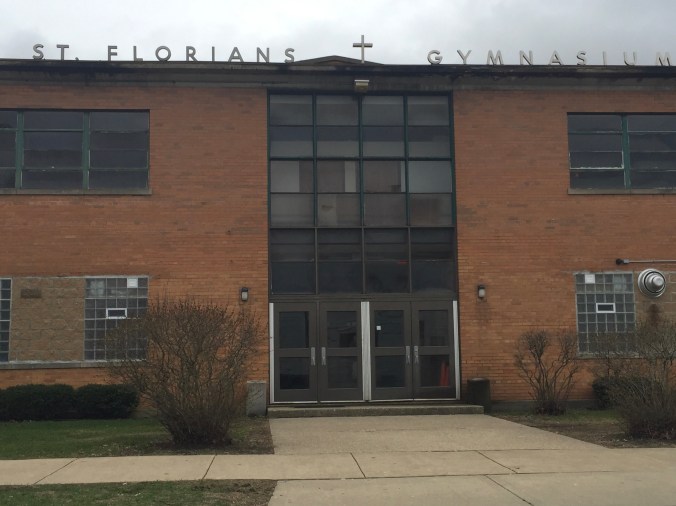
The anniversary celebration was attended by Chicago Archbishop Albert Meyer.


The beautiful footage, uploaded by Gerard Dupczak, includes many members of the community, as well as the St. Florian buildings in the background.
Sadowski Funeral Home, formerly Joseph’s Memorial Chapel, and later Lesniak Funeral Home, at the corner of 133rd and South Houston Avenue, is located about a block and a half south of St. Florian.
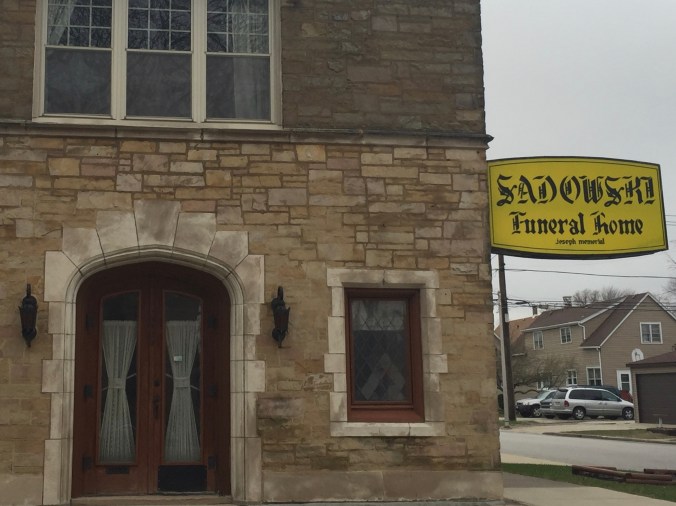
Directly across 133rd Street stand a building that was once a tavern, and across Houston there’s a building that, based on its design, was likely a tavern. It makes sense, because in between the cradle and the grave you had to have some fun.
You could even have a good time on church grounds. (And we’re pretty sure there used a be a tavern across the street from the auditorium if you needed to step out for a drink or two.) Mickey Isley and his band played throughout Northwest Indiana and across the state line in Illinois. Like many people in the region, he was also a steelworker, spending thirty years at U.S. Steel’s Gary Works, so he knew his audience well.
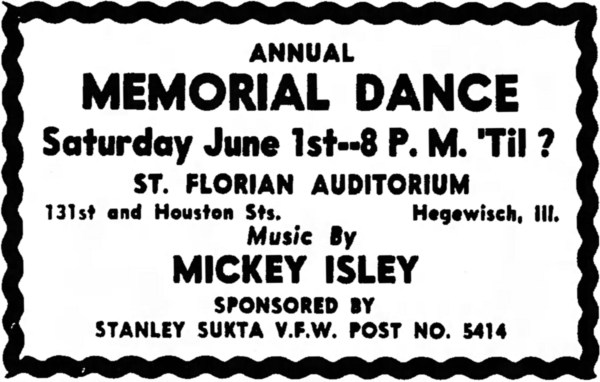
Source: Hammond Times, May 31, 1957.
A contemporary account highlighted the prominence of celebration in daily life in Hegewisch. The Hammond Times profile of Hegewisch in 1940 described Hegewisch as “a community comprised mainly of foreign-born individuals, about 50 per cent of whom are of Polish descent, wherein sociability and friendliness go merrily hand in hand; wherein dancing is their joyous pastime, and gay wedding parties, stork showers, and birthday celebrations are every-week occurrences with the attendance figures invariably large.”
Houses across the street from St. Florian’s are mostly modest one-and-a-half story worker cottages and bungalows. Many parishioners lived nearby.

There were good memories for one woman on this street, the same street as her parish, St. Florian. She lived about a block south, and her father owned Ted’s Tavern on 13200 block (another tavern roughly across the street from Sadowski Funeral Home) from the 1940s to the 1970s. Ted’s was known for its fried fish. She remembered attending mass for Christmas, and later dinner included Polish sausage, pierogi, and mashed potatoes. This is just one story, but there are no doubt similar memories held by many people in the community.
These were, after all, common customs for a neighborhood with one of the highest percentages of Polish-born residents, not to mention their American-born children and grandchildren.
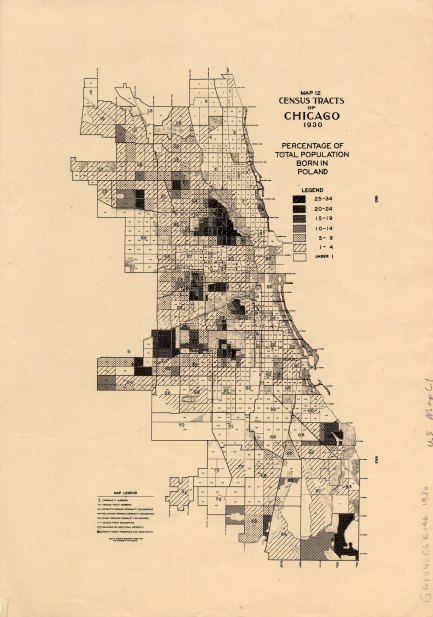
Music was an essential part of the fun. If you really wanted to have a good time, polka was it!
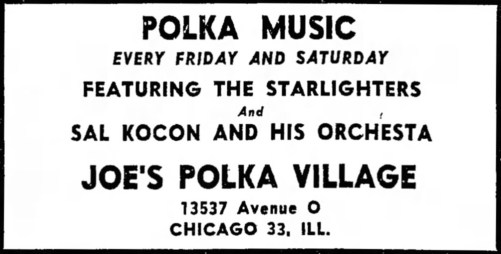
Source: Hammond Times, January 17, 1958.
And Hegewisch was a polka-loving neighborhood. While it did not sport the density of taverns, clubs, restaurants, and recording studios that a few other neighborhoods–South Side neighborhoods such South Lawndale, Archer Heights, and Brighton Park, as well as the traditional Polish Downtown on North Side in the West Town area–there were a number places one could go polka dancing on a regular basis. One polka club in Hegewisch was Joe and Jean’s Lounge, founded by Jean Salomon and her husband. Jean, whose parents had immigrated from Poland to Wisconsin then moved to Hegewisch to work in the steel mills, had been studying to be a nun when she met her future husband, Joe, a local steelworker (the 1940 census lists him as a trimmer in an auto factory; his brother was a laborer for the WPA, his sister a hotel maid, and his father a riveter at one of the car shops). They opened there lounge featuring live polka shows in 1949, later moving it first to Burnham then to Chicago’s Gage Park neighborhood.
Source: 1964 International Polka Convention Program, via Forgotten Buffalo.
Jean would later co-found the International Polka Association and serve as the first chairwoman of the Polka Hall of Fall and Museum.
Source: 1964 International Polka Convention Program, via Forgotten Buffalo.
Again, the neighborhood had at one of the highest percentages of Polish residents in the city. South Chicago itself was a Polish colony beginning in the 1880s and boasted four Polish Catholic churches by 1928 (Ernie and I had passed one, St. Michael the Archangel, on our way to Hegewisch). As that community grew larger, Polish residents moved to areas such as West Pullman and Hegewisch. The smaller Hegewisch, almost a satellite of South Chicago, soon developed a large Polish community of its own, in part to due to the industrial jobs available there. Just as the neighborhood’s physical distance from the other Polish and Eastern European communities in Chicago promoted the creation local social and religious institutions such as churches, that distance no doubt encouraged the creation of a locally-supported polka “scene.” Isolation, too, encouraged residents to look inward, and likely helped the culture thrive on its own within the borders of the community. All the while residents of Hegewisch were connected south- and eastward to other polka-loving communities just over the city limits like Calumet City and Burnham, across the state line in Northwest Indiana, in places like Hammond, where one could get their polka fix. At places like Eddie’s Crystal Tap, young folks from nearby places like Hegewisch and South Chicago meet their lifelong polka dancing partners, which included a wedding at St. Florian’s, of course.


To get to the real party place in Hegewisch, we had to head a few blocks south from St. Florian’s to Brainard Avenue. Club 505 , located between Baltimore and Brainard avenues, was the long-running of polka capital of Hegewisch, and one of the longest running polka clubs in the city of Chicago.
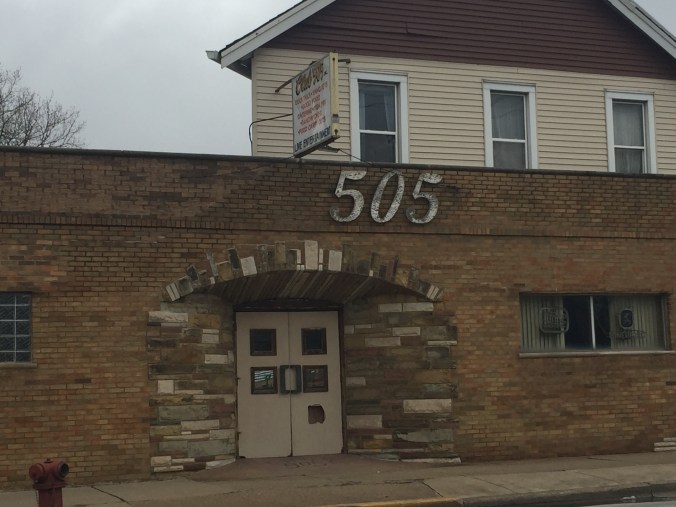
A tavern for several decades prior (owned at one time by Albert Sowa), Club 505 opened in 1946 by Walter and Josephine Mlynarczyk, who with a new addition to the building began hosting live polka shows in 1957.
Source: 1964 International Polka Convention Program, via Forgotten Buffalo.
A nice write-up on Forgotten Buffalo (the Rust Belt takes care of its rusty own) about Club 505 has some great interior photos. Man, we want that jukebox!
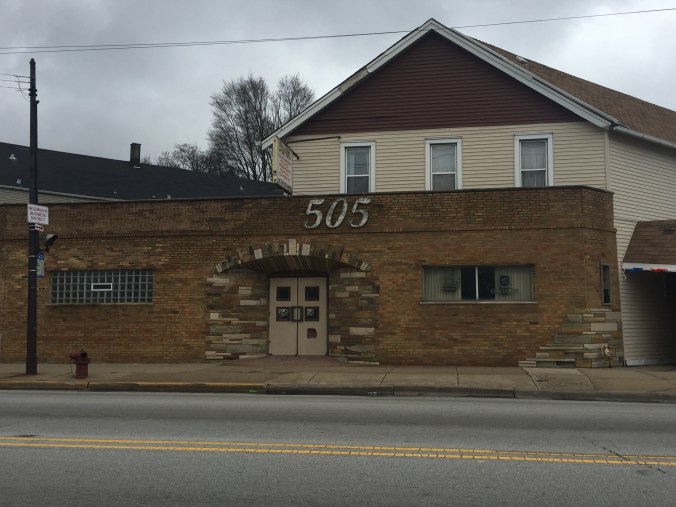
Typical for the area, Club 505 served fried fish. Cocktails, too!
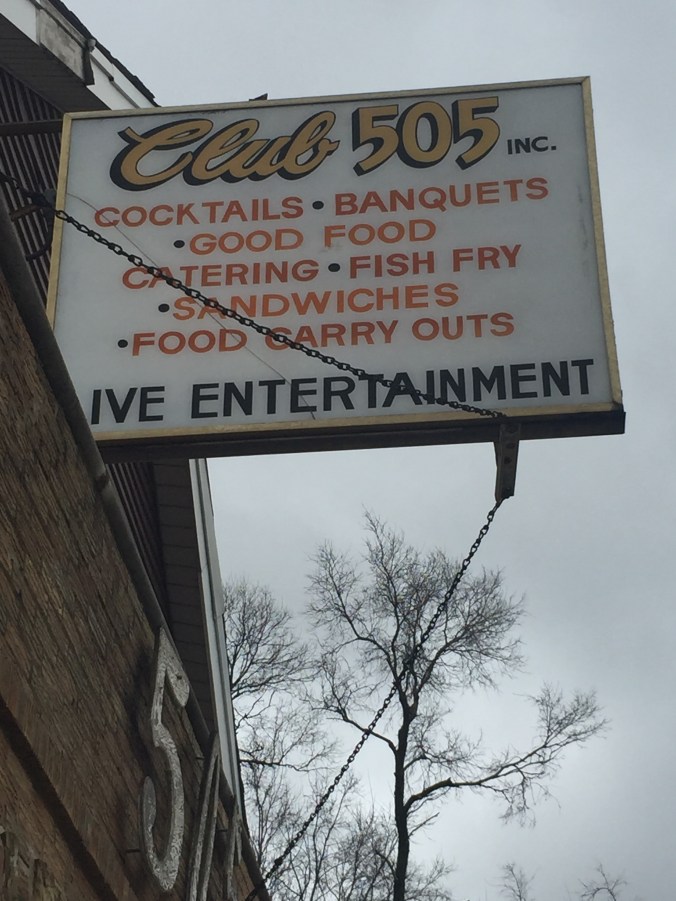
Chicago’s king of polka, and one of the first inductees into the Polka Hall of Fame, Li’l Wally, played there on occasion, as did all-time greats such as Eddie Zima, Li’l Richard, Eddie Blazonczyk’s Versatones, Marion Lush, and many more.
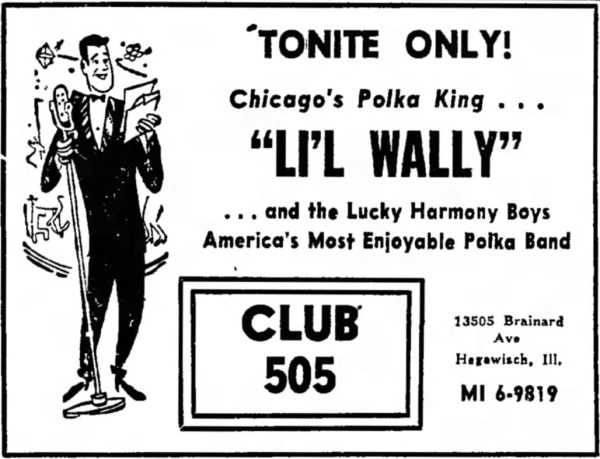
Source: Hammond Times, January 17, 1958.
For 31 years, a weekly show was broadcast from the club via Hammond, Indiana radio station WJOB.
Ernie and I love polka, and it’s such a shame that we never got experience this place.
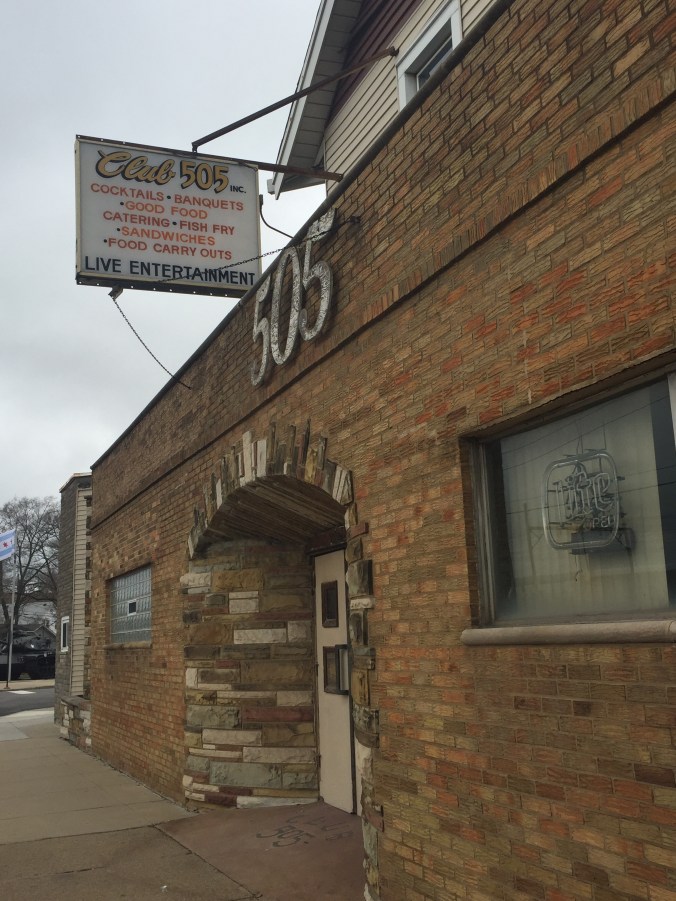
There are another reminders that Hegewisch, despite its strong case for its own identity, is located in Chicago. The old Hot Dog Joe’s was one, which was located next to Club 505 for many years.
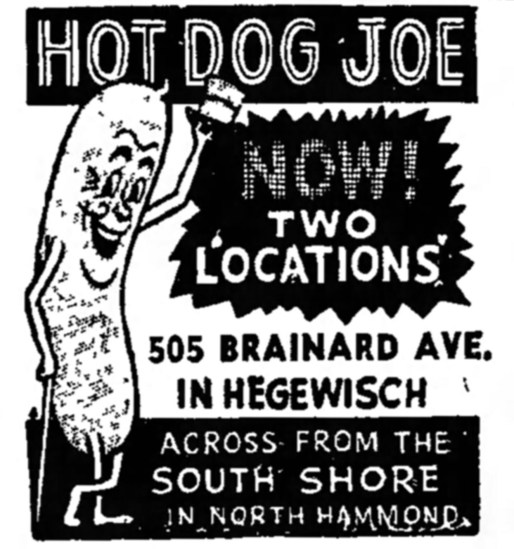
Source: Hammond Times, January 3, 1958.
Today, the building shows the evolution of an American community in the twenty-first century.

Club 505 closed in 2011, further highlighting Chicago’s slowly disappearing polka heritage. Still, the Polish imprint is still evident Hegewisch. Even today, over 23% of its residents claim Polish heritage, the fifth highest neighborhood percentage in the entire city. That number is higher than any group within the neighborhood other than Mexican (42%), reflecting a significant demographic change in Hegewisch in the last two decades. But as the neighborhood’s population percentage becomes more and more Latino–the percentage of foreign-born residents increased from 8.3% in 1980 to 9.1% in 1990, 13.5% in 2000, with a slight drop to 12.7% in 2010–it’s interesting to remember that one variant of polka is Norteno, which can be roughly translated as. . .Mexican polka. Na zdrowie to the possibility that festive music could one day soon flow through Club 505 again.
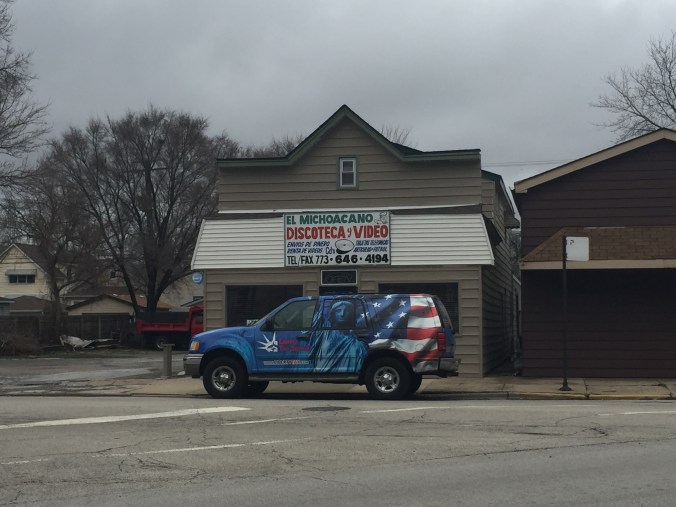
✶ ✶ ✶ ✶
Doubling back to the northern part of central Hegewisch, sometimes called Old Hegewisch, Ernie and I needed some fresh air. So, we took a stroll to enjoy the cool, cloudy day with a walk around Mann Park.
It took some work for this park to appear in its current form. About two decades after the founding of Hegewisch, residents continued pushing for amenities already enjoyed by other Chicago neighborhoods. The tract of land was acquired in 1898, and reportedly as early as 1900 a campaign began to make a park on the site. (Hammond Times, January 5, 1940) So, in 1907, local civic groups lobbied the South Park Commission for a local park. One year later, the commission purchased a 20 acre site between 130th and 132nd streets bounded by Carondolet and Exchange Avenues. The park was known officially as Park Number Nine (though one map from the era listed it as “Park 17”) and more commonly as Hegewisch Park for about a decade and half. In its earliest days, the park hosted football games with opponents coming from across the region.
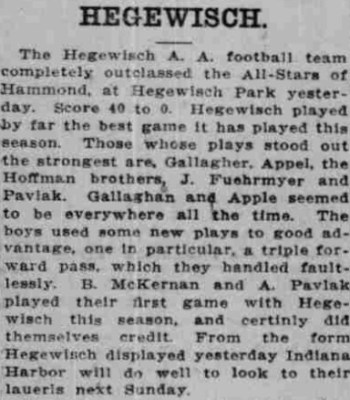
Source: Lake County Times, December 15, 1913.
In 1922, the park received its current name in honor U.S. Representative James R. Mann. Mann, who died in office after serving about 25 years, had previously served as an attorney for the park commission, and is most famous for sponsoring the Mann Act in Congress. The park’s 20 acres include several baseball fields, a football/soccer field, tennis courts, a playground, a harvest garden, and a field house and natatorium.

Proposed as early as 1916 and designed in 1931, the field house was not completed until 1934. The Mann Park Natatorium with its swimming pool was constructed in the late 1950s.
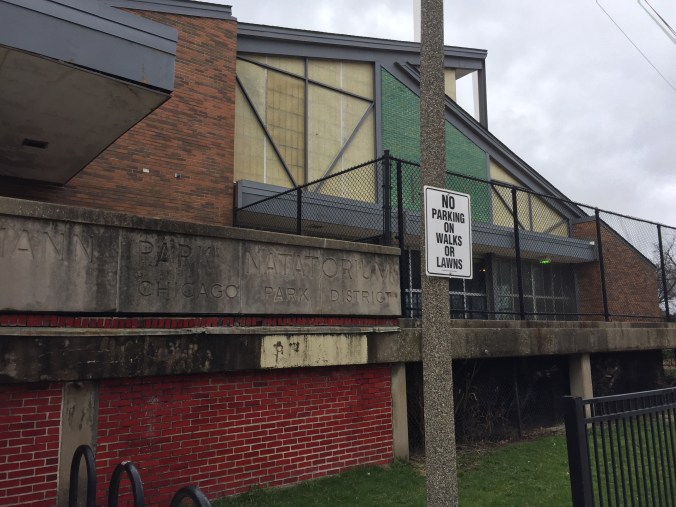
It had been a nice walk, but it was time to get to Pudgy’s!
And to get there, we had to travel just a few blocks down Baltimore Avenue.
While Brandon Avenue has a number of storefronts with active and closed businesses, the wider Baltimore Avenue is home to the primary business district in Hegewisch. Here one can find banks, grocery stores, restaurants, civic organizations, a funeral home, taverns, and more. Starting at 132nd Street heading south, Doreen’s Pizzeria, one of the longstanding pizza options in Hegewisch, is located at 13201 South Baltimore Avenue. Founded by Bob Wisz in 1986, Doreen’s menu states “Voted 1 Pizza on The South Side of chicago.” It is also known by many Chicago supermarket shoppers for their frozen pizza line, which along with Home Run Inn and Connie’s–and don’t forget Gino’s, Vito and Nick’s II, Reggio’s, and Savy’s (the brand named for Blackhawk hockey great Denis Savard), and more helps make a case for Chicago being an amazing frozen pizza market. We had eaten Doreen’s Frozen Pizza several times and enjoyed it, though Home Run Inn was the usual pick. Wisz sold the Doreen’s store in Hegewisch to Bill Delis, who runs it today. There’s also a second location in Dyer, Indiana, and a large part of the customer base is former Hegewisch and East Side residents. It’s a pretty common story in Southeast Chicago for businesses to follow their customers as they move to Northwest Indiana.
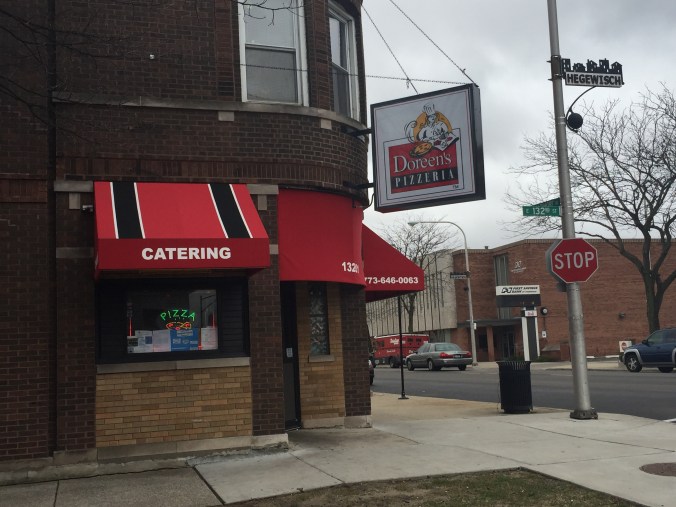
First Savings Bank of Hegewisch is visible down the street, on a large lot that part of which was home to Frank’s in the mid 1960s.
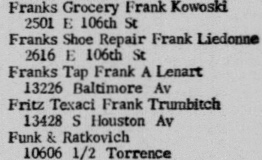
Behind our camera, just across 132nd Street and out of view, there used to be a tavern. Steve’s Lounge, however, is still open for business right across the street.

Hegewisch Fruit Market, formerly Hart’s Food Center, boasts a quaint, mid-century modern design, with some sales advertisements written partially in Spanish.
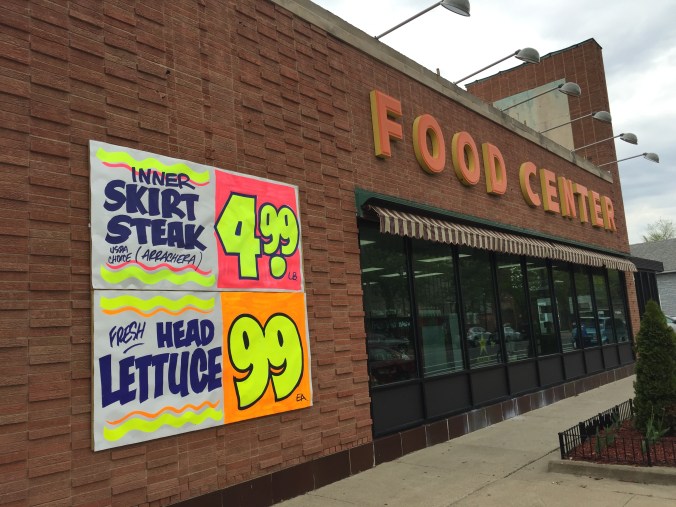
The local post office may list Chicago, but it mentions Hegewisch twice. And emphasis on the Hegewisch name is important. It makes a point that Hegewisch is a distinct place. Before this location was built around 1960, the Hegewisch post office was housed down the street in a building that was the centerpiece of the commercial district.
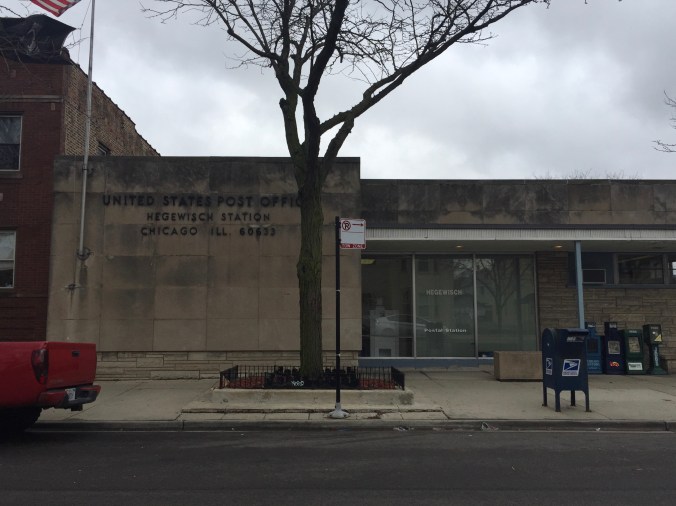
The post office was once located in the turreted, two-plus story building on the left in this undated view of looking south on Erie Avenue, now Baltimore, just north of 133rd Street.

Courtesy Southeast Chicago Historical Society.
A bowling and billiard hall was located in the far left of the photograph, barely visible, in 1912. Billiard halls could be found all over Chicago, and Hegewisch had several well into the 1920s.
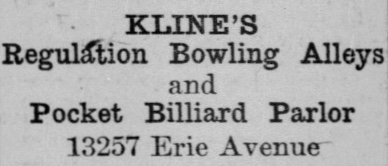
Source: Lake County Times, August 29, 1912.
Today, Old Hegewisch is interspersed with a few vacant lots on which buildings that stood for many years have since been demolished. One notable large lot, located at the southeast corner of Baltimore and 133rd Street, was once the site of the Hegewisch Opera House.
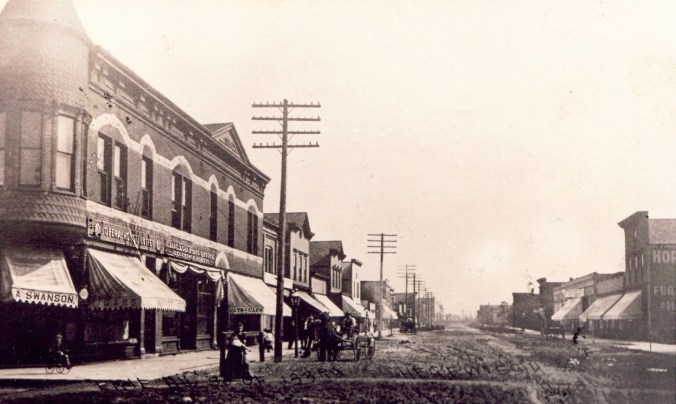
Courtesy Southeast Chicago Historical Society.
Reportedly built, as the a marker atop the building stated, in 1888 (though one source says 1895), one year before Hegewisch was annexed by the city of Chicago, the opera house served as a community meeting space and performance center. Buildings with similar functions were built in small towns and satellite urban neighborhoods across the country in the late nineteenth and early twentieth centuries. Battling Nelson had at least one fight at the opera house (he fought Hegewisch resident and car shop worker Pudden Burns. . .not surprisingly, Pudden lost). The Hegewisch Station post office was located in the building, as was the Opera House Buffet, one of many restaurants and taverns that would eventually occupy the space.
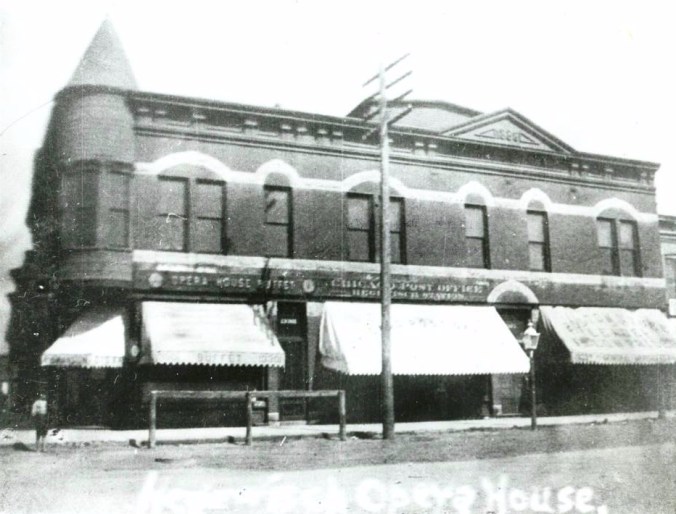
Hegewisch Opera House. Courtesy Southeast Chicago Historical Society.
One of those establishments was Milan’s Snack Shop, operated in the 1950s by Milan Panayotovich and his wife, Mitzi. The business was taken over by Joseph Strazzanti by the end of the decade.
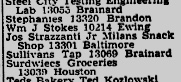
The Panayotoviches then opened a restaurant and pizzeria in the Vet’s Park and Merrionette/Jeffrey Manor section of South Deering. Milan himself would often perform Serbo-Croatian tamburitza music as a vocalist.
In the 2006, a fire that started in Cousins Restaurant consumed much of the building, which was subsequently demolished. Today, there is a noticeable large vacant lot stretches an entire half-block. It appears to be mowed and taken care of, awaiting the hope of redevelopment.
Despite the region’s historical focus on heavy industry that produced dirty environmental factors–including rates of cancer significantly historically and currently higher than most of Chicago and huge number of landfills and dumps–many people in Southeast Chicago are working to make it a cleaner, healthier place to live. This move, in part, coincided with decline of the steel mill industry in the 1980s and 1990s when citizens recognized a future where the lingering quality of life threats caused by those must be reckoned with. In 1992, the Washington Post reported that the “toxic wasteland” of Hegewisch spurred the actions of concerned residents made up from different backgrounds and occupations in a form of “blue-collar environmentalism.” One group actively confront these environmental issues is the Southeast Environmental Task Force, which in recent years has taken on the Koch Brothers Petcoke storage in the area. Part of the Calumet Stewardship Initiative, an coalition of environmentally-focused groups, the task force has an office on Baltimore Avenue at 133rd Street. Hegewisch Marsh, the largest wetland in the city limits, is located just a few blocks to the west across Brainard and Torrence. It’s a beautiful reminder of the region’s natural history; one that also shows the remnants of the area’s heavy industrialization. Pieces of slag, a waste product of steel production, can still be found throughout the marsh.
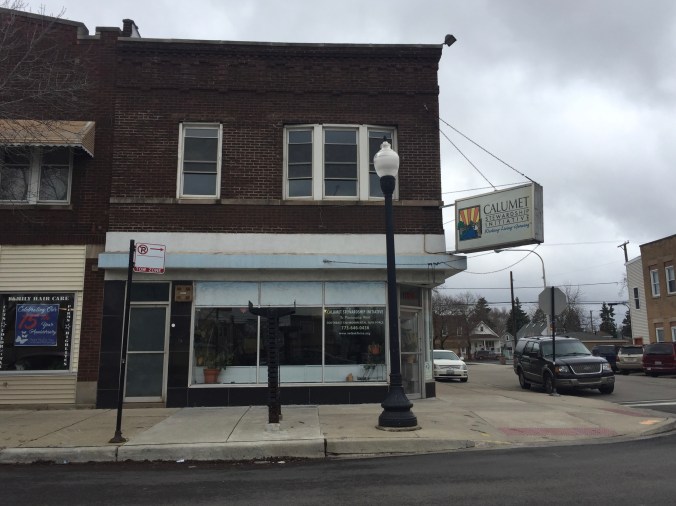
This building for many years was Klucker’s Pharmacy from at least 1920 until at least the early 1980s. Harold Klucker, ran the business for 43 years until 1983.
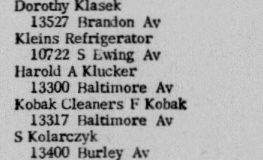
Albert C. Klucker, grandfather of Harold, opened the drugstore just down the block at 13332 Erie Avenue, at what is today a vacant lot next to the Hegewisch Chamber of Commerce.
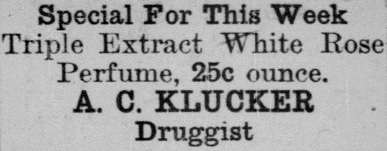
Source: Lake County Times, August 29, 1912.
The chamber’s current building was later home to the Flower Box, operated by Robert Panayotovich, Milan’s brother. Later, the business moved to 13308-10.
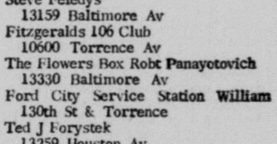
American Legion Fred Schweitzer Post 272 on this block, too, for veterans to enjoy a drink and some comradery. The post was likely named after the Hegewisch resident who lived at 13336 Buffalo Avenue and was killed in action at the slaughter known as the Battle of Verdun in 1918. According to Rod Sellers and Dominic Pacyga’s Chicago’s Southeast Side, numerous veterans organizations were based in the region by the end of World War II, including the Hegewisch Polish Legion of American Veterans Post 44, in the early ’60s met at the Hegewisch Community Center at 13454 Baltimore. In the late ’50s and early ’60s, there was a Legion Tap on Brainard. Was it related to either of these groups?

The American Legion post’s current building, located at 13304 South Baltimore Avenue, at one time was the site of the Inter-State National Bank, founded in 1906. Apparently, the bank constructed a new building at 13310 Baltimore around World War I. One announcement for the building contributed to Hegewisch’s identity crisis.

Source: American Architect and Architecture, Volume 111, 1917.
Inter-State consolidated with the Hegewisch State Bank, located at 134th and Brandon, in 1927. Arcade Hall likely had meeting spaces for local community groups. Apparently, American Legion South Shore Post 388 also currently meets there. We might need someone from Hegewisch to explain the two different posts to us, and why one is named “South Shore.”

Serbian immigrant Sam Panayotovich, father of Milan Panayotovich, operated a confectionery two doors down at 13308 South Baltimore as early as the 1920s. By 1940, the business was listed on the census as a “pool room,” while his World War II draft card lists the business “Hegewisch Bowling Alley.” The birthplace of his wife, Ella, is listed as Austria, though it is just as likely that this refers the Austrian partition of Poland. According to the census both sons in their 20s were employed in a steel mill: Robert was a chipper and Milan, prior to entering the hospitality business, worked as an oiler.


Robert Panayotovich, Sam’s oldest son, later moved his flower and gift shop to the building, where he operated it with his wife, Helen. The Flower Box closed sometime in the early 2000s.
James Hopkinson–the man who was Hegewisch’s oldest resident in 1940–ran a grocery with his wife Maria at 13312 Baltimore, which is today a vacant lot. A few doors down, the Hegewisch Theatre once presented vaudeville shows, and later motion pictures. Though according to the ad, the theater was once located at 13326 Erie Avenue.
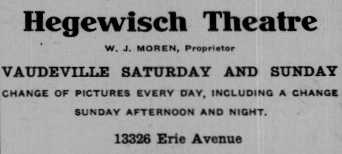
Source: Lake County Times, April 6, 1912.
A reviewer noted that it was a suburban theater in a town several miles from Chicago. It got high marks, too. Good job, Jack Wolfberg!
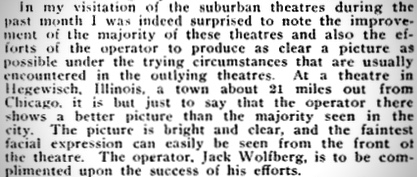
Source: Motion Picture News, January 6, 1912.
By 1917, a grocer was listed at that address, and by the late 1920s, the theater had moved a couple of storefronts north, listed at 13320 Baltimore Avenue, site the well-known white building that bears the theater’s name.The theater operated for decades, and later the building was used for a local organization. Most recently, Monnie D’s Pizza occupied the space adding to Hegewisch’s pizza legacy. We never got a chance to try it, as it closed just recently.
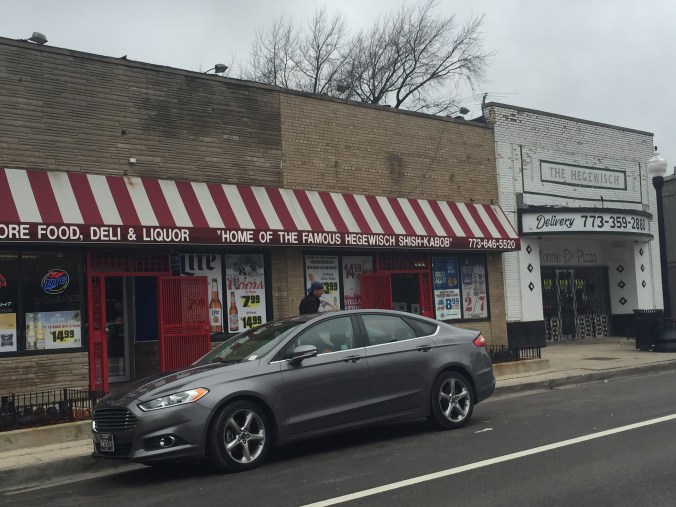
Just next door, Baltimore Foods occupies two connected storefronts at 13322 South Baltimore Avenue. A small market where you buy groceries, wine, and beer, Baltimore Foods also boasts delicious shish-kabobs! (Hey, what’s that thick orange sauce on the counter in containers of various sizes. Sixty-nine cents? Sure, we’ll take some.)
Way back in 1912, the two adjoining buildings were home to The Scandinavian Fair, a name that likely the reflected Hegewisch’s Swedish population during the era.
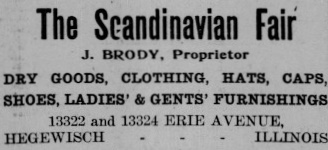
Source: Lake County Times, April 6, 1912.
In 1983, the store was purchased by husband and wife Drago and Zorica Protega, Croatian immigrants. Drago’s, or DragoBob’s, a very popular recipe that has fiercely loyal customers. DragoBob’s at this location is gone now, but the family keeps it alive for events, now based out of Northwest Indiana. You can also DragoBob’s recipe on the menu at Doreen’s and at Chicago Pita Kitchen located at 13227 South Brainard Avenue.
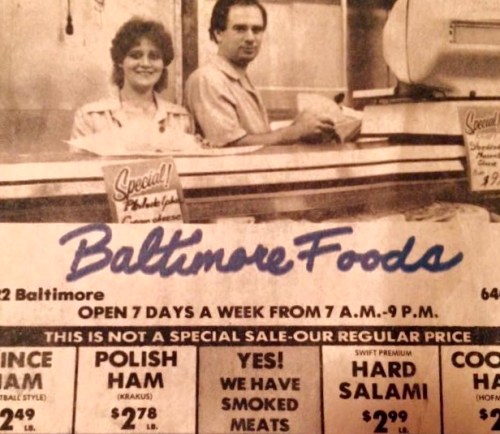
Source: DragoBob’s Official Facebook.
For over 65 years, Opyt Funeral Home has served the community. Founded by World War II veteran Frank Opyt and his wife Helen, Opyt has been located at 13350 South Baltimore Avenue since 1947.
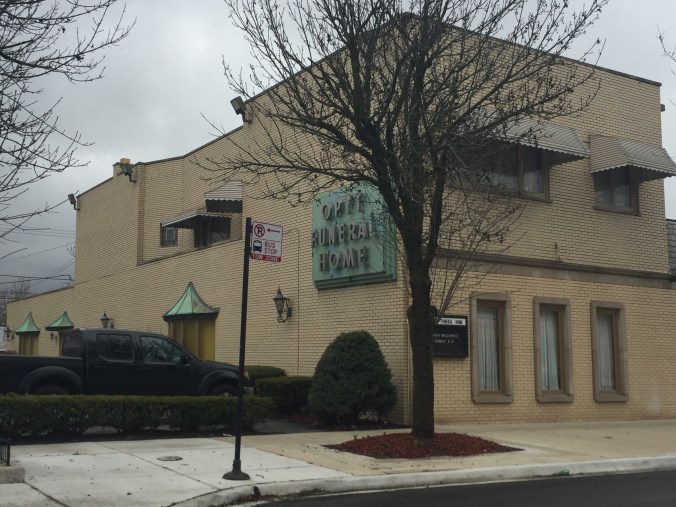
The original beacon, namesake for the tavern, was located to the left of the funeral home for many years. Constructed in the early 1930s, the beacon was intended by its builder, John Serafin, to serve as a tower for a planned radio station. Serafin was apparently injured during its construction and the station never materialized. Nevertheless, the beacon stood as a local landmark for decades at the northwest corner of Baltimore Avenue at 134th Street–site of the old Hegewisch police station–and was later demolished for a parking lot serving Opyt Funeral Home.
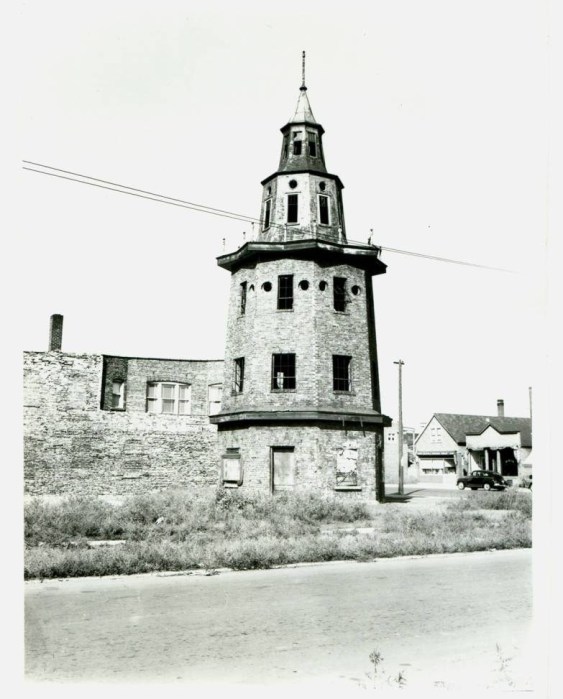
The Hegewisch Beacon, with the Oypt Funeral Home building and Baltimore Avenue in the background. Courtesy Southeast Chicago Historical Society.
Aniol’s Hardware, a True Value store, has been in Hegewisch for decades, opened by veterans Stanley and Helen Aniol. The Aniol family has been involved in business in Hegewisch for well over a century, with Aniol and Hasiak Butcher Shop an early-twentieth century venture. Around the same time, Andrew Aniol owned a tavern at 13448 Baltimore Avenue, a few doors south of today’s hardware store, and later at 13447 Houston. Today, the business is run by Stanley and Helen’s son, Mike Aniol.
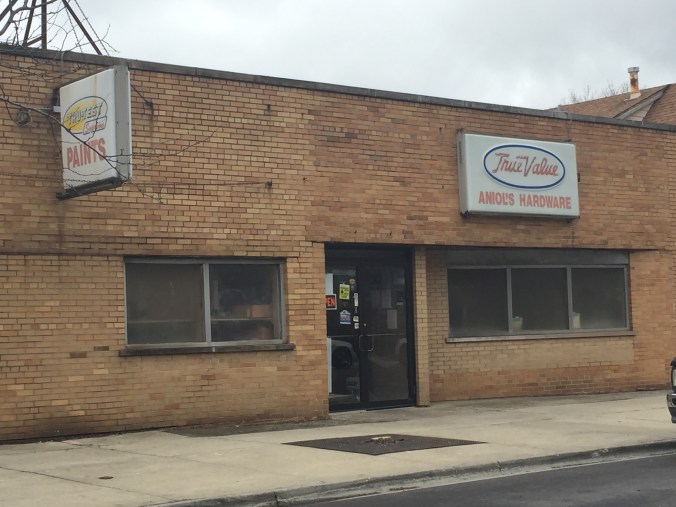
Helen helped build tanks at Pressed Steel during World War II before enlisting. That’s her, third from left, on top of the tank. We wish we had gotten a chance to talk to the Aniols because we’re sure they could tell us a lot about Hegewisch.
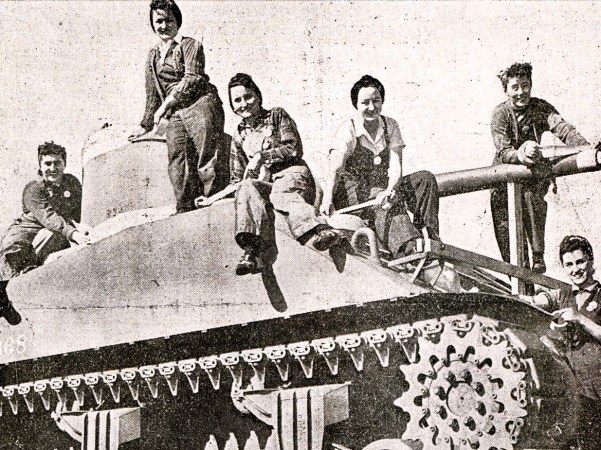
Courtesy Southeast Chicago Historical Society.
In the community’s early days, citizens of Hegewisch had to fight hard to be recognized by the city of Chicago and get public streetcars lines routed to the neighborhood. In many ways, they still have difficult time getting noticed by city hall. That said, civic commitments for public transportation are currently honored.
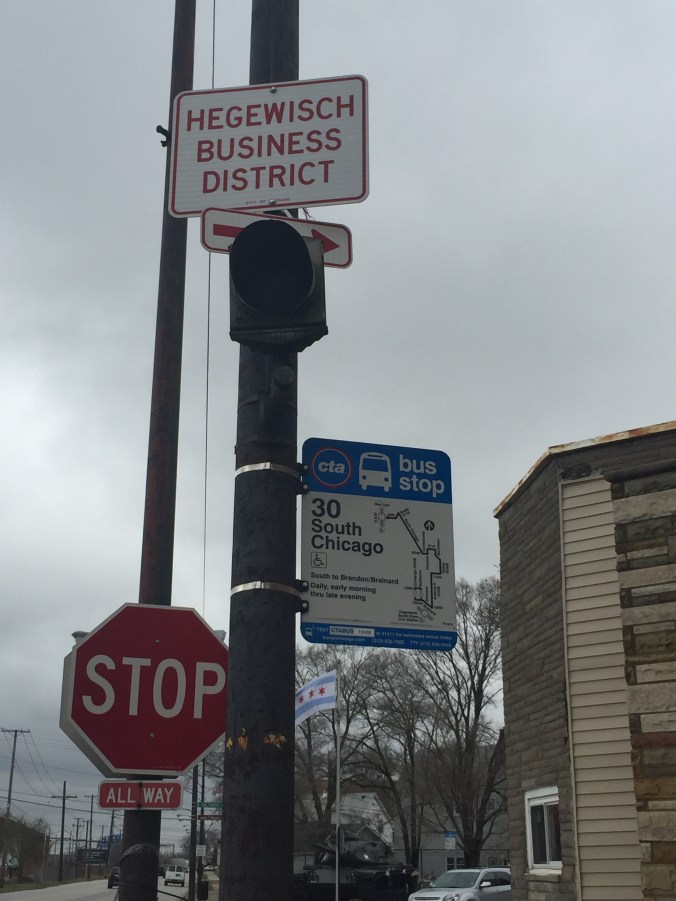
Things are slowly changing in Hegewisch, but some things persist. One of those things that just keeps going there, we would learn, is pizza. Places like Mama D’s helped make pizza a staple in the predominantly Polish neighborhood in the 1950s and 1960s, but many more pizzerias would follow. One of those places, located just north of the intersection of Baltimore and Brainard, also happens to be one of the best pizza shops in all of Chicagoland.
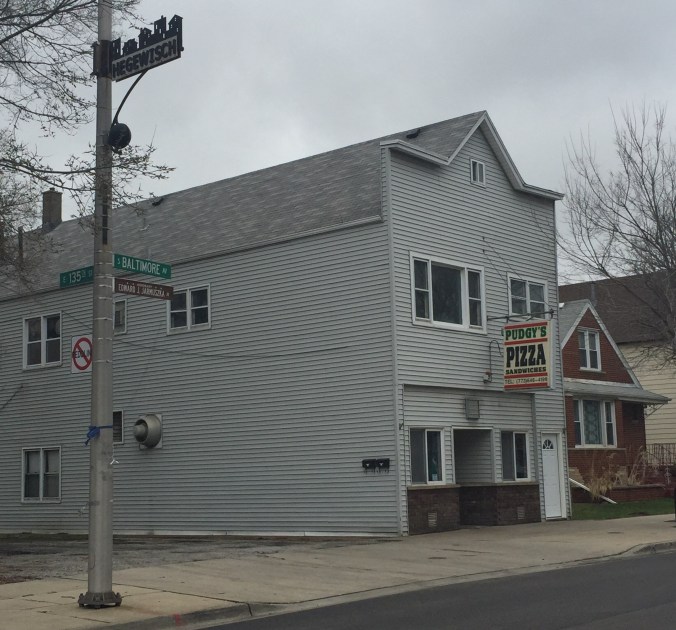
✶ ✶ ✶ ✶
Our first trip to Pudgy’s was probably our favorite pizza trip ever. We had visited a lot of places already, and we have tried vastly more since that first visit. But through them all, Pudgy’s has stuck with us. Our previous trips to Hegewisch had set the stage, and some online research (hegewisch.net was essential for our planning, and remains an excellent resource to learn about the community) really got things moving. All we needed was a few hours to make it work. When the opportunity arose, we made our first official Pizza Hound run to visit these folks. I mean, come on, look at those smiling faces.
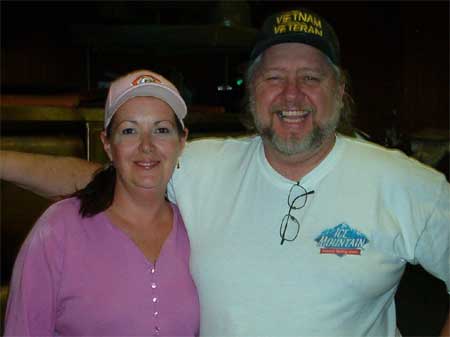
Source: Hegewisch.net.
The Pudgy’s All Stars wall told us that it was community-minded place, which went a long way with us. We like pizzerias that are geared toward families rather than “fancy” ones. Pictures of local residents and sports teams–some new, some faded and old–are a good gauge of pizzeria’s place in community life. Pudgy’s apparently had a lot of them. Plus, Pudgy’s had a pizza clock, too!

Source: Hegewisch.net.
So, our curiosity borne out our first pizza-less trips to Hegewisch and just a bit of honest advertising made Pudgy’s a place we really wanted to visit. We made that long slow trip from the North Side–down Lake Shore Drive, through South Chicago and the East Side, under the Skyway, then down Avenue O, and then crossing the railroad tracks–to find what we hoped was an amazing pizza. So when we weren’t too far away, we made a call to put in an order for our typical extra large all-pepperoni, half-sausage pizza. Thin crust, of course.
All indications pointed to this being a fantastic pizza experience. First, off the aroma inside the two-and-a-half story building with light blue siding was incredible. Immediately, I saw the man I knew as Bob from the picture online working in the kitchen, and the woman named Donna took my order on the phone and helped me in person. One kitchen worker was rolling dough and several others were constructing pizzas with sauce, cheese, and toppings. You could see they were putting a significant amount of work and care into the product.
The interior of the building was, thankfully, not overly updated. The original tin ceiling tiles were there, and wood paneling that came along sometime after adorned the walls. There were two well-used stainless steel Blodgett deck ovens.The atmosphere was very relaxed; no fuss at all. There weren’t even any matching company t-shirts, either. It was incredibly affordable, which really needed at the moment. Around this time we were pretty broke (but still needed pizza), so we had to sell an LP to fund the Saturday trip. It was worth it, though. Far and away the best trade we’ve ever made.
Pudgy’s had some pretty unique quirks, too. When you call Pudgy’s, you are given an estimate of when your order will be done (usually the classic Chicago “15 to 20”. . . minutes, that is), but they don’t ask for your name. Instead, they give you a ticket number. Remember this! Don’t walk in a say, “I was number, um,. . .” as I did once. . .or twice. They would not be impressed. (Or would it really be a problem at all? Stay tuned.)
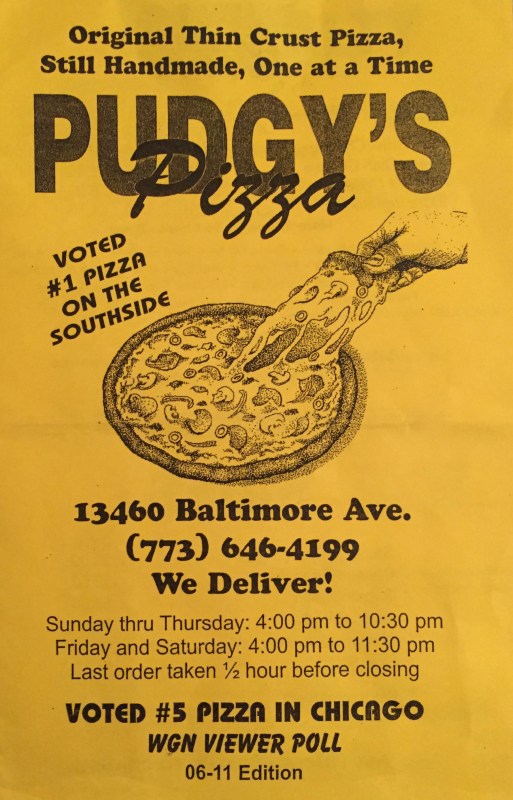
I remembered the smiling faces from the picture, but I think the moment I forgot my number shook my confidence. I don’t recall getting a smile; only a look of slight annoyance. Hearing the cheerful hellos given to regulars who walked through the door–“Hey, Kip!” for instance, as they looked past me–coupled with the casual “Who are you?” looks I got from those regulars, I wondered if the that friendliness wasn’t intended for everybody. We were indeed far from home. To put things in perspective, despite living on the North Side, our apartment was closer to Sox Park, one of the quintessential landmarks of the South Side, than Pudgy’s was. But when we left and headed back north that night, we would were so happy. Hegewisch dominated our thoughts the entire rest of the night as we attempted to scour the internet for as much information as we could get. We found out that there’s not really enough of that out there.
We were so hungry by the time we got home. Normally, we would wait until we were settled, but we could not wait this time. We quickly opened the box on the kitchen table and grabbed an edge piece. Wow. We will never forget that first bite. One of the greatest bites of pizza of our lives. I shook my head side to side in disbelief as I chewed. It was our reward after such a long trip. So perfect, so delicious.
Like most neighborhood pizzerias in Chicago, thin crust is the standard style and appeared to be the most popular. Pudgy’s thin crust is very thin, not thicker like places such a Capri’s in South Chicago or even Pucci’s (from the open location on the East Side). Ernie loved it, too. He got a few delicious pieces of crust. Is this what pizza is like in all the corners of Chicago, we wondered? We had been living in the city for years, but why had we previously limited ourselves to such a small section of the city and region so far? Would the Pizza Hound be able to settle for anything but great, neighborhood-style pizza?
But somehow, such a momentous day for us resides mostly only in our memories. Because we were so caught up in the moment that we didn’t take any pictures of the pizza. In this day and age, where photos are taken of everything (including a dog and his favorite pizzas), it’s almost like it never happened. . .like we really didn’t find the passage to Hegewisch. We know we were there, we just don’t have a lot of evidence to prove it. That’s okay because we went back a few times.

We treasured that first coupon. It was like a free ticket to go on our favorite ride.
✶ ✶ ✶ ✶
We’ll get back that in a bit. We promise.
In Hegewisch, an outsider is confronted with competing small town and big city impressions. But there are also the steps in between: reminders its different periods of growth. That previously highlighted Hammond Times article notes that A.R. Harris, local historian and son of John Harris, said the area originally, was divided into three subdivisions: the car shops site, the Hegewisch subdivision, and the Canal and Dock Company property. Harris’s status as an early resident of Hegewisch helped make him an authority, and his many years of business in the community surely helped, as well.

Source: Auburn Community Booster, September 3, 1918.
Sorting this out on a map is somewhat difficult based on sources, but it appears that there were at least three other sections platted outside of Hegewisch proper. One is to the west of Pressed Steel, and to the west of the Grand Calumet River. Another was an eight block section between 126th and 128th along Torrence. And the last borders Wolf Lake, comprised about about five or six total blocks between 131st and 134th. Waterside Avenue ran diagonally along the lake. Some of this must have been the work of speculators, but we can’t say for sure we have this mystery figured out.
A section located east of Avenue O comprised of some homes constructed in the 1950s and 1960s, though there are many older ones, some constructed as early as the 1910s. This area is commonly known as Arizona, no doubt due to the sandy marshes once located there that resembled the desert found out west. Or at least the deserted marshes of the Calumet Region, where there is a feeling of open space that resembles the west. You especially feel this on the eastern edge of the The Avenues at Club 81 Too, a neighborhood bar and restaurant known for its fried chicken and fish located at 13157 South Avenue M. Opened by Chester Dombrowski in 1945, the original Club 81 was located in South Chicago, a fact that may point to the current location as being an expression of suburbanization within the city limits. As standards of living increased and many people could afford to move to newer subdivisions outside of the old crowded neighborhood. Like many business owners who saw opportunities to make money in growing areas, the proprietors of Club 81 (still run by the Dombrowski family) likely followed their customer base the wide-open spaces of Arizona, a move that certainly shows the connection between Hegewisch and the arguable motherland of the Southeast Side, South Chicago.
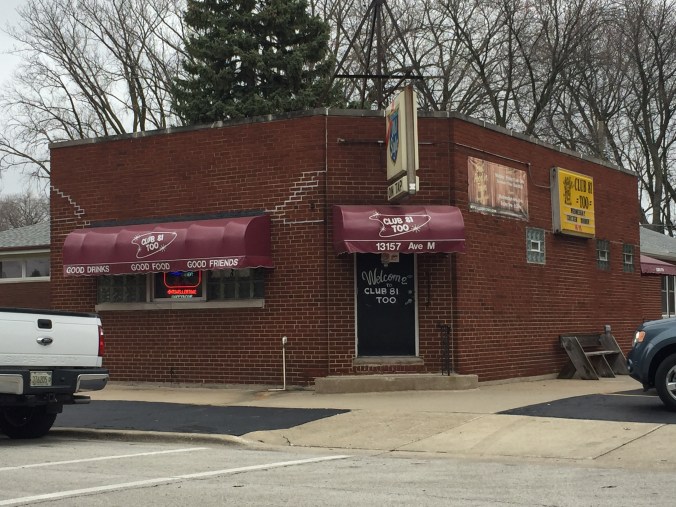
Not far from today’s Club 81 was the Delaware House, a large building constructed by the state of Delaware for the 1893 Worlds Fair that was later moved to at Wolf Lake around present-day 130th and Avenue O. Sellers and Pacyga note that the house was the source of local legends. In 1904, the Chicago Daily Tribune ran a rare front page story about Hegewisch, however, it was one of high drama: an armed standoff occurring at the Delaware House. It all started when, at the behest of the Knickerbocker Ice Company, which used Wolf Lake for its operations, police tried to evict “Old Man” Ellis Bennett and his family from the property. Ellis, who had lived in the area since 1869, reportedly owned 100 acres of land on Wolf Lake, including his “castle.”
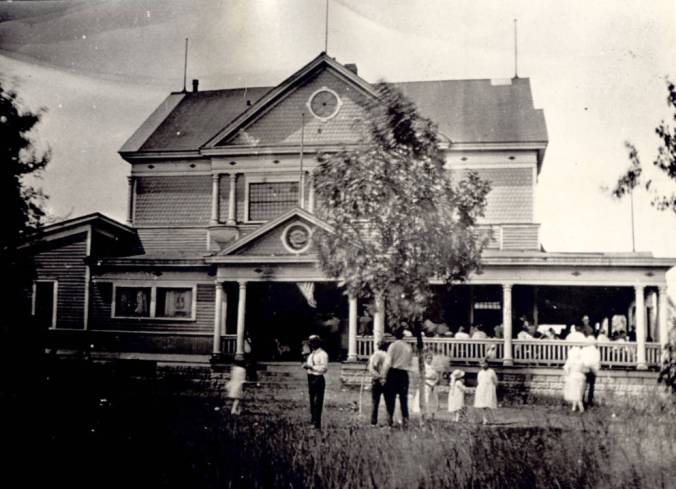
Ellis Bennett’s Delaware House. Courtesy Southeast Chicago Historical Society.
Despite a court order, the 58-year-old Bennett, well-know to local hunters, refused to leave. Bennett’s eldest son spoke to police and reportedly asked, “Are you armed? ‘Cause you’ll need your guns to take him.” Apparently this was confirmed by Bennett, who yelled through a door, “You’ll have to kill me to get to me, and, the Lord willin’, I’ll take a few of you along to heaven with me.” And he made good on the promise the next day, exchanging fire with a deputy sheriff. But after 36 hours, an exhausted Bennett surrendered. He was taken into custody and charged with resisting an officer and attempted murder. Bennett’s mansion was demolished in the 1950s, and the newer homes built in the area around the same time express a more mid-twentieth century suburban design. The Southeast Sportsman’s Club is over here, too, along Wolf Lake, in a building dedicated in 1955.
Some of the earliest non-native settlers in this area were the Neubeisers, who arrived in the mid-1800s. They lived a rural experience for many decades, surviving by fishing and hunting. They evolved with the times, though. According to historians Rod Sellers and Dominic A. Pacyga, two authorities on Southeast Chicago, the Neubeiser family later, as the population of Hegewisch grew and automobile transportation became more widespread, ran an auto repair shop at 13058 Avenue O (See Chicago’s Southeast Side).
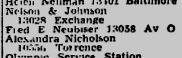
When they moved to the area a century and a half ago, the Neubeisers likely could not have imagined that Nike missiles would be stationed nearby, as they were for a few decades in the mid twentieth century.
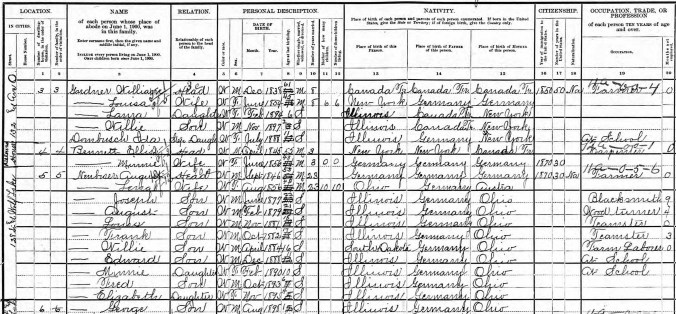
While drives through other Southeast Side neighborhoods set the tone, it continued to be clear to us that taverns were a big deal in Hegewisch. Taverns are all over Chicago, of course, but Hegewisch has an impressive number for its size. Georgie’s, a perfect neighborhood tavern with an old wooden bar, comfortable worn stools, twinkly strands of lights, a pool table in the back, and friendly staff is one of those taverns located in Arizona at 134th and Avenue M. This place is worth a visit for a laid back drink.
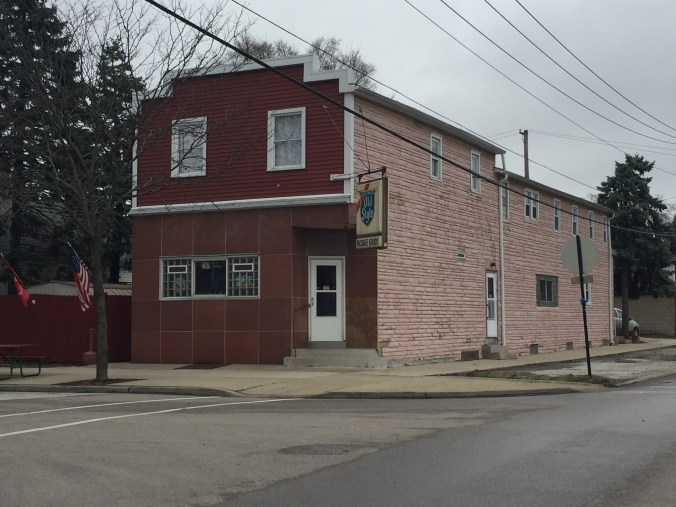
At one time, this establishment was known as Krupa’s Tavern, run by John Krupa. If Krupa’s didn’t do it for you, you used to be able to walk around the corner and go half a block south on Avenue N to One Way Lounge.
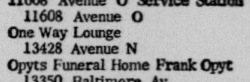
Probably one of the most confounding bars in all of Chicagoland and Northwest Indiana, the Green Olive can be found in Arizona at Avenue N and 135th Street. Apparently this place is or was at one time run by a family member of the long-serving, though recently deposed, alderman John Pope, who grew up in the neighborhood. Sometimes they have fundraisers youth sports teams, birthday parties, and classes there, and they have a full menu of food with some pretty delicious-looking burgers. They sponsor the Hegewisch Bulldogs junior football team, too. That said, the one time I went there–yes, it was only once, two years ago–it was late, it was crowded, and the music was loud, and I couldn’t help but get the distinct feeling that I might get punched in the face if I looked at somebody the wrong way.

But, hey, it’s always been a party place. Maybe I need to give it another try.
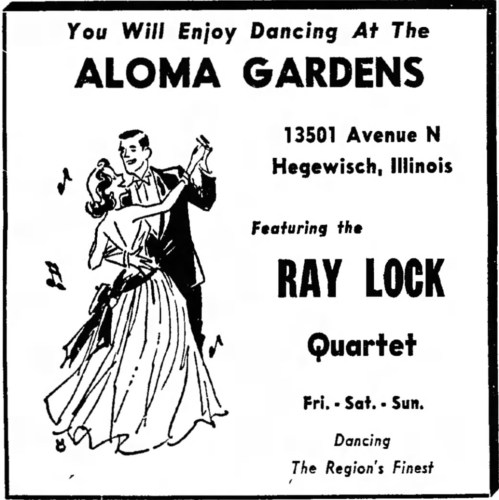
Source: Hammond Times, January 17, 1958.
Over the years, there have been several options for fun in Arizona.
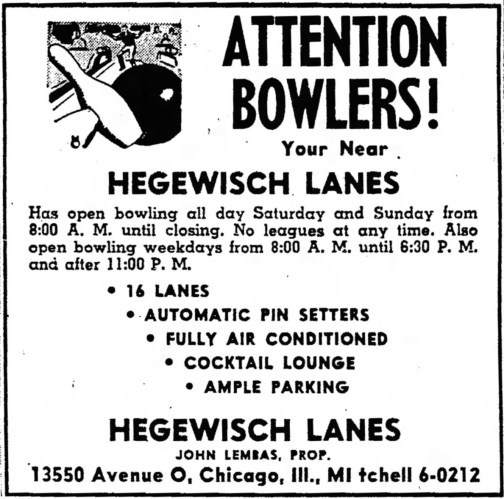
Source: Hammond Times, September 1, 1959.
The beloved Mike Royko wrote an entertaining column listing all kinds of things one could do to get oneself into trouble across Chicago. One suggestion involved a steelworker and the local bowling alley.
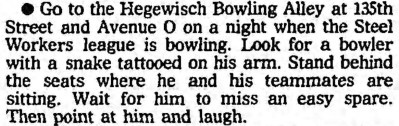
Source: Chicago Tribune, January 7, 1986.
Hegewisch Lanes closed years ago and the building was demolished. You can see a picture of it on this fun bowling history blog, a great site examining urban America’s peculiar obsession with sport. Penguin Lanes, which was in the older part of Hegewisch, on Brandon, can be found on the site, too.
Aloma Gardens on Avenue N provided live music, too. Florian Bolsega, son of Polish immigrants (his father worked in an oil refinery) and who grew up in the Indiana Harbor section of nearby East Chicago, Indiana, is still out there playing. Call him up and schedule some lessons!
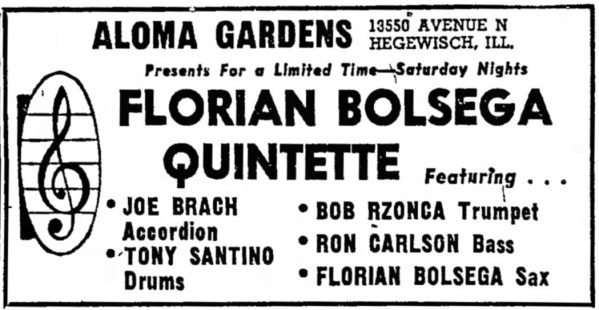
Source: Hammond Times, March 8, 1957.
At the western edge of Arizona–back at our entry into the neighborhood–a small five or six square block section stretches for a width of just one city block between Avenue O and the railroad tracks by Green Bay Avenue. A train depot stood at 133rd and Green Bay for many years, showing up on late-19th century maps of Hegewisch.
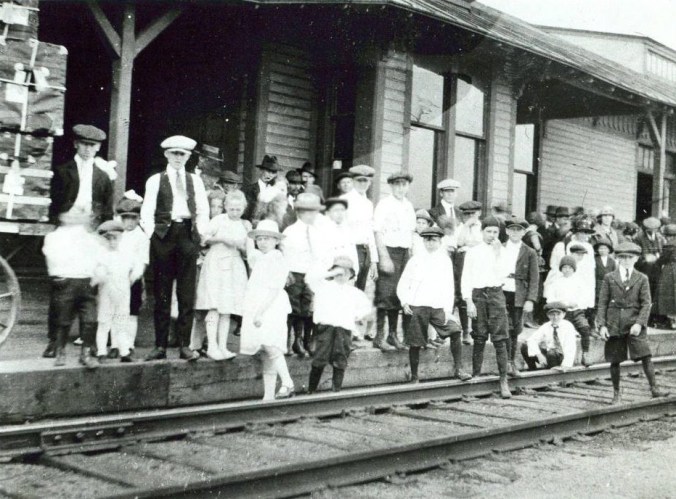
Pennsylvania Railroad Station c. 1920. Courtesy Southeast Chicago Historical Society.
This area includes the old Pucci’s. The signs are still there, and it almost looks like it is just closed for the day. For many years, this was the location of Larry’s Pizza, which also was located in Hammond.
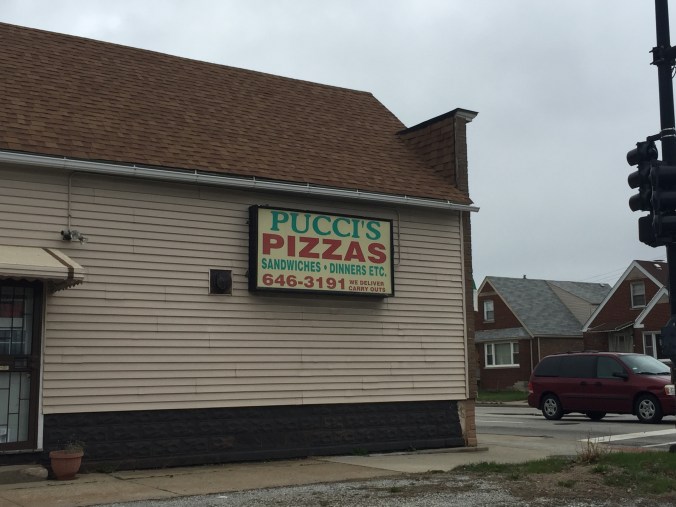
Just a block or so away from Pucci’s, at 134th and Green Bay, we noticed St. Columba Catholic Church, the first spiritual home of Catholics within Hegewisch boundaries. The church opened in 1884 as mission of St. Kevin Catholic Church, which was located several blocks north in South Deering. While St. Florian’s was formed as a Polish parish, it certainly wasn’t the only place Polish Catholics attended mass. Many were members of St. Columba, and today the Knights of Columbus chapter based there is named after Casimir Pulsaki, Polish-born hero of the American Revolution. The original structure at 13305 South Green Bay Avenue was replaced in 1951 with the current building, a block south, mid-century modern in construction, along with a new elementary school. The school closed in 2001.

The church includes beautiful stained glass windows.
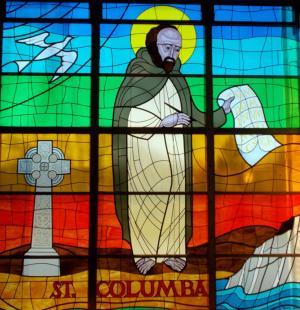
Source: St. Columba.
Rows of bungalows that look like they could be in Norwood Park or Garfield Ridge, line the streets adjacent to the railroad tracks. That house is listed at $189,000, in case you are interested. (Update: This one sold pretty quickly.)
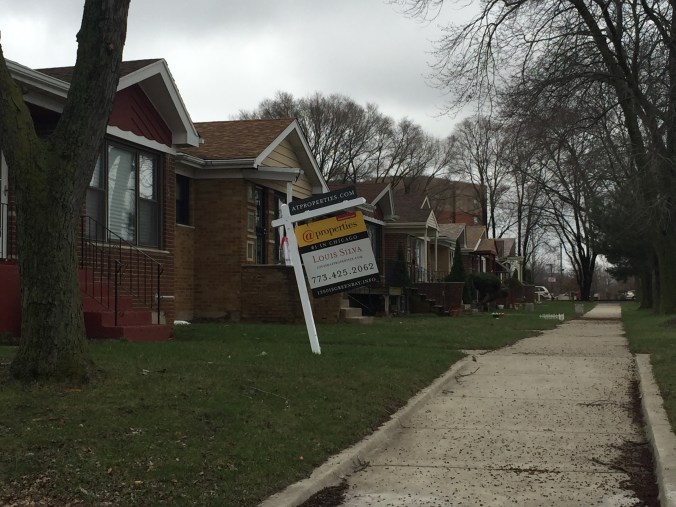
In addition to Arizona and Old Hegewisch, the neighborhood has another distinct area. North of 130th Street between Avenue O and Torrence, to the east of the Ford plant, you can find a section many attractive single-family bungalows and as well as a number of yellow brick ranch houses. This subdivision, Avalon Trails, was developed in the early 1960s, with a handful of homes there dating to the 1950s. The residential architecture of Avalon Trails is notably different than that of Old Hegewisch.
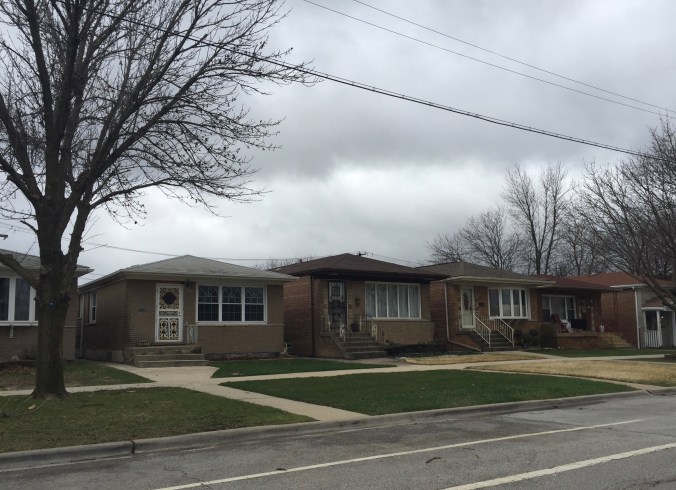
Maps from the late 19th and early 20th centuries show tract of land patted within this section, and though none of the homes there today look to be that old. This map from the U.S. Geological Survey in 1953 shows the area largely undeveloped, without most streets platted. The map also effectively shows the marshland surrounding Hegewisch.
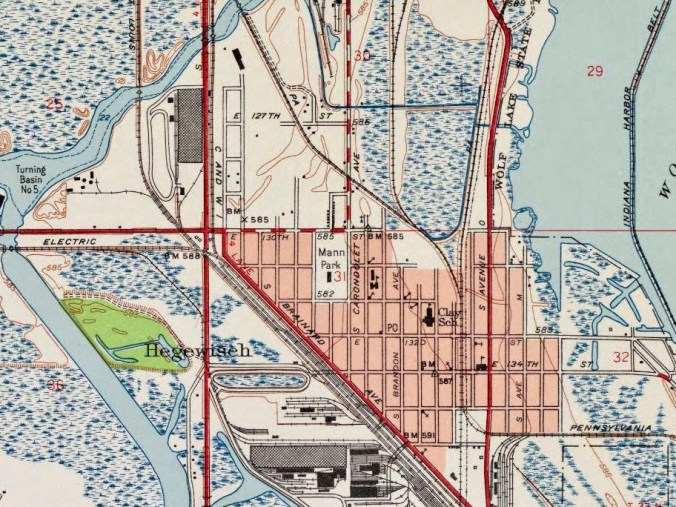
The future site of Avalon Trials, between the Calumet River and Old Hegewisch (light red). Source: U.S. Geological Survey Map of Chicago, 1953. Harvard Map Collection – Digital Maps.
The area may have been surrounded by marshes–and rivers, lakes, railroads, slag heaps, and polluting industries (not to mention a now-aging “uptown”)–but Avalon Trails was constructed and promoted as ideal working- to middle-class suburban living perfect for police officers, firefighters, and other civil servants. Required by law to live within the city limits, many government workers and civil servants such as firefighters and police officers lived in Hegewisch. Just they did in many edge neighborhoods such as Edison Park on the Northwest Side, and Garfield Ridge, Clearing, Beverly, and Mt. Greenwood on the Southwest Side, Hegewisch provided near-suburban living within the city limits, seemingly removed from the problems of the larger metropolis. Among ads for new developments in suburban Cook County, the Tribune published glowing pieces promoting new single- and two-family homes in Hegewisch’s newest subdivision.
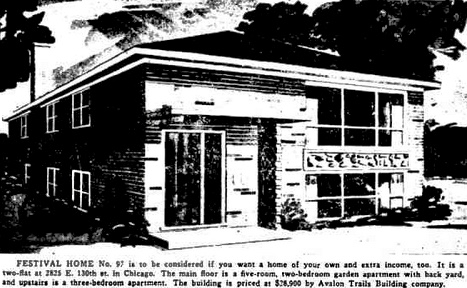
Source: Chicago Tribune, September 28, 1963.

Source: Chicago Tribune, January 19, 1963.
And despite the role played by the railways in the founding and development of Hegewisch, community leaders in Avalon Trails–more or less an automobile suburb– found themselves at odds with those same railroads almost immediately after the new subdivision’s construction. With the assistance of 10th ward alderman John Buchanan, the Avalon Trails Improvement Association fought a proposed railroad embankment that would transverse part of the northernmost section of the neighborhood. As proposed, it would require the removal of twelve recently-built homes, while isolating four others that would be located north of the embankment. After two years of wrangling the association won a compromise that would move the embankment route about 125 feet north of the original proposal, with the plan that only four houses–in fact the four that under the original plan would have been spared but cut off from the rest of Avalon Trails–would be demolished. However, by the time the plan was carried out, a total of ten homeowners were bought out and their homes sold for scrap.

The amended embankment route. Source: Chicago Tribune, February 16, 1964.
The improvement association was also very active in working to reduce congestion at the meeting of 130th Street and the railroad tracks that crossed it at Brainard Avenue. The crossing served as a particular thorn in the side of Hegewisch commuters for decades. Long waits and congestion at the railroad crossing were a normal part of driving through the area. Small changes over the years improved the wait times somewhat, but they never fully alleviated the problem and occasionally pitted the association against the local alderman. A proper overpass was not constructed until 2012, when the new Torrence Avenue Bridge finally brought congestion relief.
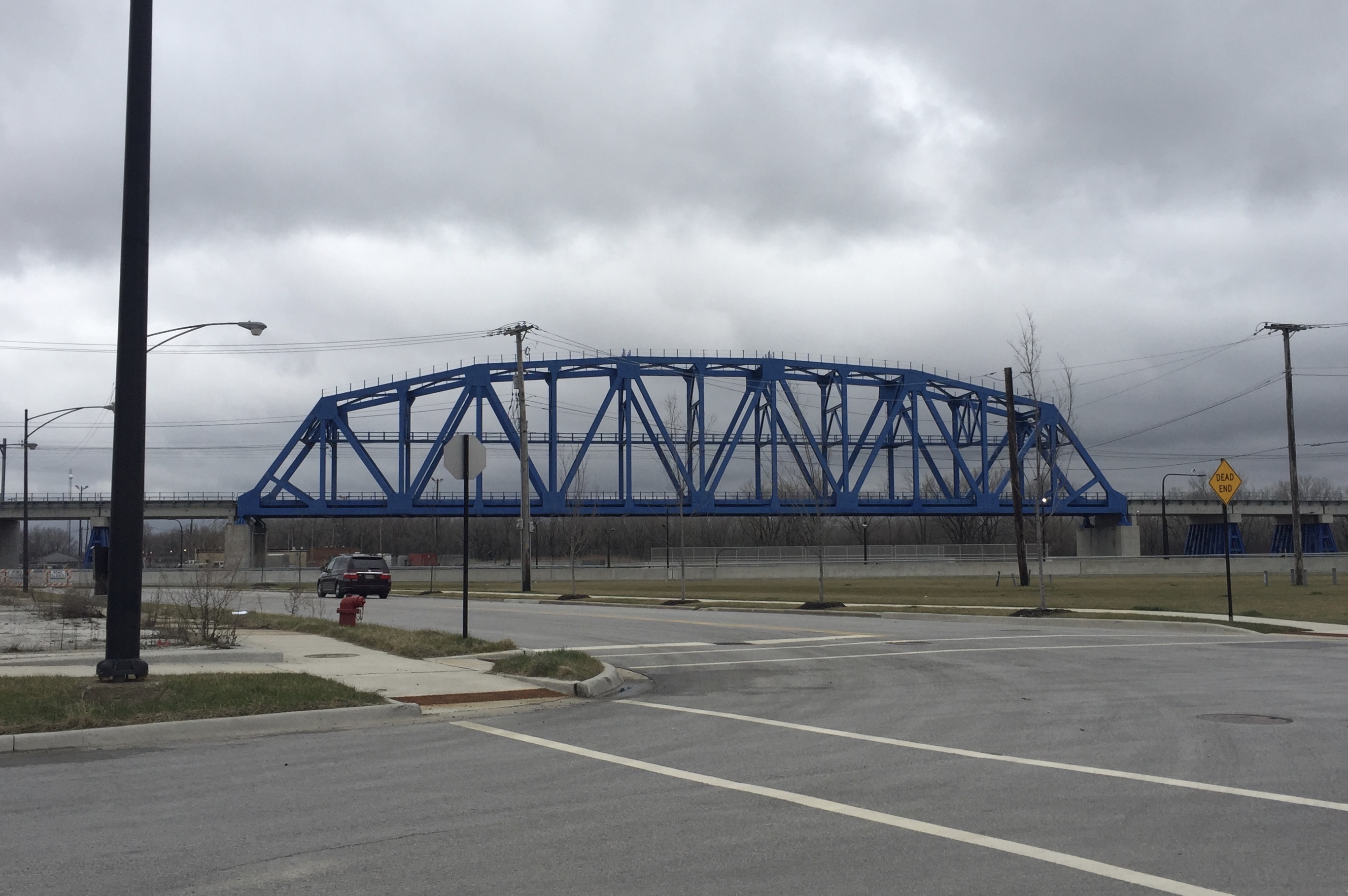
The streets of Avalon Trials are lined with rows and rows of brick single-family homes, mostly one story, that would not be out of place on the southwest or northwest sides of Chicago.

But despite the suburbia-like environs of the streets of the Avalon Trails subdivision, there’s an industrial world beyond that wall.
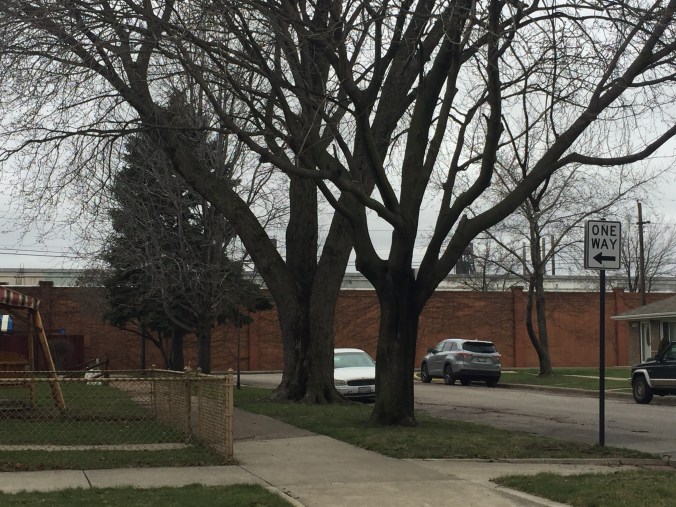
The Chicago Assembly Plant still roars. A planned residential development north of the Ford plant in the 1920s never materialized and today the tract of land remains vacant. But Avalon Trails is located instead to the east of the factory.

The plant undoubtedly employs many people from Hegewisch, but it has also long been a draw for employment across Southeast Chicago and Northwest Indiana. The profile of Hegewisch in the Hammond Times from 1940, noted that “Oddly enough, townsfolks commented, the majority of Ford’s employees are not Hegewisch residents, but rather skilled automobile tradesmen whose places of abode are elsewhere in Chicago or Indiana cities in the Calumet area.” The plant produced over 150,000 automobiles in 1950. After a large reduction of numbers during the Korean War, the plant produced over 100,000 a year by 1953, employing 2,367 workers. In fact, producing over 40,000 more vehicles than the year before. In 1965, the plant produced 204,734 vehicles, a 36.8 percent increase over the 1964’s numbers. The plant’s one millionth car, a gold Galaxie 500 with white interior, “rolled off the line” in early 1972. (My dad would have loved that; his cream 1970 Galaxie was probably assembled in Hegewisch.)
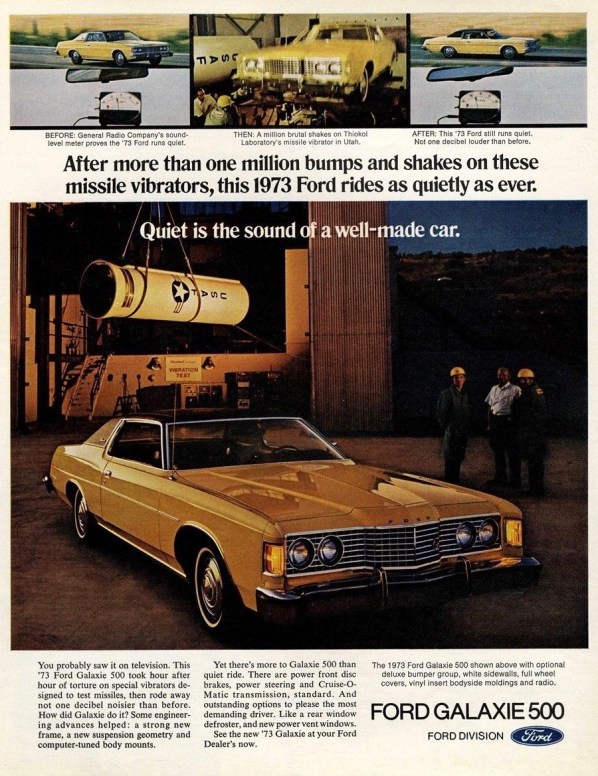
Automated robots were added to the assembly line in the mid-1980s, reflecting a changing economy that threatened some jobs.
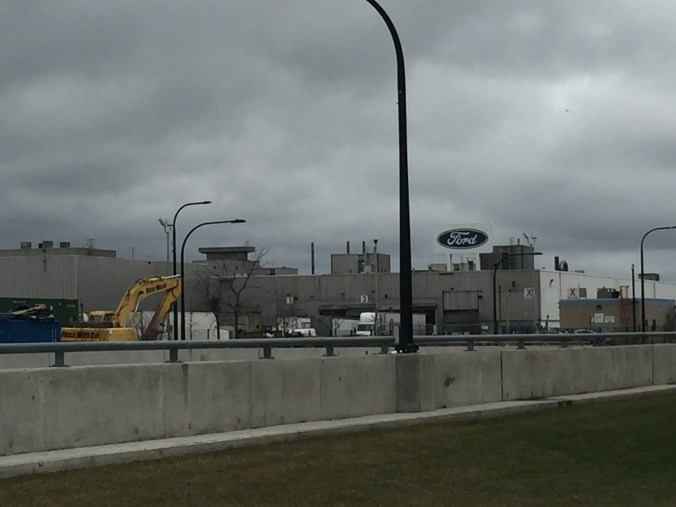
Despite the decline of industry and union membership across the country and in Chicago, the nearby manufacturing plant helps ensure the strength of unions in the area.
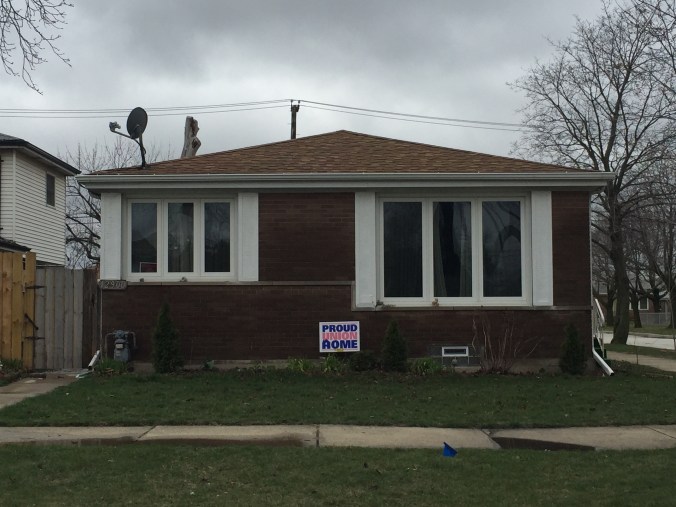
Like members of the United Steelworkers, local members of the United Auto Workers participated in nationwide strikes over the years. Sometimes workers at Chicago Assembly held out longer than fellow union members and Ford manufacturing employees across the country.
Today, UAW Local 551 represents the interests of local workers in the same labor tradition of steelworkers at Republic Steel in 1937, albeit under changed economic and political circumstances.
And the plant has earned awards over the years.
✶ ✶ ✶ ✶
With a new subdivision and a generally healthy national economy, Hegewisch continued to grow. For those who weren’t police officers or firefighters, and for those who didn’t have a job somehow connected to city hall or downtown skyscrapers, the Ford plant, the chemical plant, and, most importantly, the steel mills provided opportunities for steady employment.
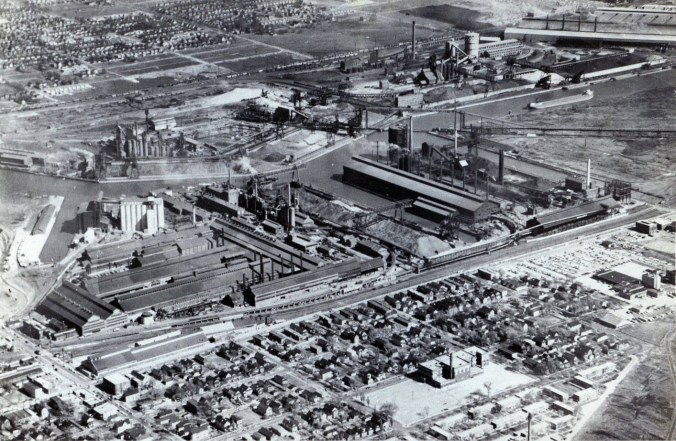
Wisconsin Steel, Interlake Steel, and Republic bordered with the South Deering and East Side neighborhoods. Courtesy: Southeast Chicago Historical Society.
But, suddenly, in 1980–a year in which Hegewisch posted likely its peak population, that of 11,572–Wisconsin Steel, after operating at losses and being jostled around by alleged corporate shenanigans, went bankrupt and abruptly closed for good, a disheartening and convoluted incident thoroughly examined and made sense by David Bensman and Roberta Lynch in Rusted Dreams: Hard Times in a Steel Community. 3,300 workers lost their jobs, and it took eight years before a pension settlement was reached. In the next few years the Southeast Side’s several other steel mills followed suit, devastating a large portion of the local workforce. Related businesses closed, and other services had a hard time meeting the bottom line. Many businesses along Torrence Avenue in nearby South Deering closed up shop.
Many families that depended on the mills for financial security were rocked by the sudden loss, and many emerged from the time period altered or emotionally damaged, as documented in Christine J. Walley’s Exit Zero: Family and Class in Postindustrial Chicago., and in Chris Boebel’s accompanying documentary. Facing unemployment for the first time in their adult lives, many former workers never fully recovered, often suffering from depression and alcoholism. Families who once viewed themselves as middle class had to find their way in a new–and very different–economic reality. The mills were beginning to leave Southeast Chicago, and the class stability that they provided the people of the region for so many years was beginning to disappear, as well.
Sometimes these changes are not always visible on the surface. Home video footage taken by a couple of teenagers in 1981 (credited to Rich Betczynski) shows a sleepy version of Hegewisch, from Baltimore Avenue all the way to community’s trailer park. There wasn’t much going on, so they found a way to entertain themselves.


By Hegewisch’s centennial in 1983, the community still appeared to be classic, care-free American small town. Documentary filmmakers captured a parade and festival with veterans organizations, children’s dance groups, and a queen.


Where in the hell is Rhinelander, Wisconsin? As someone from Hegewisch, I’m sure he could enjoy the sentiment.

Source: Wrapped In Steel, 1984. Directed by Jim Martin.
Throughout the weekend, home video footage again captured by Rich Betczynski also recorded Hegewisch having a good time at the parade and festival.


No doubt, including these cool guys.
Source: Wrapped In Steel, 1984. Directed by Jim Martin.
Amid flying American flags and “God Bless America,” Polish pride was still evident, by now among mostly the children and grandchildren of immigrants from Poland.


There was lingering turmoil, however, as documented in Jim Martin’s fantastic documentary produced for PBS, Wrapped In Steel. Released in 1984, as part of the larger, crucial Southeast Chicago Historical Project, the film examines the unforeseen decline of the steel industry and its devastating effects on the beautifully diverse communities of the Southeast Side. You can feel the tension throughout its short 90 minutes that’s still unsettling over 30 years later. To get a snapshot of Southeast Chicago during this time period, it is essential viewing.
If there was a star of the Southeast Side, it had to be powerful 10th ward Alderman Ed Vrdolyak. Still, though, he may have given Southeast Chicago a voice in city hall, during these hard times after the closure of Wisconsin Steel, many were not convinced he was looking out for them. The crowd was not exactly thrilled when Fast Eddie drove by, or were, at most, indifferent.
Source: Wrapped In Steel, 1984. Directed by Jim Martin.
Residents could take out their frustrations on other local politicians such as canditate (and eventual) state representative Sam Panayotovich, a Hegewisch native and son of the owners of Milan’s, who sat in the dunk tank. This Sam Panayotovich also co-owned Milan’s Pub at 108th Street and Ewing Avenue on the East Side with his brother Michael.


Faced with economic challenges and, despite loyalties to the neighborhood, the lure of the suburbs, Hegewisch’s population slowly dropped over the years. Between 1980 and 1990, the community lost about 1,500 residents, posting a population of 10,136 in 1990. Even if the lure of newer places with more jobs was strong, many vowed to never leave. A few years earlier, the Tribune reported on the pull of Chicago’s “old neighborhoods”–as Hegewisch was now–felt by many who grew up in them. Those that left often missed it. One man who had moved from Hawaii returned each year to visit. And despite Hegewisch’s disadvantages, some chose to stay. “Face it,” stated his friend, who instead chose to stay in the neighborhood, “this is the armpit of Chicago. But me, I’ll never move away. I don’t think my lungs could deal with all that clean fresh air they tell me is out there.”
While nineteenth century technological advancements such as the railroads helped create Hegewisch, twentieth century advancement threatened to destroy it. In 1990, residents were met with plans to wipe Hegewisch and much of South Deering (as well as Burnham and part of Calumet City) off the map entirely. Mayor Richard M. Daley eyed the communities as sites of new runways and terminals for his proposed for a third Chicago airport, dubbed the Lake Calumet Airport.
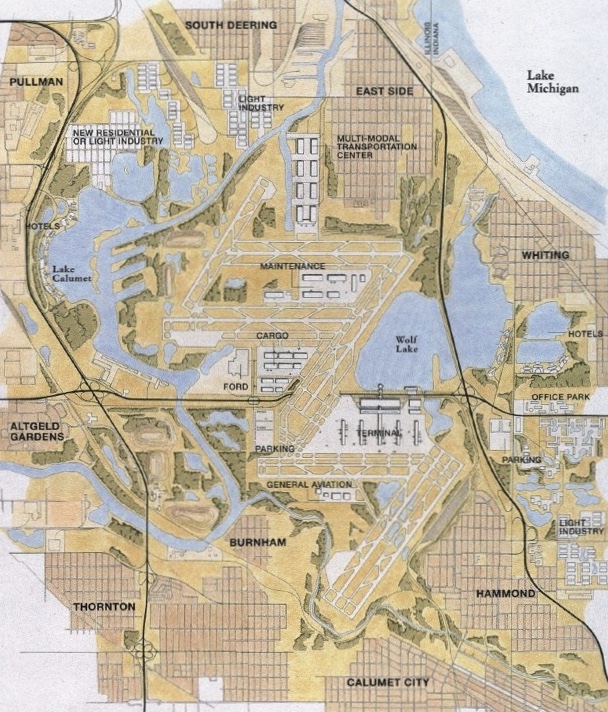
Source: G. Goldberg & Associates.
Industry had brought people from across the world to Hegewisch and Southeast Chicago, but Daley suggested that looking to it to solve the area’s decline was backward thinking. “I think what we have to do is to go out into Hegewisch, go out to South Deering, go out to the city, go out in the suburban area, Northwest Indiana and tell them what this airport, economic development, would do,” Daley said. “Is steel mills coming back? I don’t see anybody building steel mills? Is factories coming back? You see no one building factories. So, we’re talking about economic opportunities and jobs.” The lure of local jobs was strong. A larger number of people in South Deering and South Chicago (and some in Hegewisch) supported the airport for the precisely that reason. According to supporters, the accompanying environmental cleanup would actually benefit there area, while detractors pointed out that it would actually destroy hundreds of acres of wetlands.
The plan was drawn-up beautifully, making the airport rival the Loop for importance.

Source: G. Goldberg & Associates.
The plan, treated by the Daley administration as a foregone conclusion, gravely upset many in the neighborhood. It was suggested that residents who wanted to stay in the area could move to a “New Hegewisch,” as if that would somehow replace the community that had built over decades.

Source: Chicago Sun-Times, February 20, 1992, via G. Goldberg & Associates.
The decline of industry and substantial pollution may not have been the only factors deciding Hegewisch’s fate, or at least that’s not all that was discussed. A couple of points of discussion came up now and then when trying to understand why the airport was planned for Hegewisch and not the mayor’s beloved Bridgeport. Hegewisch had long a part of Alderman and East Side resident Ed Vrdolyak’s 10th ward realm, a fact could have helped their cause. . .or not. Vrdolyak’s tough style of politics brought significant loyalty, and created substantial enemies. Writer Eugene Izzi suggested that Vrdolyak was the main reason Daley wanted to level the neighborhood. True or not, Hegewisch had a tradition of feeling isolated and ignored to its detriment by the larger Chicago political structure. Vrdolyak for a while gave the area a sense a power it never had before, but his kingdom had withered by 1990. The press also made much of the odd coincidence that the last act of Richard J. Daley, the then-current mayor’s father, as the city’s highest official was the dedication of the Mann Park Fieldhouse, dying later that day.
So, the answer had to come from within: local residents organized and helped stopped the plan. The shared connection to the neighborhood proved to stronger than big political power directed from the mayor’s office. As former state representative and Hegewisch native Sam Panayotovich was quoted in 1990, “People here know that if you leave town for a couple of days, neighbors will watch over your place, pick up your mail, water your tomatoes for you.” To many (though, of course, not all) it really was a tight-knit community that stood together. It was also tough as nails. As reported in 1992, one local handmade sign seen in town stated: “Born here. Live here. Will die here. Go to hell ‘Dick’ Daley. No airport!” Even Eugene Izzi softened (if that’s the right word) his stance on a drive through the neighborhood, stating that “This is the last of the great, tough neighborhoods. The mills have shut down, but people have kept their respect. There’s a lot spirit and heart here.”
People in Hegewisch just wanted to be left alone and do what had for decades: go to work, go home, and enjoy the little community they had built.
But they had to do it with fewer and fewer opportunities to work.
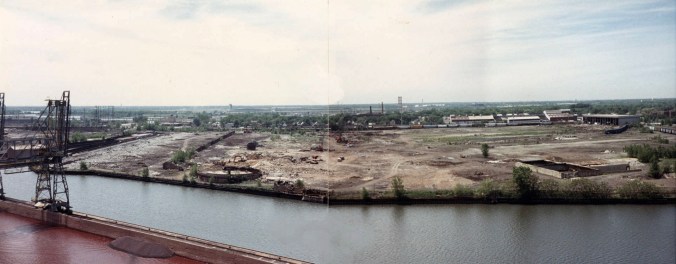
The empty Wisconsin Steel site looking west from the Calumet River, circa 1990. Courtesy Southeast Chicago Historical Society.
✶ ✶ ✶ ✶
But people in Southeast Chicago still go to work. A lot of different people. The communities of the Southeast Side, including Hegewisch, are evolving. Still, the traditions of hard work and hearty celebration continue.
All that hard work throughout the community’s history made the need for recreation almost a pressing necessitiy. Work took up so much of one’s life that finding time to express oneself artistically was difficult. Often, just like the many company and club sports teams and social organizations, musical groups formed in the shop were great ways for workers to cross boundaries with coworkers and find some relief. The Western Steel Car & Foundry Co. Band provided workers an opportunity to have fun.
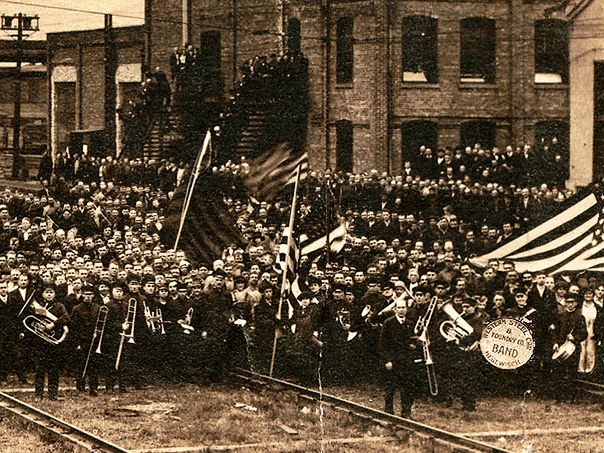
Armistice Day at Pressed Steel, 1918. Courtesy Southeast Chicago Historical Society.
The community-oriented polka provided a similar outlet. It also helped define Hegewisch musically in the 1940s through the 1970s (and longer). Obviously, polka wasn’t the only music people in Hegewisch listened to during that time period, and we’re sure plenty of people did not like it at all.
One of the most common forms for people to enjoy live music in the late 1940s through the 1950s was to enjoy a dinner and cocktail with somewhat jazzy attractions. Restaurants and lounges like Joseph Zralka’s Jo Jo’s Club worked to attract business by scheduling combos, trios, and even orchestras staffed mostly by local talent.

Source: Hammond Times, September 15, 1961.
In the late 1940s and early 1950s, Hegewisch native Jay Burkhart who lived on Brandon led a big band that performed a new style of jazz known as bebop. The band was famous in the Chicago scene, playing in the some of most well-known downtown clubs. In addition to backing many major stars, a remarkable number of famous names passed through the band including Gene Ammons, Joe Williams, Irene Kral, Hal Russell, Lou Levy, Jackie Cain, Roy Kral, and more. Named Chicago Jas Cradle, the band was also popularly known as the Polish Be-Boppers!
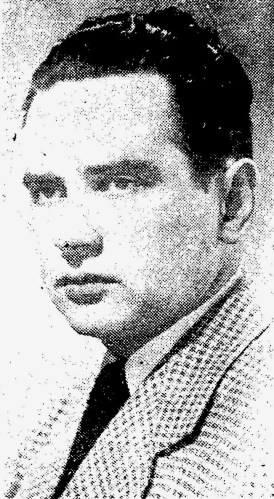
Source: Southeast Economist, March 9, 1950.
Burkhart also graced the stages of clubs throughout the South Side of Chicago, which had a vibrant nightlife in the mid-twentieth century.


The reach of top 40 no doubt helped define the baby boom generation there in the 1960s, and certainly hard rock appealed to many younger folks by the ’70s and ’80s. Different generations found their own ways to escape the grind.
Hegewisch’s 100th anniversary in 1983 a showed a proud small American town having fun in the 90-plus degree July heat. It also showed two dueling generations, one after the other. A young rock band named Voyce did its best to blow everybody’s minds. . .


But it was a polka band that got people dancing.


Check out this nice home video footage from the event.
Homegrown rockers Deadlock did their part to address the need for local rock in the early ’80s. What other Hegewisch rock bands do we need to know about? We’d love to hear them.


Deadlock had a nice hard rock groove going on, and clearly had a strong local following.
Almost concurrently, punk was making waves. During the ’80s and ’90s (and even now?), Southeast Side bands like Dead Steel Mill took the sound and gave it an ugly edge that reflected the local working-class culture. With releases bearing names such as Sweatshop and Just Got Laid Off (and releasing records on, appropriately, Wisconsin Steel Records), Dead Steel Mill made music that didn’t romanticize the steelworker lifestyle, but reacted to it.
Johnny Vomit played–and still play–loud and brash punk rock. Two members of the band were born and raised in Hegewisch, while the other two spent time there at some point in their lives. At a time when much of the punk/indie focus was on venues like the Lounge Ax in Lincoln Park and multiple clubs in Wicker Park like Czar Bar, Milk of Burgundy, and Phyllis’ Musical Lounge, the band played shows in Hegewisch. More well-known bands were drawn to the Fireside Bowl in Bucktown/Logan Square; Johnny Vomit preferred the Brandon Bowl in Hegewisch.

And the Knights of Columbus hall at St. Columba worked just fine for them.


And that’s way more interesting to us.
Each provided somewhat of vignette of popular culture’s reach to Hegewisch. No doubt there are others to note. From 1983 onward, the yearly Hegewisch Fest brought together many area bands, some good and likely some bad, to play for the whole community. In 1990, the Northwest Indiana Times reported that upcoming Hegewisch Fest would included entertainment by “The Merrynotes, Adams and Country, Johnny Kaye and Orchestra, Blues On Toast, Energy, Legionnaires Orchestra, Bedbugs, Calumet Sounds, Johnny ‘Two,’ The Rear View Mirrors, Productions DJ, Changes and The Walking Band.”
Power-poppers The BedBugs from South Chicago were one of the very good bands to play Hegewisch Fest.

Source: BedBugs on Facebook.
They and artists such as Phil Angotti from the East Side (or is he from Whiting?) played popular clubs on the North Side but also a number of bars and venues in Southeast Chicago on a regular basis.
But if you needed more fun, you could always continue the party over at Club 505.
Source: Lansing Pennysaver, July 28, 1998.
Hegewisch’s polka has faded substantially in the last two decades, and different musical styles have moved to the fore.
To get a good a snapshot of Hegewisch and the broader Southeast Side today, though, one could do little better than checking out the music of CoJack, a hip-hop artist that grew up in the neighborhood. Born Cory Cahill, the son of a firefighter, CoJack represents Hegewisch well while connecting it to Chicago’s larger hip hop community. While the city is currently the midst of renaissance of rap, most of the well-deserved attention is focused on the competing (or non-competing) scenes of the generally bright, positive Chance the Rapper and his SaveMoney crew, and the grittier, streetwise drill scene occupied by artists such as Lil Durk, King Louie, and the notorious Chief Keef. (This is, of course, an over-simplification of hip hop in Chicago today. There are way too many different artists, crews, and genres to mention.) Rap took a while to take off in Chicago, while the scene was thriving in New York, Chicago House music dominated the local underground. The rap community grew slowly, but eventually, big names emerged from city, including Common, Lupe Fiasco (whose pizza-set social commentary “Deliver” is a must hear, Pizza Hound says so), and Kanye West, among many, many rappers and producers. Of course the are all kinds of other thriving music styles in the city, in particular the West Side-born footwork, too, and in addition to those to rap variants, Chicago is truly flourishing with rap thanks to an ever expanding universe of crews blending styles.

CoJack hasn’t gotten much attention, though. Maybe it’s simply because he isn’t producing trap or maybe he’s not using enough post-808s and Heartbreaks-style Auto-Tune, but we’re willing to bet his subject matter is a good reason why he hasn’t broken through to at least local stardom. True to the best practitioners of the style, CoJack rhymes about what he knows, which in this case is the working-class lives of those around him, and the hopes, dreams, and expressions of (near) contentment of living that life. For instance, his image–often decked out in a paint-splattered work coat and work boots, isn’t remarkably appealing to many people looking for entertainment. To us, it’s refreshing. And he’s honest why he doesn’t wear flashy clothes. His reason? He can’t afford to. Working-class culture has never been really considered a topic of note in hip hop. New York City rapper Ka, who spends his days as firefighter, has gotten positive press recently, but he doesn’t really write songs about his work, consciously choosing to keep it separate. American working-class life certainly does not come close to forefront of the imaginations of other hip hop artists, listeners, and cultural observers, either, especially not working-class hip hop from an isolated section of Chicago like Hegewisch. Recent political discussions of the Rust Belt and the very real economic struggles and the political impact of the “white working class,” notwithstanding (you know what we’re talking about. . .a subject so prominent–and divisive–after the 2016 presidential election that any suggestion of it to many hip hop listeners and aficionados would possibly be met with dismissal) it seems the rest of world isn’t remarkably interested in what’s going on in places like the Southeast Side of Chicago.
Thus, this review is being written on a pizza website where a basset hound is the star. We’re glad we can do our part. Ernie loves Hegewisch…and CoJack. More broadly, for Ernie and me, CoJack points to a perspective that basically drives our travels to visit interesting neighborhoods and find great pizzas. We have long held the concept that art created in places where it’s not typically expected to be created is vastly more interesting than the typically accepted narrative. Or more plainly, cool stuff from places that aren’t really “cool” is way more fun than stuff that’s “cool” from “cool” places. Art is supposed to come from places like New York, L.A., London, and Paris, right? Brooklyn’s over, but Philadelphia is in. Wait…Philly’s over?? Chicagoans have been trained in recent years to believe that art and good music is supposed to come from neighborhoods like Wicker Park, Logan Square, Pilsen, Bridgeport, and Garfield Park (where are the cool kids now? It’s exhausting.). You may expect excellent hip hop to come from Englewood, Shore Shore, or Austin, but you might not expect it to come from places like Lorain, Buffalo, Youngstown, or Hegewisch, but CoJack accomplishes that, all the while helping critique the new reality for America’s Rust Belt working class.


CoJack’s Southeast is worth checking out, though, if only by hitting the play button on a few tracks. It is a place where great things happen, but it’s also a place where dreams sometimes have a hard time thriving. Everyday issues with complicated romantic relationships and self-doubt, detailed in tracks like “Beauty & Her Beast” and “Tried My Best,” provide stumbling blocks to happiness and stability. He chases his dreams of hip hop stardom in tracks like the Minnie Riperton-sampled “Sleep Walk,” including those that are mere working-class fantasy, such as the remarkably reasonable dreams laid out in “Bill Gates Rich,” where he a small amount of happiness for himself and those he loves. . .and maybe just a little more. He may dream of a “pad in Amsterdam” and “houses all over the map,” but just as much about “no more running out of gas/on the road like Kerouac.” “Tell Mom that I’m buying her a house,” he raps, dreaming of comfort and stability for his family. But its tempered by feelings of creeping insecurity: “Once the big money comes in, the check doesn’t bounce.” Even party rap songs express an undertone of existential fear, which comes out in the menacing tone of “Here We Go Again.” As he recounts all the good times, and by making the connection to CoJack’s larger body of work–one can feel nearly endless cycle of weekend release, necessary after hard work week. “Here We Go Again” is about fun, but it might just as well be about the dread of doing the same thing over and over again and never breaking that cycle. But as he raps in “Go Get ‘Em,” “We all got work to do/We need some time to play.”
CoJack first album, Clear My Mind, was released in 2011.

While his subject matter may not seem too exciting to much of the listening public, cynically, one could also say simply that, as a white guy, he comes across as inauthentic in an art form created by African Americans who strove to document black experiences. No doubt, there’s a bar there that must be reached and overcome, as much as is possible. Race in rap music–heck, in music–is a thorny issue that can be difficult to fully unpack, with cultural appropriation rightly a hotly-debated topic. Some have argued that a few artists have broken through some of these barriers by taking their inspiration from the black culture around them and rhyming authentically about their own experiences, not just mimicking then discarding it at will. Meanwhile, others have argued that America’s long history of racism is so embedded in our culture that it is impossible to ignore or fully transcend. Even the best intentions cannot escape this history.
Ups & Downs came out in 2014.
While he may be working with a tradition created and perfected by black artists, creates no illusions about his background and upbringing–describing it as middle class–admitting that he did not grow up with hip hop culture, but instead grew to love it from the outside. Most of his early gigs involved opening not for other hip hop artists but for his friends’ punk bands or for acoustic sets at coffeehouses. An introduction to the hip hop sound led to another, then another, each time going deeper and deeper, learning more and further appreciating the art form. He said he liked Bone Thugs N Harmony, but couldn’t relate to the lyrics. That’s key, we think. A dishonest rapper would try to connect himself to the music, claiming common ground where there is none, but CoJack is open about the divide. Instead, he focused on his own experiences, while still trying to grapple with the larger implications of diversity, or the lack of it.
Which is important because hip hop is by the far the most popular pop music of today. The Rust Belt and places like Southeast Chicago have not always stood at the forefront of trends, so it’s notable that he’s white guy from an old working class area that’s not playing in a wanky bar cover band or nu metal, styles that have tended to thrive in the Rust Belt and older outlying urban areas (nu metal-loving Joliet and Peoria, we’re looking at you) as they fade away in the larger popular consciousness. In fact, at a stoplight at Brainard and 130th Street on our way out of Hegewisch one time we were there, we could here an Auto-Tuned hip hop track blaring out of the pickup truck driven by a sunglasses-wearing twenty-something. Not polka, classic rock, heartland rock, metal, horrorcore, country, nor even ironically-enjoyed ’90s gangsta rap, but good ole Drake. Hegewisch–like America–evolves.

Of course, the tales of the working class must be understood in the greater context. The reality of the Southeast Side’s past must include at least an acknowledgment of race. Bat Nelson’s autobiography is regrettably marred in part by bold, mocking racist language describing his African American opponents. Hegewisch may have been relatively far removed from notable, direct racial tensions in the mid-twentieth century, but the riots at the Trumbull Park Homes just a few miles to the north in South Deering and the negative reactions by some to Martin Luther King’s march for open housing on Ewing Avenue on the East Side in 1966 mark episodes of violence borne out of a widespread culture of racial exclusion, be it in certain jobs in the mill or along the streets of Southeast Chicago. The Southeast Side may have been remarkably diverse on one level, but on another, it was not quite as diverse. Hegewisch and large portions of the area were for many years was overwhelmingly white. There is little chance that residents of Hegewisch did not watch the events in South Deering closely, perhaps wondering how such tensions would play out in their community should they appear. Change in some respect may have appeared slow, but at the same time it was always just at the door. It’s a story continuing to be played out as neighborhoods with shared histories such as South Chicago and South Deering have seen near complete racial turnover in the last few decades; it’s a story you feel in a tavern from time to time, where certain statements leak out, and the only reason you figure you get to hear them is that you “pass the test.”
In mid 1990s, 40-plus years after the Trumbull Park riots, when the population of Hegewisch was around 86 percent white and only one percent black, anecdotes pointed to race as a local issue. When some residents opposed a group home in the old St. Florian convent, others claimed it was due solely to racism, others suggested it was more so just an aging community showing resistance to change they did fully understand. One story for Chicago Public Radio’s This American Life focused on Chicago wards where Harold Washington met hostility during his 1983 mayoral campaign against Ed Vrdolyak. Reporter Robert Wildeboer noted that in those areas, one of which was Hegewisch, that things had changed, as most people now said they would willingly vote for a black candidate. Still, Wildeboer noted that a few guys he met in Hegewisch joked with him that “they call it ‘The Last Stand,’ as in the last stand against integration.” As one Hegewisch resident stated that some racial undercurrents were still there.” Go on a holiday to Wolf Lake. Well, who’s over there? They’re all barbecuing over there. We can’t even go to our own parks. Cal Park is taken over. Wolf Lake is taken over. We got nothing.” Perhaps, Hegewisch has moved forward and evolved farther than this–those anecdotes both come from at least 20 years ago–but change can be slow.
Since industrialization and large-scale settlement, demographic diversity has helped define the culture and society of Southeast Side. Heavy industries such as steel dominated the work world, and to do that hard, hard work, people came from all over the world. Serbians, Croatians, Mexicans, English, Italians, Germans, Poles, African Americans, and many more all mixed in the Southeast Side. Each community created and supported its own institutions within the larger community. They certainly had their cleavages, too. It was common for certain hierarchies to develop within a mill, with certain groups shut out certain types of work. There were power struggles regarding race, ethnicity, and age, such as the struggle of Latinos to gain equal representation in South Works against the powerful Polish leadership, many groups were united via the union. (See sociologist William Kornblum’s fantastic Blue Collar Community for more information.) Union leadership elections increasingly became an opportunity wrestle some control from an entrenched power structure. Women didn’t breakthrough into the leadership ranks until the 1970s. Local 65 at South Works did not elect a black president until 1974.
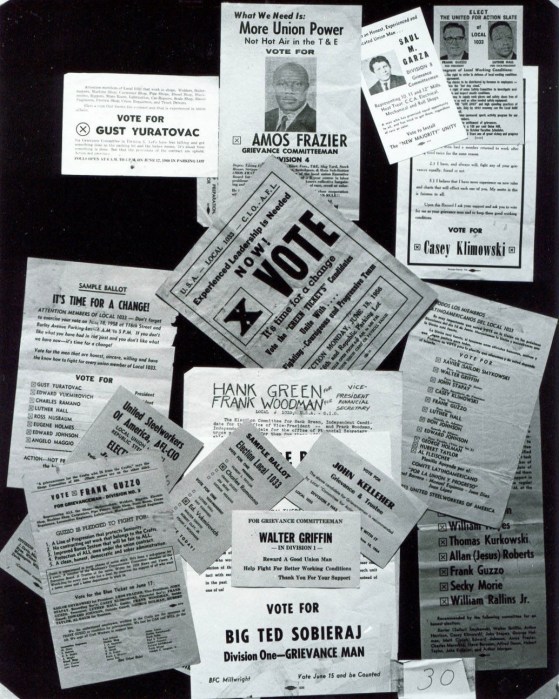
United Steelworkers Local 1033 Election Fliers. Courtesy Southeast Chicago Historical Society.
And while Hegewisch and the other neighborhoods are bound by a shared industrial past, Hegewisch, unlike the rest of the Southeast Side and many parts of Chicago around it, had for years resisted racial and ethnic demographic shifts. Despite its resistance to change for so long, the neighborhood is evolving. The overall population has dropped, and people of Polish ancestry are no longer a majority, either, as they had been for several decades. The percentage of residents identifying as white has changed, as well. Meanwhile, Hispanic proportion of the population of Hegewisch has increased to just over 50%, a huge change for the neighborhood. Culturally, Hegewisch today is not the same Hegewisch as in 1950, 1980, or even 2000. It’s changing. Still, hard work is a common thread in the community.
And for the most part life in Hegewisch does not experience–and CoJack’s rhymes only on occasion express–the day-to-day violence seen in neighborhoods just a few miles to the north and west. Hegewisch for decades felt like a sleepy small town where crime rarely occurred, and when it did, officers reportedly would say, “there’s trouble in paradise.” Crime, of course, does occur. The violence of Chicago does not leave residents of Hegewisch completely unscathed. In the 1990s, the small town atmosphere of Hegewisch was dented with the appearance of gang problems; problems that once seemed reserved for rougher neighborhoods to the north or even other Southeast Side areas like South Chicago. Several shootings and robberies have occurred in recent years. The gang presence can be visible, and it is certainly of concern, but it is often less pronounced than in most neighborhoods dealing with gangs. While perceptions might suggest otherwise, statistically crime has held steady in Hegewisch over the last 15 or so years. In fact, Hegewisch still ranks as one of the safer neighborhoods in the city. Being working-class has its very real pressures and struggles, but they pale in comparison the constant threat of death that being black and severely below the poverty line–or black and working class, or even black and middle class.
Those stories are told vividly by many of Chicago’s drill rappers, such as King Louie in his track “To Live and Die in Chicago.” Other great artists such as Ibn Inglor, who comes from Altgeld Gardens, an impoverished public housing project just to the west of the Calumet River and the Bishop Ford Expressway that’s arguably more isolated than Hegewisch. Which makes, we think, CoJack’s place in Chicago hip hop all the more useful. He manages to honestly reflect his own experience, connecting his community to others, while crucially seeing the larger picture that some of those around him might fail to see, sincerely attempting to bridge a racial divide in an area where some others have no interest in doing so.
And he manages to address that racial divide with with some simple, yet pretty incisive rhymes. In “For You,” from the debut album Clear My Mind, CoJack bluntly addresses the elephant in the room almost just to clear the air and to get it out the way. “You and I really aren’t that different you know/Thrown into a life with no decision to say so/It’s a roll of the dice/And at times it can be fatal,” and “Hey, don’t assume I’m sharing stereotypes/With belligerent bigots and their arrogant lies/Some might think all whites are either rich or racist/I’m neither of the two/Forget the ignorant statements.” In his track “American Dream,” a dissection of the illusive driving force that dominates a large part of American working culture, he notes “White kid working with bricks you think mason/Black kid working with bricks you think slangin’/We’re all influenced by the nations we get raised in/Unfortunately mine was born racist.” He points the finger at white flight and the destruction it wrought, along with pointless political affiliations rather than working together to solve problems. In “Just a Song,” he struggles with the pain and disillusionment of the death of friend, and wrestles the seemly insurmountable violence tied to poverty, drugs, gangs, and racial disparities. There’s more going on here than race and class, obviously. Broad strokes, despite our best intentions, don’t really sum up the complicated tensions at the intersection of personal beliefs and the actions of a community, and they certainly never will. The truth is, Hegewisch and the rest of Southeast Chicago are proud communities with a lot to offer.
Perhaps the best summation of CoJack’s Hegewisch-shaped sound, message, and aesthetic is his fantastic working-class opus, “Work.” It makes perfect sense that this track comes out of a place that owes its founding to rail car factory; a place that owes its persistence to those who worked in that factory and many other places year after year; a place where hard work has always been a defining facet of the local culture.

Accompanied by stirring sampling and production, and featuring a smooth, hooky chorus from rapper, singer, and fellow Chicagoan Wes Restless, the track’s simply-drawn, yet memorable message makes it absolutely shocking that one of big three automakers hasn’t bought it to be used in a stirring television commercial (hey, Ford folks on Torrence! Just sayin’. . .), or that it hasn’t been co-opted by a dubious political campaign (please don’t). It certainly could be used to help spearhead a brand new racially, ethnically, and politically inclusive labor movement because, lyrically, it’s a straightforward, yet vivid and illustrative summation of working-class pride in the most honest terms possible. It’s a pride rooted in generations of industry and civil service but also one looking to an uncertain future. The video, stunningly directed by Nick Brazinsky, is probably the best promotional video for Hegewisch and the Southeast Side ever made. And it would make the Republic Steel demonstrators proud.
“Time to get up. . .” CoJack’s opening spoken words, heavy with resignation, plant the message firmly in the repetitive day-to-day reality of working-class culture. They reverberate, too. Since first hearing the song, I hear that line in my head almost every morning that I struggle to get out of bed before dawn for my own 40-hour-a-week job (as Ernie continues to sleep). It reminds me of my parents and how hard they worked in police cars, restaurants, farms, chemical plants, garment factories, aircraft manufacturing facilities, motel offices, book warehouses, and construction sites, rising at ridiculously early hours day after day, year after year. Union members along the way, too. It’s a reminder too of how so many people of so many classes, races, and ethnic backgrounds do the same thing under even more trying circumstances. . .every single tired morning. It’s time to get up because it’s time to get up. If you want a better life for yourself and the ones you love, you don’t really have a choice.


Along with the evolving social diversity, there’s a notable new diversity, too, particularly the different jobs one needs to survive in a blue-collar community such as Hegewisch. CoJack highlights the doctors, lawyers, paramedics, police, firefighters–professional and civil service careers held by many in Hegewisch–and “all the dedicated. He calls out to “those in the factories, those in the mills,” a current, though increasingly historical perspective on local work, but also to “those working to get food to your grills,” and “waiters and waitresses working for tips/bartenders giving us a place to sit” alluding to the oft-overlooked reality of the new face of the American working class. This growing service sector, where struggles to survive simply on low wages pitted against the high cost of living put the dreams of better life–a better life that could have eventually been achieved by working in the steel mills–farther and farther away. Still, work in places like Hegewisch continues, and hard work, if CoJack is to be believed, to achieve stability and maybe even one’s dreams remains a constant theme there. “The dads and moms working in bad jobs/But the kids got food to eat and pants on,” he raps. Everyday, people go through that struggle for not only themselves, but their families as well. So, through change, the drive to work persists. And just like that opening line–“time to get up”–the refrain from Wes Restless, “I’ll see you in the morning,” reminds us of not only the continuing job to be done, but also the community that is often required to get it done.
Other tracks by CoJack dig deeper into working-class culture. “Day By Day”, from the the album Ups & Downs, works through stress of not quite getting there. Lines like “One major accident away from going bankrupt/Medical bill or car crash and we stay stuck,” highlight a new working reality in which one may not be living in poverty now, but if you aren’t careful and each little thing doesn’t work out just right, you may be soon. Going further, CoJack highlights how outside perceptions shape his community. “My neighborhood/Mostly misunderstood/Rich cats think we’re living in the hood/Hood cats think that we really got it good/Somewhere in between/All we need is a push.” On the one hand, they don’t have it too bad. On the other, they could use some help. With the arrival of the changing economy, Hegewisch is in limbo. Finding answers is increasingly difficult.
In the poignant centerpiece of the album, the “Downs Interlude,” friends relate some of their biggest disappointments via a telephone call or voicemail over a looped mournful saxophone and slow beat. Losing loved ones, dealing with illness, falling out of touch with friends, and failing to reach goals are recited by different individuals. One voice also notes that one of his downs is “making pizza for minimum wage.” That’s a voice of the new working class, or at least someone who thought that life had more to offer.
While the American Dream ideal suggests otherwise, hard work doesn’t always translate to huge success. It may result in day-to-day contentment, though, because sometimes that’s all you can get. To paraphrase Scott Atkinson in his introduction to Happy Anyway: A Flint Anthology, for many people in the working class, life is sometimes just one big middle, so you have to find joy where you can. Probably the song that sums this up best is “Let’s Call It Good.” The track and the album of the same name feature CoJack backed by a live band comprised fellow musicians and close friends, a project simply dubbed CoJack and Company.
The accompanying video–also directed by Nick Brazinsky–presents a number of beautiful cloudy day shots of Hegewisch and the Southeast Side, reflecting song’s minor chords and reflective emotional content of navigating through change and soldiering onward through the ups and downs.
The common theme of one’s dreams and expectations sobered by reality reappears in lines like “Who’s ready for real life when it hits” and “You wanted to be hero or princess/But here you are you’re now in debt.” The chorus cuts through it all: “Still living though it isn’t what I planned/Don’t get it but I’m giving all I can.” That refrain sits there and makes one look around and take stock: you go to work all day, you struggle to achieve your dreams, you care about of where you’re from and the people that surround you, but things just don’t always work out as planned. And that’s okay.
It’s okay because all of that build up has created something, maybe something you didn’t expect, but maybe something just as good. In CoJack’s case, it seems like friendships and community are what he has left, including a comfortable life, and that’s enough, at least, for personal contentment. CoJack confirms this notion in his interview on Vocolo. It’s worth a listen, if only to get some insight on how is upbringing in Hegewisch has influenced his worldview and rhymes. He sounds like a very nice guy, too, which goes a long way with us. His honesty and sincerity are impossible to deny.
With the video for “Let’s Call It Good,” CoJack embraces Chicago and Southeast Side for what it was once was–which with its past industrial glory would be easy to do–but just as much for what it is today. There are classic tough guy Bears fans on throwing air punches on the lawns of bungalows just like the ones Ernie and I saw on our way into the neighborhood, but there are also Mexican markets and a racially diverse Hegewisch Bulldogs junior football team and fan base that supports them. Some of the houses may show their age, while others are immaculately kept. The landscape is partially polluted by years of past and present industry (petcoke may officially be gone, but other toxins persist), but there nice parks and even beautiful lake views just a few miles away. It’s a community evolving with one eye on the past, appreciating what it still has.


And this sentiment allows the pendulum to swing the other way from disillusionment to happiness. The album ends with the “Ups Outro,” on which friends recount happier days. Like the “Downs Interlude,” the track is remarkable in its simplicity and effectiveness. We all have downs, but we still keep looking for the ups.
And good comfort food can be one of those ups. It can be a part of a community, too, especially good pizza. But the 2:13 mark of the video, one of the main reasons we came to Hegewisch appears: the smiling faces of a community institution, Pudgy’s Pizza.
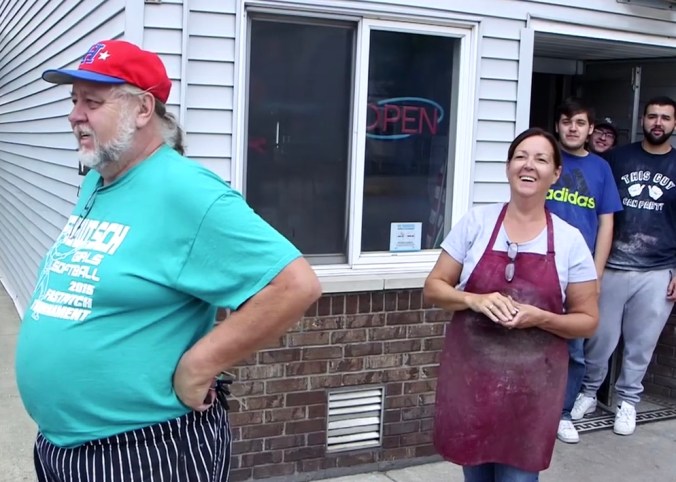
Pudgy’s–we’re convinced–is special. Especially with this endorsement.
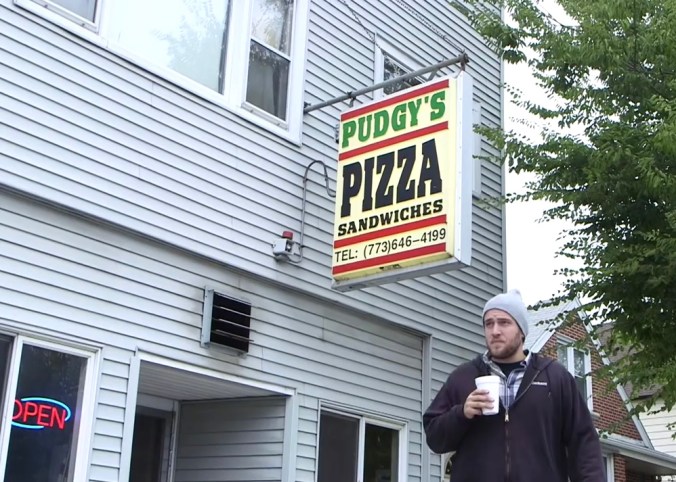
✶ ✶ ✶ ✶
After our first visit to Pudgy’s, we would return a few times, with some of our favorite trips coming in winter as our days as Chicago residents were winding down. And by the late point in our time in the city, we knew we had to make our Pizza Hound trips really count, so we tried to sample everything Hegewisch and the surrounding neighborhoods had to offer, which included taverns, parks, and food other than pizza. There’s no way we could do it all, but it was worth a shot.
One area we explored was the South Deering neighborhood, located north of Hegewisch along Torrence and the Calumet River. There you can find the old, vacant site of Wisconsin Steel, a huge swath of land that also borders the Calumet River, with it’s mix of returning overgrown vegetation, broken concrete, and asphalt that rivals the old Republic Steel site. Wisconsin Steel was the first steel mill in the area. It opened in 1875 as the Joseph H. Brown Steel Company and provided a dependable employment for thousands of Southeast Siders for decades until its abrupt closure in 1980. The buildings have been demolished, but the site has yet to be fully redeveloped, which is understandable: the magnitude of Wisconsin Steel cannot be easily replaced.
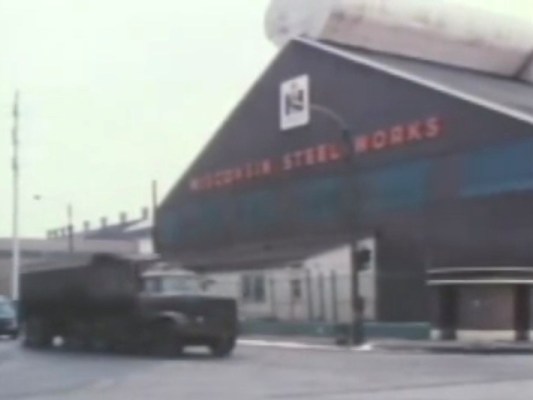
Wisconsin Steel at 106th & Torrence Avenue. Source: The Popovich Brothers of South Chicago, 1977. Directed by Jill Godmilow.
For many years, one could find a pie at Irondale Pizza, run by John Beneak, located at 2614 E. 106th Street, just a couple of blocks east of the Wisconsin Steel mill gate.
That place is gone, but one can still find a pizza right by there at a place called Gusi’s.
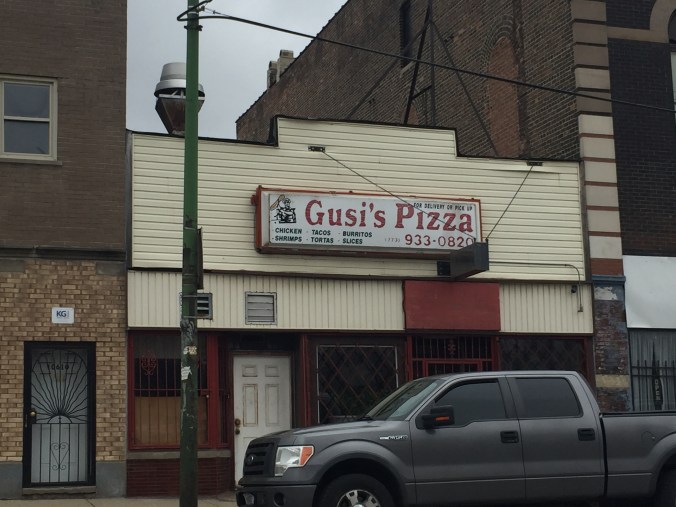
The longstanding and delicious Calumet Bakery, in business since 1935, is just a few blocks west, as are the Trumbull Park Homes, site of the infamous race disturbances. Historically one of the main drags of the Southeast Side, where many businesses and taverns, with their proximity to the steel mills, used to thrive, Torrence Avenue runs through South Deering all the way through Hegewisch

Today, Torrence is much quieter, with very few active storefront businesses. As late as a couple of years ago, we remember seeing a neon light in this building suggesting tavern or private bar. (Then again, it looks like Ragtyme II is still there.)

The tavern located here is gone.

In the 1960s, the space was home to the South Pole, right across the street from the Glidden Co., whose grain elevators are still visible as part of today’s Cargill plant. The name pointed out that the building was basically the end of the world. So where did that put Hegewisch?
The remnants of Acme/Interlake Steel’s coke plant, another heavy-polluting local employer, are located a few blocks south of the old tavern on Torrence. The plant closed in 2001, and in 2004, preservationists working through Chicago’s Steel Heritage Project, a program spearheaded the Calumet Heritage Partnership, proposed turning the Acme site, which housed the last structure’s in Chicago dedicated to steelmaking, into a museum. Just a few months later, architects released plans for the site. Supporters of the project, however, were unable to raise enough money to purchase the site, and Acme’s materials were transferred to the Pullman State Historic Site. The partnership recently released a proposal for a Calumet National Heritage Area.
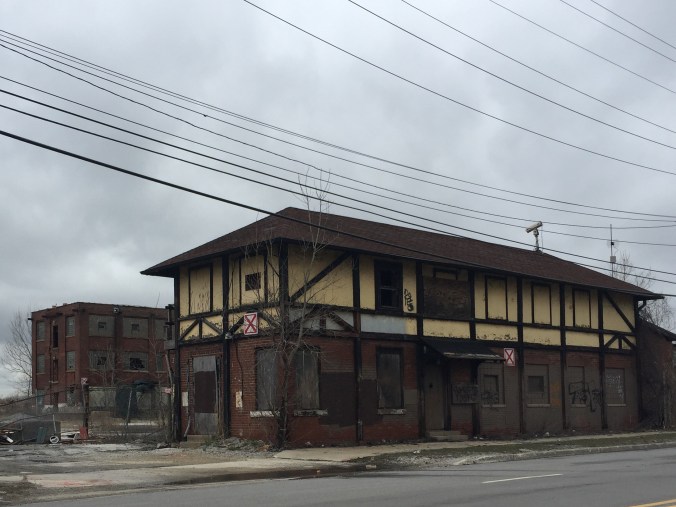
Part of why we visited South Deering was to find the source of the orange sauce offered at grocery stores and markets throughout the Southeast Side, including Baltimore Foods. This photo from Familia Cardenas on Brandon Avenue in Hegewisch, now closed, shows a big bottle on the counter that’s common in a lot of corner stores around the neighborhoods.
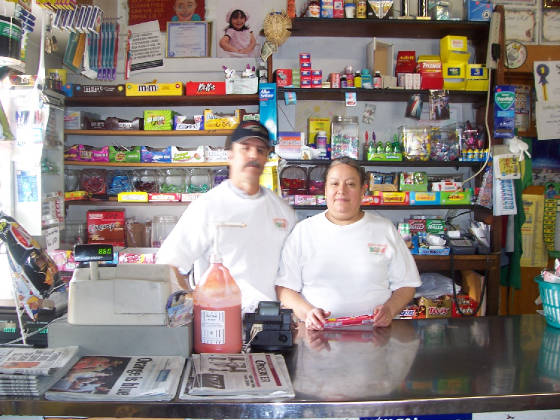
Source: suzanna-andrade.tripod.com.
That unique sauce comes from the South Deering institution, Hienie’s, a chicken restaurant that were fortunate enough to visit a couple of times. Located on the northeast corner of East 104th Street and Torrence Avenue, a couple of blocks north of the old Wisconsin Steel gates, Heine’s is probably more famous for its sauce than anything else. Tribune food writer Kevin Pang produced a nice article worth reading that investigated and analyzed the history and local appeal of Heine’s and its famous sauce. Mike Sula, acclaimed food critic of the Chicago Reader, even named it “Best Regional Hot Sauce” in 2013.
Heine’s was part of one our last trips to Pudgy’s, too. Heine’s is a popular place. It was about a 15-20 minute wait for the chicken, which wasn’t a surprise at all considering the place had customers lining up to order and several others waiting for their food. After our reasonable wait, we grabbed our order and headed farther south to Hegewisch
Hegewisch pride is visible on street posts. It’s almost as if it was its own town, not just a neighborhood in the city of neighborhoods.
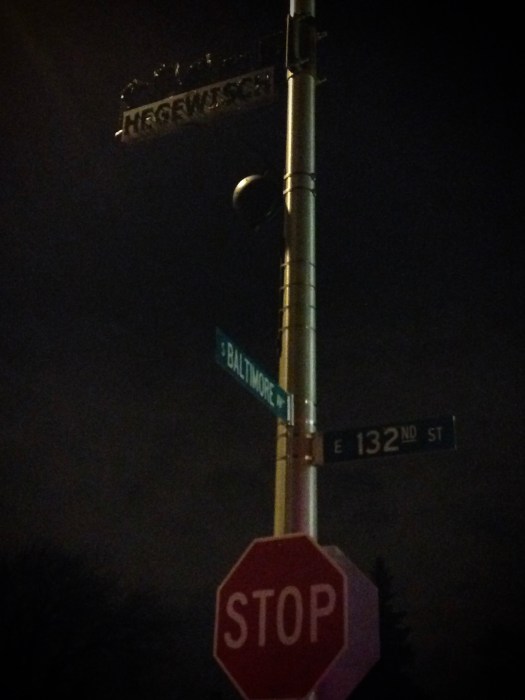
Doreen’s anchors one side of the northern end of Baltimore Avenue at 132nd Street, A newer place called Monnie D’s opened recently, selling wood fired brick oven pizzas, and apparently it’s already gone. So, at one end you have Doreen’s, and at the other end, Pudgy’s. This trip was about Pudgy’s, but we had to stop in for at least a slice. CoJack knows Doreen’s, too, as halfway through “American Dream” video he raps in front of the building.
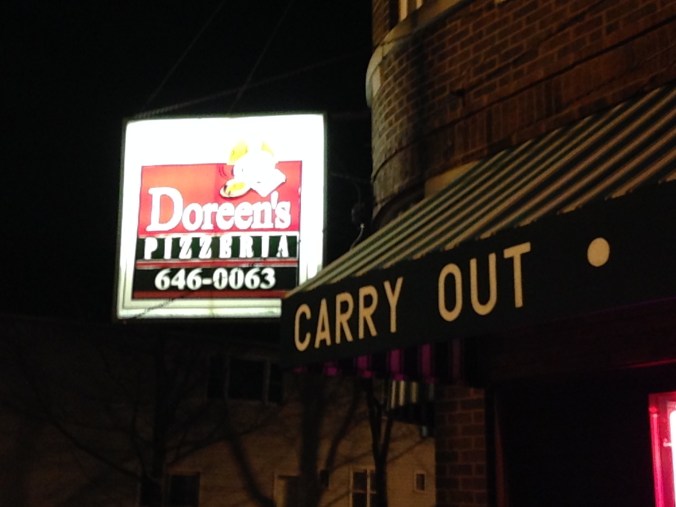
Wendol’s, on Baltimore Avenue, just across the street from Baltimore Foods, is another of Hegewisch’s many watering holes. Along with Club 505, Old Time Tap, and Mugs Bunny, the tavern shows up in CoJack’s “Tried My Best” video. One has to love Wendol’s support for all of Chicago’s sports teams!
The space occupied by Wendol’s has been a bar for a long time, and it looks like it used to be pretty fancy. In the early 1960s, it was Inn Harmony. The building
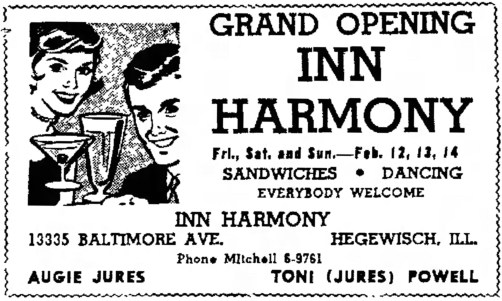
Souce: Hammond Times, February 19, 1960.
But at the southern end of Baltimore Avenue, Pudgy’s beaconed.

We’ve never had the sandwiches, but the pizza. . .
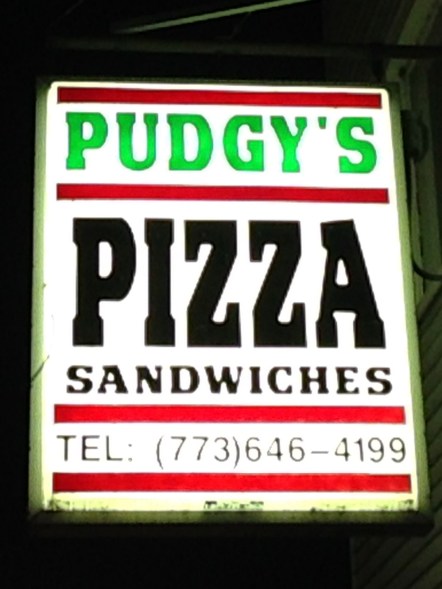
In an light blue vinyl-siding clad two-story commercial building, lies pizza heaven. We’d been here before, but it was still special. Possibly, the most savory, perfect aroma pizza lovers like ourselves have ever experienced. The walls were covered with wood paneling were still there, thank god, and the original gold tin plated tiles were there, too. It looks the same as it did when the original business was there, aside from the fluorescent lights. I told them how much I loved the place, and a young guy working in the kitchen saw the easy opportunity to poke a little fun at my sincere pizza-inspired enthusiasm. The nice lady I’m pretty sure was named Donna, smiling, told him to shut up, but of course, the damage had already been done.
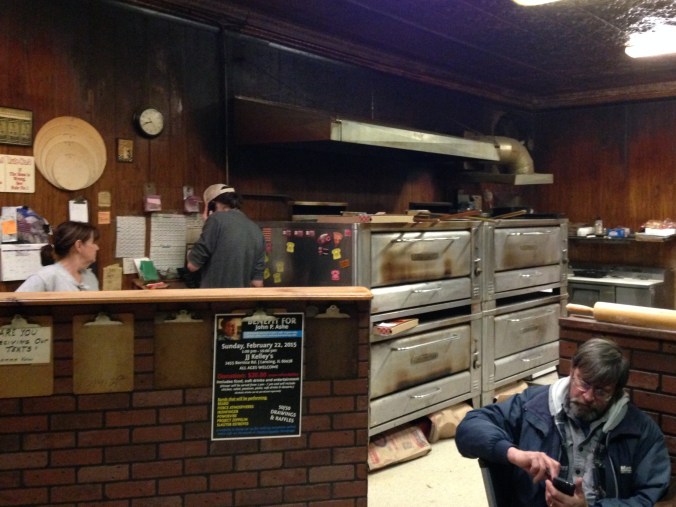
Despite these speed bumps, it remained our favorite pizzeria in all of Chicagoland and Northwest Indiana. We could that you could sit down and eat there, but we’re pretty sure nobody does that. Many regulars come through the door. I think they knew I wasn’t a regular.
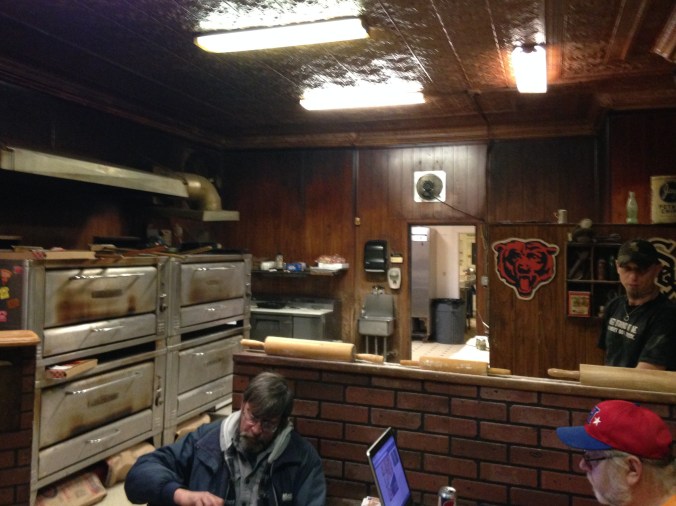
After grabbing our 16″ pizza, the centerpiece of our trip, we headed home. Sometimes on these trips we would do some more driving around. If you keep going on Brainard, you come upon on a busy gas station. . .busy in part due to the cheaper price of gas in just across the state line in Indiana. Over the years we would occasionally drive over the border to see what was going on. We saw a number of taverns with a few cars outside, some taco shops advertising cheap tamales, and a pizza by the slice place. One bar in Hammond, Milskie’s, had a nice neon sign and was located in an older two story building. A later trip revealed that it was gone. Apparently, there was a crackdown; not sure if it was the death knell. The building’s gone now, too.
But, hey, we live in Illinois! Time to get back! We knew we would have a nice spread to enjoy once we got home, and we were right. The slice from Doreen’s didn’t impress, but, hey, it was a typical slice. I feel bad writing that because the lady who helped me was very friendly, and gave me a big piece. No doubt they make a great pizza if you order a whole fresh one. For some reason Ernie and I chose to save a couple of bucks (we were on a tight budget at this time) and instead just grabbed a slice. Yeah, it likely had been sitting in the warmer a couple of hours. (Update: We’ve since enjoyed a fresh, full size pizza from Doreen’s and it was delicious, but that’s for a future post.)
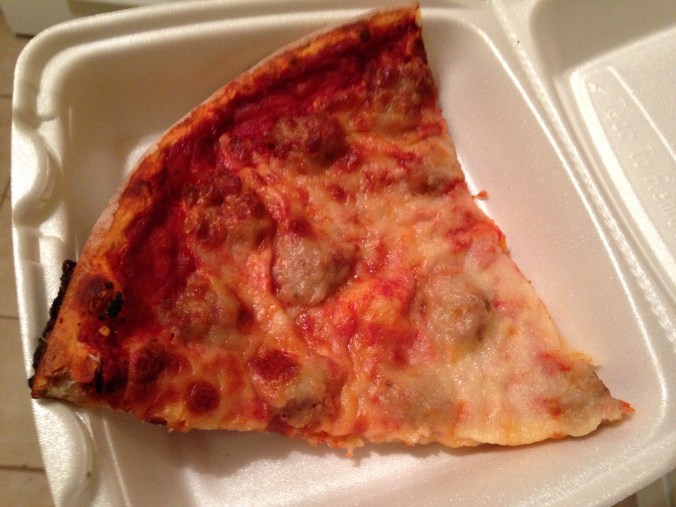
The fried chicken from Heine’s was delicious, just as in past visits. While juicy with a crunchy breading, I would put our money on the chicken from Loncar’s Chico, nice great longstanding neighborhood tavern in South Chicago, where the bartenders, cooks, and other patrons are very friendly and welcoming. Heine’s apparently used to be located in South Chicago, too, on Commercial Avenue, not too far from Loncar’s. Fries, a roll, slaw, and hot sauce included!
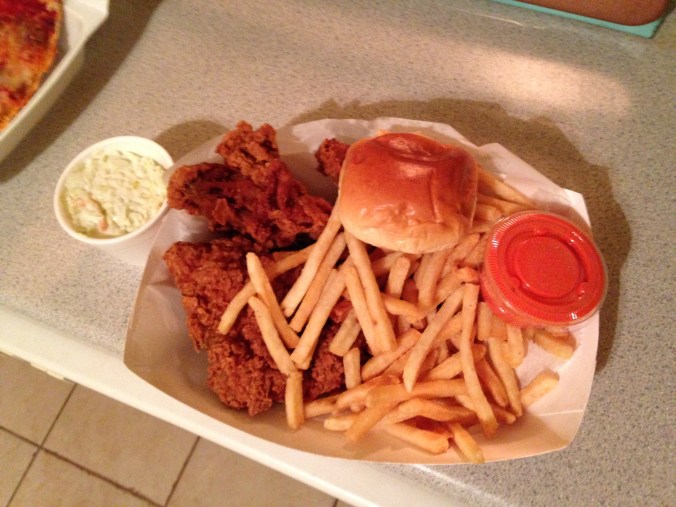
We could see why Heine’s is locally famous for that sauce. Honestly, we can’t say there’s many hot sauces like it. Thick, creamy, almost mustardy- or horseradish-like, with an orange color that has a somewhat unnatural tint to it, almost like a few drops of gray paint have been mixed in. (Kevin Pang of the Trib put it best: “…like a child with paint went nuts at the Sherwin-Williams store.” Genius. It even kind of references the old paint plant in nearby Roseland. We can’t beat that.) Of course, it’s unnatural hue almost correlates with the industrial pollution that abounds on the Southeast Side, too.
Maybe kind of like molten slag.
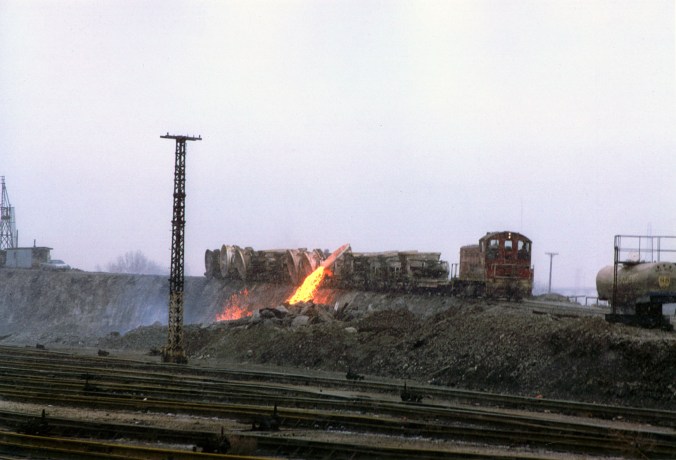
Courtesy Southeast Chicago Historical Society.
It’s a must for the chicken (they serve it at Loncar’s and you can buy it at markets like Baltimore Foods) and it’s not bad for dipping your pizza. The only sauce we’ve had that comes close in flavor, color, and consistency is Syberg’s wing sauce, five hours away in St. Louis.

A giant pizza with a topping and a half for $23 is pretty good. It’s a great deal for a well made pizza in one of Chicago’s classic pizzerias. Don’t forget! Remember your number! As circled below. And it’s probably 41 and not 941. Remember!!
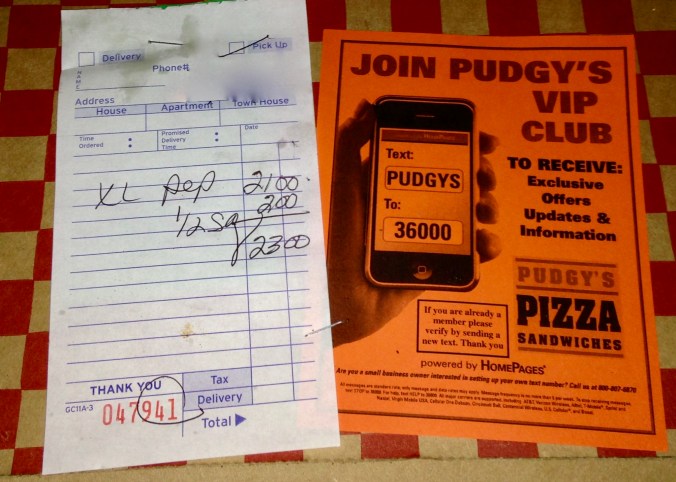
What a fantastic looking pizza! Not perfectly round, this pizza had perfectly imperfect oval shape. You could tell an actual person had made this pizza. I had a brief conversation with Bob, one of the owners, about the ovens. He noted that so many places have moved to conveyor ovens, where you put your uncooked pizza in at one end, then take the baked pie out at the other end. Pudgy scoffed at this. “It takes away the human element,” he said as he went back to what he was doing before I interrupted. Indeed, a human had cared about the quality of this pizza. “Take as many pictures as you like,” Bob said with the wave of an hand. Who was this person?
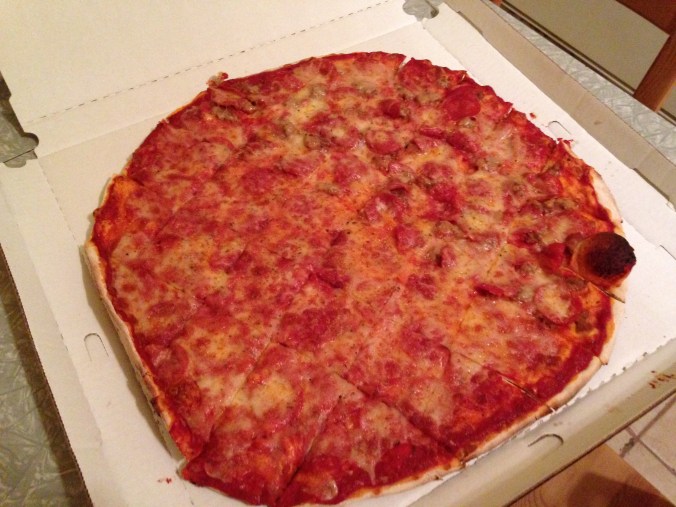
When we opened the box at home, there was a beautiful ring of sauce around the edge.
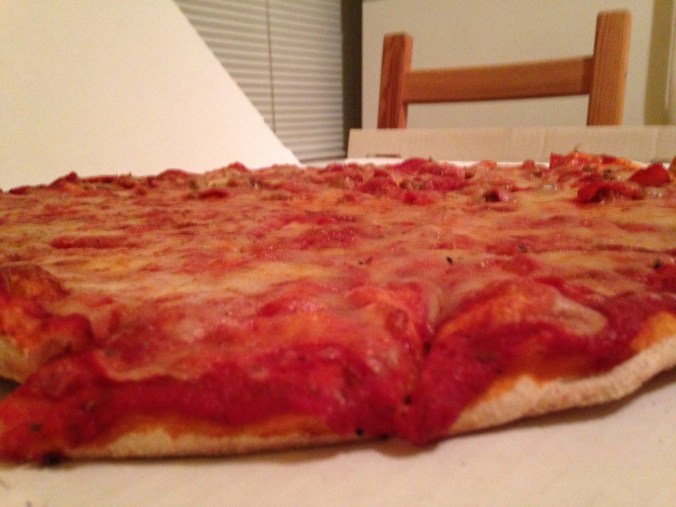
Ernie posed proudly, as he always does, but I know he couldn’t wait.

One more picture.
First small saucy piece for the champ!
That pizza from Pudgy’s is as big as you, Ernie!
The beautiful spread: Doreen’s slice, Heine’s chicken, fries, and hot sauce. . .and a huge Pudgy’s pizza! A meeting first of it’s kind in Logan Square? Probably. Meanwhile in Hegewisch, there was a collective shrug. . .
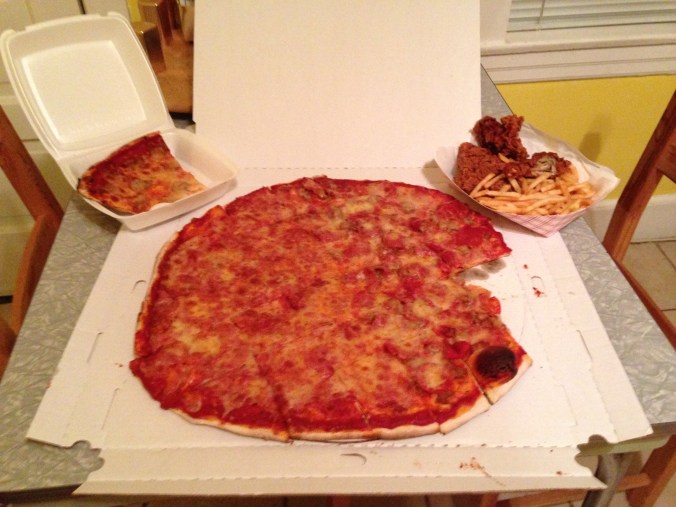
Warmed up, the pieces get a little more life, melting the cheese and brightening up the tomato sauce.

Love that bubble!
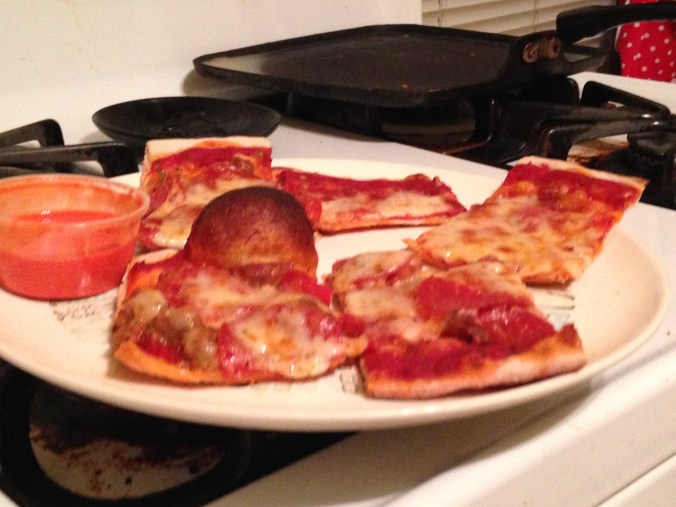
This was such a great trip that we headed back to Hegewisch just a couple of weeks later.
✶ ✶ ✶ ✶
It was a particularly cold winter in Chicago; a winter when zero-temperatures were fairly common. To some, the brutal cold of Chicago is soul-crushing; to us, it made us feel alive. No doubt there are some former Hegewisch residents living in Florida. They may have the warmth and sunshine, but there’s a good chance they feel a little nostalgic for cold streets of Hegewisch. A lot snow came that winter, too, but in Chicago, life does not come to a halt. . .it absolutely thrives. Not everybody shovels their sidewalk, but a heck of a lot of people do. If you worked in the steel mill, you went no matter how cold it was outside, and no matter how hot it was by the furnaces inside.


Republic reports [for work], indeed. Pile it up, and head to the bar!
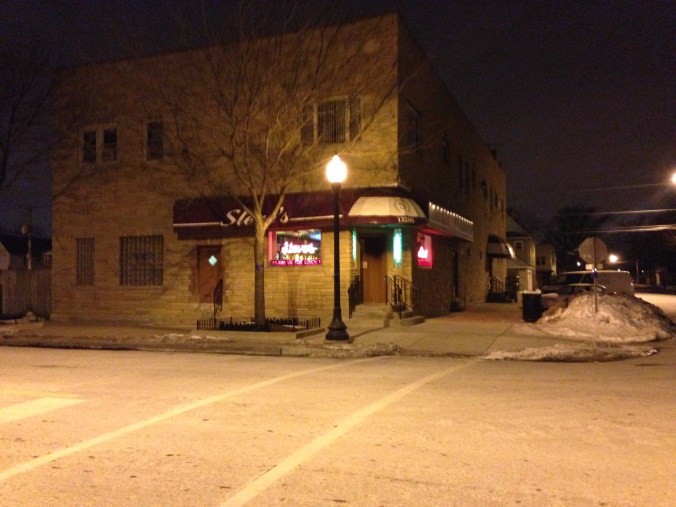
One great tavern in Hegewisch is Steve’s Lounge, located at 132nd and Baltimore just across the street from Doreen’s.

Source: Hammond Times, May 31, 1957.
Open under its current name for about six decades, the corner at 13200 South Baltimore Avenue has been a home to a tavern for much longer.

I made a special trip to Hegewisch (sadly, sans hound) with my friend Bill for their legitimately famous fish fry.

Source: Chicago News Marketer, April 10, 1991.
Fish has long been a common staple in the area due the proximity to bodies of water and the swamps that make up the natural landscape. The Catholic presence of this long-predominantly Polish, and now significantly Mexican, community, certainly plays a part, too. This was pre-Lent, so the crowd’s weren’t too bad, though still busy. I’ve known Bill longer than anybody in Chicago.

Fish is available in the back dining hall, through which you enter via door along 132nd Street, a door from which St. Florian Catholic Church is clearly visible in the block just to the north. Was polka played at Steve’s years ago (or recently)? We’d be shocked there wasn’t.
Getting off work on the North Side at 6 pm cut it close for us, but we managed to arrive just before the end of the serving hours. We were greeted with an incredible spread of food that rivaled our pizza and fried chicken from a couple of weeks ago. Bread, whitefish, lake trout, shrimp, fries, pickles, and tartar sauce, with Old Style and Miller Lite to wash it all down.
The potato pancakes were fantastic!
After our meal, we grabbed a drink at the bar, located in the front room. Don’t let the gentle smile on the face of this sensitive artist type fool you: Bill’s done as much blue-collar work as almost anybody in Hegewisch. Northern Ohio gets Hegewisch.
Draft beer was available, but bottles seemed to be the de facto choice. This isn’t the only place where we encountered this. Why is this the case? Is it the typical preference of most customers, or does everybody know something I don’t? A bottle it is.
And a fancy glass to go with it. In a damn fancy tavern. We enjoyed hanging out at Steve’s. Nice and quiet. No one else besides the bartender and one other patron. The hockey game was on, too. And despite the direct and somewhat threatening “Again?!” from the bartender regarding my just finished Miller Lite, we would have loved to stay all night. But we decided to hit the road–and he seemed not to care one bit. And by the road, I mean Baltimore Avenue. Just a few blocks away, we payed a visit to Old Time Tap.
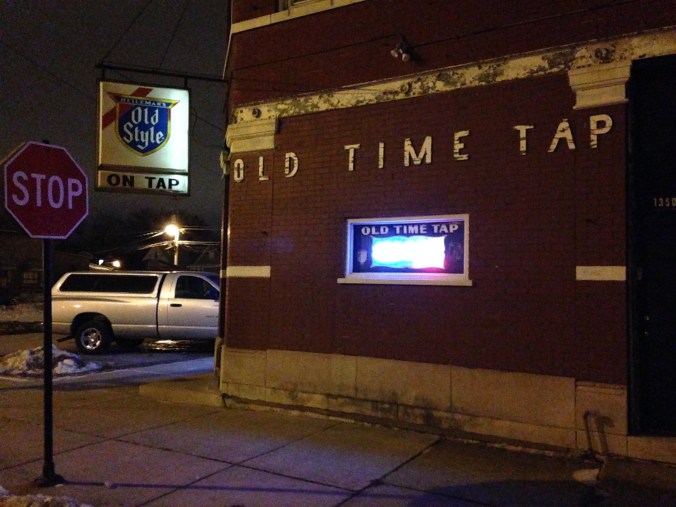
Old Time Tap is located at 135th Street at South Brandon Avenue, just a block off of Baltimore. In recent years, the bar scaled back its long hours because of decline in the numbers of customers coming in after the third shift, showing how prosperity of local service economy is tied to the health of local industries. Without workers at the big companies, places like Old Time Tap–and Pudgy’s–have fewer customers. It’s something that has happened citywide and even nationwide. So, now many old taverns have to be partially supported by Renaissance men like Bill.
While we can’t guarantee it’s the most popular beer inside, the illuminated sign hanging outside shows the widespread appeal of Old Style throughout Chicago like in no other city.

Inside was a perfect neighborhood tavern that could have been in any smaller Midwestern city like Rockford or Peoria, or even a small town. Despite a city-wide smoking ban, cigarette smoke flowed freely through the air. Dean Martin was playing on the jukebox as a couple of small groups of friends laughed and enjoyed the Friday night. Old Time Tap was on the real estate market around this time. Ernie and I did some dreaming. . .
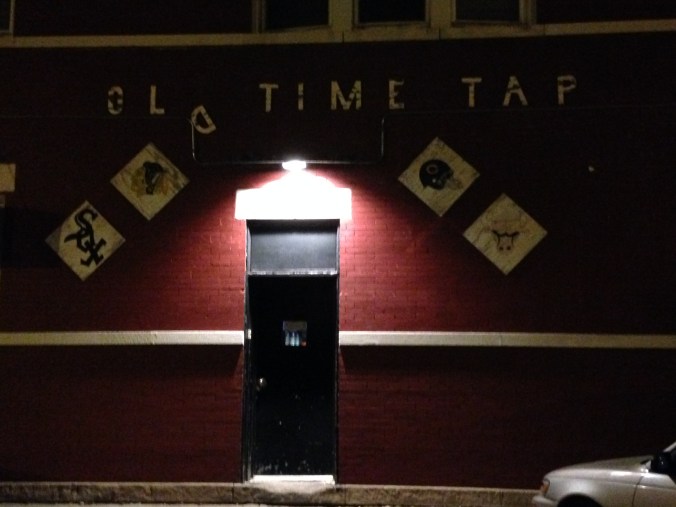
This tavern has been around a long, long time. There’s Old Time Tap on the right in the early days of Hegewisch.
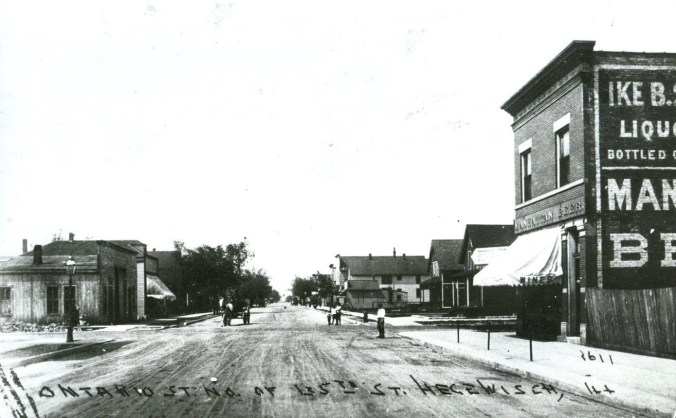
Brandon Avenue, formerly Ontario, at 135th Street. Today’s, Old Time Tap is located at right. Courtesy Southeast Chicago Historical Society.
Ike B. Silverman operated a tavern there after 1900. Most men worked in the car shops or steel mills, but women were mostly able to find work in the service sector. Accordingly, Silverman placed a classified ad looking for a “Girl for general house work.”
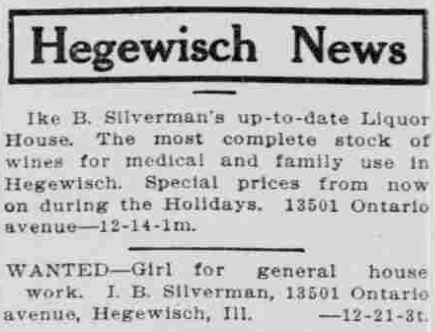
Source: Lake County Times, December 21, 1906.
Production of Old Style Beer began in 1902, but Silverman instead advertised Budweiser on draft rather than the eventual Chicago classic.
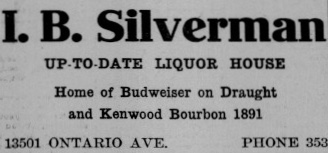
Source: Source: Lake County Times, April 6, 1912.
No doubt Old Style was served a later incarnation of the tavern in the late ’50s.
Since Bill and I had been at work all day at a record store up on the North Side and made the somewhat long trip down south–and hit a couple of places already–the night was winding down. Before heading back, I asked Bill if I could make a call. I had to do it for the Pizza Hound. So, I made the call. And while we waited, we decided to check out Mugs Bunny.
A tavern since at least the 1910s, when it was operated by Theodore Kossakowski, likely a Polish immigrant, you could tell Mugs Bunny had a lot of history despite its cartoony name. No doubt a lot of autoworkers, steelworkers, police officers, firefighters, city hall employees, and local business owners have graced the barstools around the bar.
It was Lil’s Lounge in the mid ’60s. Has it been anything else? Hmm. We’d like to know.

Known by its interesting name since 1978, we found Mugs Bunny to be a common enough neighborhood type of place. But the more we looked, it turned out to be a pretty unusual one, especially for what one would expect within the city limits of America’s third largest city. Time Out Chicago hilariously noted that it was the “most irresponsibly named bar” in Chicago. There was a bar in the front, but there was also a wood-burning stove in the back with stacks wood along one side, and a pool table, too. Despite feeling a bit rejected by the clientele (not sure if it’s connected, but they headed to back room right after we arrived after a few looks that lasted one second too long) the bartender was very friendly and welcoming. We enjoyed our beers and soaked up the ambience of a classic Chicago tavern. Interestingly, it was the first and only place in Chicago that I had ever seen St. Louis-based Schlafly Beer available.
While sitting at the bar, my phone started to ring. Hmm. Who could that be?
“Hello?”
It was Pudgy’s. They were closing and wondering if I was going to pick up the pizza I ordered.
Dear god! I can’t help messing up with those fine folks. More than once I forgot my order number. This time, I messed up their closing time, and thus ordered a pizza right before the end of the night. They probably hated me. Bill and I quickly headed over to Pudgy’s, where I expected to meet my pizza fate, forever denied welcoming entrance into one of my–and Ernie’s–favorite pizzerias, and thus forever denied entry into one of my favorite neighborhoods in all of Chicago. Battling Nelson would be irked by my disrespect. Not even CoJack could save me now.
With most of the lights off, I nervously opened the door. The woman I had encountered before–one of the co-owners–was the only one there. At first, she seemed aloofly annoyed that I was late, or maybe I was too sensitive (probably that). I paid, then asked if they had my size in t-shirts, which had a really cool new design. She lightened up, and tried her best to find a shirt that would fit me, evening offering me a chance at other sizes. As an outsider, this meant a lot. This pretty much summed up every experience we had in Hegewisch: caution at first, with a slight bit of indifference, that quickly became warm and welcoming once a level of trust was reached. With that, she turned off the last light, locked up, and left in her pickup truck. Bill and I left, too. What a great experience.
We made it back up north around midnight. I dropped Bill at his place in Humboldt Park, and then I made home to deliver the pizza to the hound, who had been waiting patiently.
“Pudgy’s! My favorite!” I got a half sausage and pepperoni, and half Bob’s Mistake.

Pudgy’s is Ernie’s place!
Our new t-shirt had a fantastic Blackhawks-inspired design!
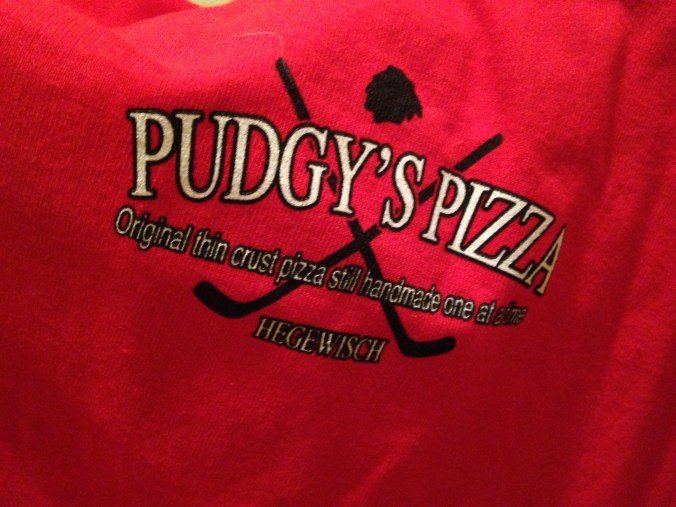
Go Hawks! And on the back, some words that we can agree with.
When pizza time was over, Ernie was ready to bundle up for the cold temperatures. Again, Chicago was freeeeezing that winter, but we loved it.
In our century-old three flat, of which we occupied the first floor, no matter what you set the thermostat at, it was going to be cold. Wrapped up in some treasure his mom found–and full of pizza–Ernie was ready to hibernate!

Only five more to go. These are our badges of honor, though.
✶ ✶ ✶ ✶
And that’s were we left it. . .then. Our trips to Pudgy’s had left a big enough impression on us that we could have felt we knew all we needed to know. Pudgy’s stood as one of our favorites pizzas, and probably our favorite pizza place in Chicago. But, still, after all of our trips there, Hegewisch remained a bit of mystery to us.
It turns out that if you want to know more about Hegewisch, all you have to do is ask. One night while writing this post, we were having a hard time feeling like we had this whole experience figured out. Something was off. We needed to know more. So, we wrote a message to Bob Zajac, owner of Pudgy’s Pizza, and nervously hit the send button. We were shocked that he responded within about an hour and graciously invited Ernie and me to swing by Pudgy’s that Friday. So we made the trip and sat down with man behind our absolute favorite pizzeria in Chicagoland.
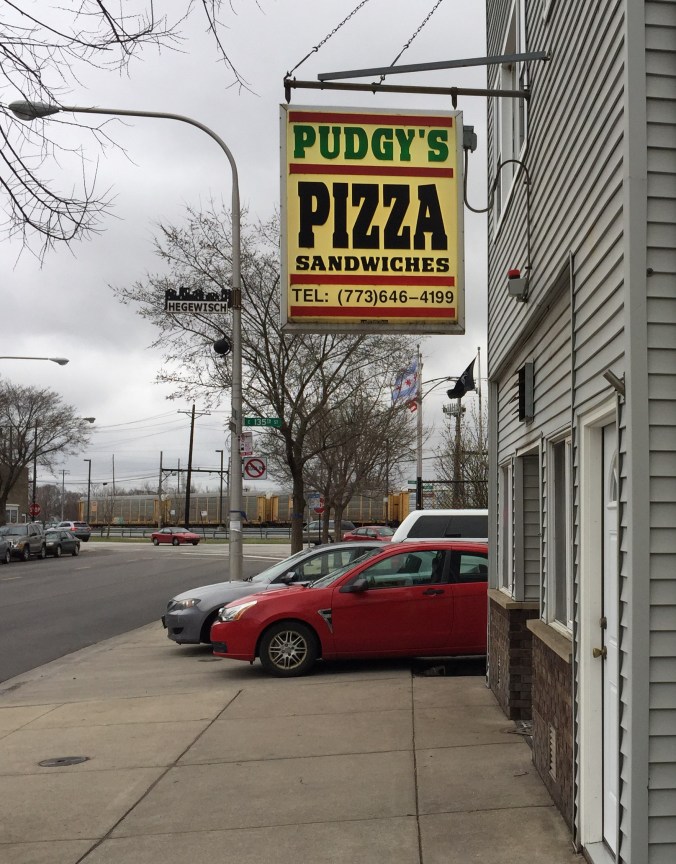
“Step into my office!” Bob said after we introduced ourselves, motioning to the small table along the wall. It was just one of three in the compact front area, and it was a perfect place to talk about pizza and Hegewisch while getting a view of everything going on at the counter and in the kitchen.
Bob’s lovable guy, charismatic, and a lot of fun. He loves talking about his favorite community, Hegewisch. Bob has a gift of making you believe. A self-described “pizzaholic,” he periodically emphasizes his words to drive home his points, and he makes you feel so glad to be engaging with him. There’s always a smile and a happy mood, not at all like the mood we thought we glimpsed most of those times when Ernie and I had visited so briefly. This time I really saw something special. We got a hint of Bob’s great personality on our visit just before this one, when Bob handed me my pizza and gave me the sincerest “Enjoy!” that I’d ever gotten there. He really sounded like he meant it. And once you get the conversation going with him, it is absolutely clear that he is passionate about pizza, loves getting to know his customers, and believes in supporting his community.

Like many people who grew up in Hegewisch, Bob is the grandson of Polish immigrants on all sides. His family has a business tradition, too. His father’s family owned Zajac’s meat market 13307 Houston Avenue, and on Baltimore Avenue where Opyt Funeral Home stands today. Later, his father worked as a steelworker for Youngstown Sheet & Tube in East Chicago.


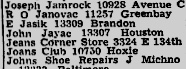
“My mom’s family was business, and taverns. At one time I had three aunts and uncles that owned taverns,” Bob said. “Two of them right here in Hegewisch, one of them in West Pullman area. And that was my mom’s two brothers and her sister. By then my mom and dad were out of the tavern business.”


“But, you know, that’s what we grew up with. We grew up with business and we grew up with taverns. And we grew up with bowling machines and stuff,” Bob said.
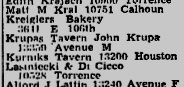
Bob attended St. Columba Grammar School in Hegewisch, and went to Chicago Vocational School, or CVS, in South Chicago, class of ’69. “Of course, I was like the world’s worst student. No doubt about it: the world’s worst student. I went three years of high school [and] my parents never saw my grades. Never saw my grades.” He detailed his clever scheme to keep his parents in the dark about his less-than-stellar marks; a plan that somehow worked. By his own words, he “never got caught.” But years later, “I finally owned up to my mom before she passed. Had to get it off my chest, you know?” Bob laughed.
According to Bob, there was no better community to grow up in. “It was so cool, you know? [Hegewisch] was a beautiful, beautiful area to grow up in.”
Everything you needed could be found within the community. You didn’t need to go to downtown Chicago or even to Commercial Avenue in South Chicago. If you didn’t stay local, you might drive to downtown Hammond, but you really didn’t need to. “You had Kurnik’s Dry Goods, which was menswear–was on this block, on this side of the street.”
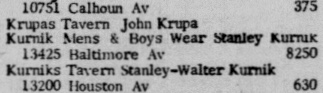
“You had Stanley Dry Goods, which was shoes and socks and shirts and underwear.”
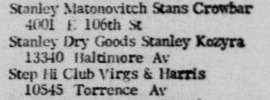
“You had Reliance, which was like the world’s biggest dime store at that time where you can buy everything.”
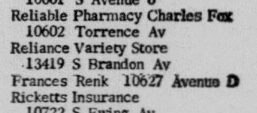
“You didn’t have to leave Hegewisch for a thing. You had lumber yards.”
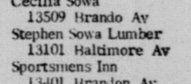
“You had bowling alleys.”
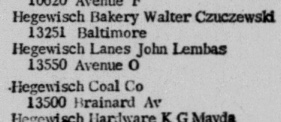
“You had taverns up the ass, you know? Now, you’re probably down to 15 or so [taverns],” down from something like 42 a few decades ago.

One early-twentieth century tavern was located in the red three-story brick building at 13501 Baltimore Avenue–almost directly across the street from Pudgy’s. It was run by a man named Andrew Zajac.
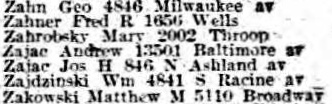
Are Bob and Andrew related? We couldn’t find any direct evidence of a connection. Zajac is a common Polish surname after all. Regardless, Andrew Zajac is a good case study for Hegewisch.
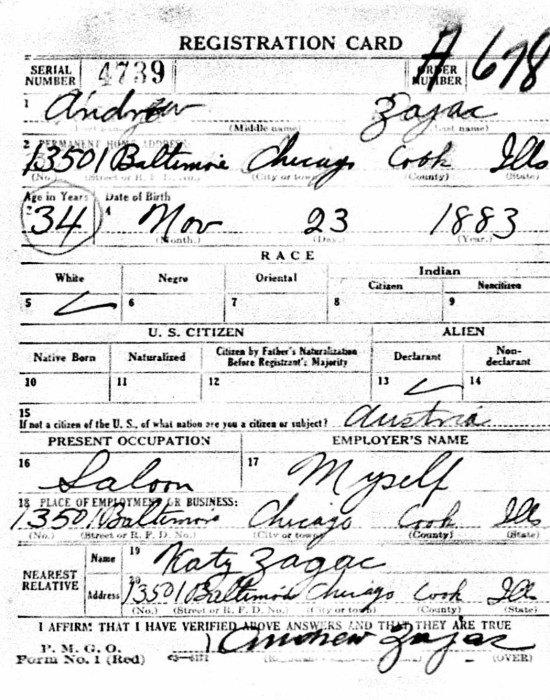
Source: National Archives.
Andrew became an American citizen in 1902, and his wife, Catherine, or Katy, received citizenship status in 1905. Despite the fact that his World War I draft lists Austria as his place of birth, later census records show they both came from Poland. The 1930 census also showed that four lodgers lived in the building, showing the diversity of Hegewisch at the time. Two of the boarders were from Poland, one from Sweden, and one from Czechoslovakia. Three of the four men were laborers either in a steel mill or a car shop, while one worked as a carpenter.


Andrew Zajac operated his tavern on Baltimore very close to the car works, an ideal location for business that was closely connected to heavy industry. In the early 20th century, there were three taverns on the east side of the 13500 block of Baltimore, just steps from Pressed Steel and the railroad tracks. But being a lucrative business also made it a target.

Source: Chicago Tribune, December 12, 1920.
Banned from serving alcohol during Prohibition, Zajac was forced to evolve and went into the grocery business a few doors south at 13513 Baltimore, near the intersection with Brainard, just a few doors away from Jacob Skowronek’s grocery market at 13460 Baltimore, the current site of Pudgy’s. Meanwhile, Ryan Car Works had moved offices into Andrew Zajac’s old tavern space in the tall red brick building at 13501 Baltimore.
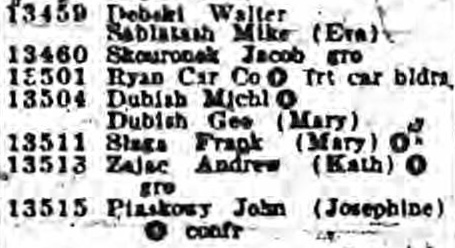
A later draft card confirms Andrew’s place of birth in Limanowa, a town in the Austrian partition of Poland. By World War II, Andrew Zajac was back in the lucrative tavern business. Later, his son August ran the tavern until at least the 1960s.
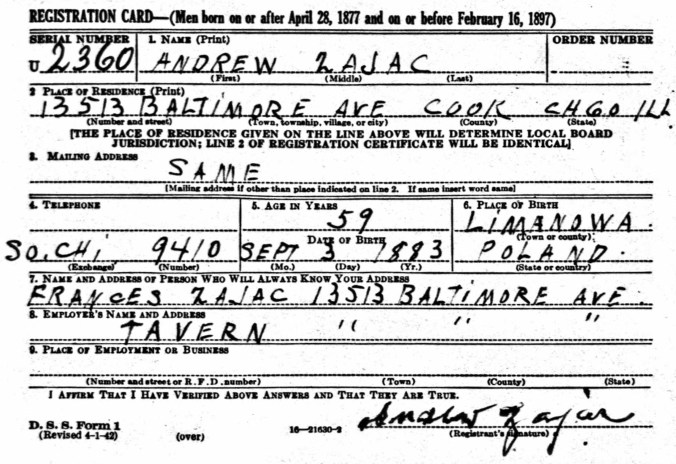
Source: National Archives.
Taverns were a crucial part of life in Hegewisch when Bob was growing up, too. “You had right across the street here on the empty [lot just across the street], that was a tavern.”
“The other end of the block was Mugs. That was a tavern. 505 Club was a tavern.” Bob also remembered how exciting it was to hear the birthdays of friends and relatives mentioned on WJOB’s live polka broadcast from the club.
“So, within a par three you had three taverns right there,” Bob said. “You had Old Time Tap which used to be Alex’s. Right there! In the middle of the block was another tavern.”
“And then, on Brandon, one block north, you had Blondie’s on the corner,” he continued.
“Then you had another tavern across the street.”
“End of the block–Beacon’s. That’s still there.”
That’s an insane number of taverns, but get a sense that it was just part of the work culture in Hegewisch.”Yeah. Steel industry. It was a steel town, you know?”
There were grocery stores and markets all over the neighborhood. Before Bob’s lifetime, the storefront that houses Pudgy’s was one, too. In the 1920s, Jacob Skowronek operated a market in the building. The original square ceiling tiles provide clues to its history as an early business establishment. Census records show that he came to the U.S. in 1914 from Poland. His wife was also from Poland, and their children were born in Illinois. By 1930, however, census records listed him as a foremen in a steel mill, with no mention of the grocery. Skowronek lived in the two-floor building valued at $8000 with his wife three kids, a boarder, and another family, also of Polish origin, of seven (if records are correct).


By the late 1950s, the space was occupied by Josephine’s Beauty Shop (which by the next year had moved to 13158 Escanaba). As in, Josephine Skowronek?
But Bob also remembered many stores growing in the community in the 1950s and 1960s. “There was another one on the next corner,” Bob said. “A block and a half down was another one. On this block–a block and a half down was another one. Where I grew up, within a block, there were three of them. Just little mom and pop grocery stores.”
It wasn’t necessarily a lucrative business, but it could help the next generation make a step up. “They all made just enough to send the kids to school–certainly not send them to college, but send them to school–to maybe take a one week vacation once a year to Knox, Indiana or something, you know?” Bob said. And implicitly you get the feeling that Bob shared a similar humble working-class experience growing up. “Gosh, I never saw an airplane until I got drafted in the late ’60s, you know? Our vacation was jump in the old family Truckster, drive an hour and sit on a pier with a worm,” he laughed. “That’s kind of what it was.”
At even that modest vacation was a big deal, because his family, like most families in the neighborhood, was far from rich. “Yeah, yeah, it was a long ways off at the time. But that was okay. It was cool. It was conducive with the way we were growing up. That was conducive with our world.” Even other parts of Chicago seemed a world away. “I remember I would watch television as a kid and they would talk about the South Side of Chicago and they’d be at Comiskey Park at 35th Street,” Bob said. “What you mean, South Side?! This [is] the South Side! That’s way up north! You know? And not even understand how massive Chicago was.”
“And pizza was kind of in its youth, you know, in the late ’50s, early ’60s,” Bob said. “It was still kind of growing in areas.” Pizza would really took off in Hegewisch, though. Bob remembered six pizza places just in the neighborhood during childhood years. His earliest pizza memories, though, come from a locally-legendary place a few miles to the northwest outside of Hegewisch.
“The first pizza place I remember was called Pasquale’s, and it was on 106th Street and the East Side. And I remember going because you had to go down the stairs to Pasquale’s. Remember Pasquale’s, Scott?,” Bob asked one of his delivery drivers sitting behind him who was looking at his cellphone wearing a green stocking hat, glasses, and a Carhartt.
“Oh, we were a Pasquale’s house, man,” Scott reminisced.
Pasquale’s was a fairly common name for pizzerias for several decades. Chicago had a few of them, and their was basically what amounted to a chain with locations in other parts of the country. However, except for its second location on 79th Street, the Pasquale’s on 106th Street and Avenue L was a local institution.
With great passion Bob said remembering the defining experience of entering Pasquale’s, “And you would open the door and the steam would come out, and the smell would hit you.” You get the same feeling when entering Pudgy’s today. An amazing aroma hits you, and you don’t want to be anywhere else in the world.
Source: Southeast Economist October 30, 1958.
“And what was the secret to their pizza?” Bob asked Scott.
Without skipping a beat Scott replied, “Old man Pasquale’s cigars!”
“Always had a cigar in his mouth,” Bob said with a laugh. “And people to this day—you can run into anybody that remembers Pasquale’s and ask them what was their secret, it was the cigar ashes, they’ll tell you.” Pudgy’s does not use the secret Pasquale’s ingredient, but it offers the same passion for creating a quality product. “But, you know, it was good. . .it was tremendous pizza, as they all were when I was growing up. Because everything was made by hand. Nothing was mass produced. There was no frozen crust. There was no open a can of pizza sauce, you know? You made your own crust, you made your sauce. A lot people made their own sausage. We don’t make our own sausage, we have a company that makes it for us. But we do our own sauce, we do our own dough, we grind our own cheese, you know? It’s a labor of love.”
The tools of that labor hang on the wall.
The dough counter, where so much of that hard work is done, is a busy place on a weekend night.
The result is beautiful rolled dough. No frozen crust at Pudgy’s.
As Bob and I talked, the rest of crew was hard at work, covering uncooked dough with even layers of sauce and generous amounts of toppings. It’s early in the Friday night, so they will no doubt make many more.
Bob’s words have a way of making you believe in the magic of pizza and Hegewisch, and the energy in the kitchen only confirms it.
“And I tell these young people here that work for me, if you don’t love what you do, do something else, because you’re not going to be good at it. You’ve gotta have a passion for it, especially with food.”
Bob eats and knows pizza, too. “I’ve tried them all,” he said. When asked what his favorite pizza was growing up, Bob mentioned a place no longer in business. “Yeah, I do have a favorite other pizza, and that was John’s Pizza,” originally from Calumet City, Illinois, located just a few miles south of Hegewisch. “John’s was a ground meat pizza.” This ground meat, typically a crumbled Italian sausage that covers most of the pizza, is fairly common in pizzerias across Northwest Indiana, though it’s unclear to Ernie and me if John’s is the origin of the practice. Various incarnations of John’s can found in the Region, with each apparently laying some claim to the being the best descendant of the original John’s. However, the original restaurant in Calumet City closed in 2005. “[That] was one of my favorites growing up,” Bob said.
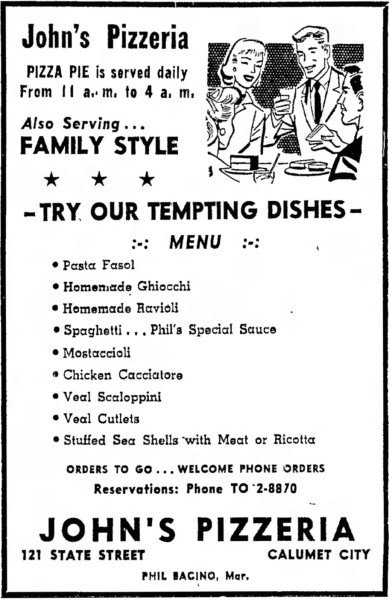
Source: Hammond Times, February 1, 1957.
Bob’s aunt, Stephanie Pober (Blondie), who ran Blondie’s with her husband, Michael (Ace), took him to John’s on occasion. As a business owner, she knew many people the region’s business community, particularly other tavern and restaurant owners. Looks like they got the address right on this one!

Source: Hammond Times, February 22, 1957.
A trip for a kid to the lights and action of “sin city” was certainly an exciting experience to remember. Pizza was not only a treat; it was an event. “My uncle had a boat–he had a beautiful mahogany Chris-Craft like the one in On Golden Pond. And there was a bar called Yo Yo Pete’s, and Yo Yo Pete had a boat, so there was common thread there. Occasionally, I’d go in there. And, I was ten, twelve years old going into these joints, you know?” Bob said laughing.
While he remembered his trips to the Calumet City institution fondly, Bob quickly turned back to Hegewisch. “Other than that, it was the little hometown pizzas that are no longer here: Mama D’s, mother pie to [Pudgy’s], was great.” Mama D’s was located near the middle of the 13500 block of South Brandon, a few spots down from Old Time Tap. “There’s an empty lot there because the building burned many years ago,” Bob said. And it likely closed well before we had ever been to Chicago.
Looks like the Mama D’s crew liked to bowl. There are probably some familiar names on these lists for folks from Hegewisch.
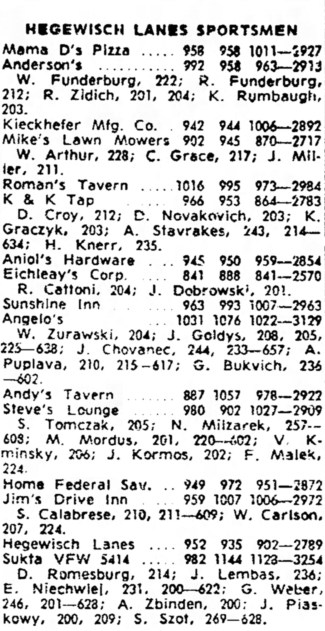
Source: Hammond Times, November 14, 1963.
Bob remembers Milan’s Snack Shop, too. He said there was a sandwich, soda, and ice cream counter in the front, and the pizzeria was in the back. “It was very cool,” he said.
Mama D’s wasn’t the only place in Hegewisch serving a great pizza. “Ann’s, which was almost right across the street from Mama D’s, tremendous pizza. Totally different, but tremendous.”
Mancini’s Pizzeria, the successor to Ann’s, remained in business until just a couple of years ago. Why did Ernie and I never go to Mancini’s? It’s something we regret, providing more proof that you have to appreciate and support your local pizzerias, because once they are gone, they’re gone, losing a link to shared histories.
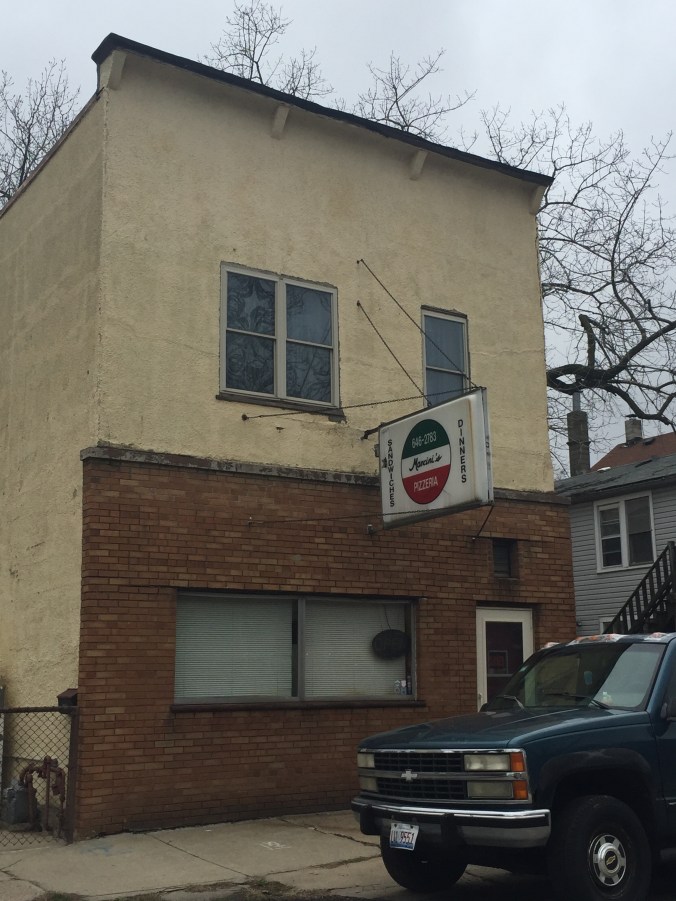
Snookie’s was at one time located just a few doors south of Mancini’s, at 13530 Brandon, and was open until the early 2000s. Pretty amazing that one block has such a long history of pizza. There were more pizza choices, too. “Another was Sam’s, and that was one Brandon (13450) and that was a ground meat pizza,” Bob said. “Kind of John’s. Same thing, only different.” Sam’s closed down sometime in the early to mid ’60s.
“And there was also another one called Bus Stop Pizza. That’s where I hung out as a teenager, you know, in my developing youth he listened to “hippy type stuff” and artists like the Mamas and the Papas, Bob Dylan, and the Beatles. “Everybody hung out somewhere, and it was run by Wally and Marge Bokowy.”
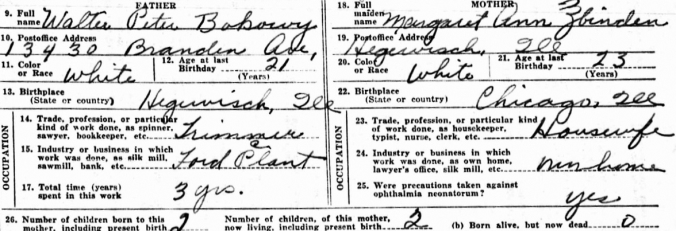
Source: Indiana State Board of Health. Birth Certificates, 1907-1940. Indiana Archives and Records Administration.
Walter Bokowy’s relatives had worked in both the Western Steel and Ryan Car factories. He was a big guy, and “he’d always have the white chef stuff on.” And, you know [it was] one of those kind of places you grew up,” Bob said. “They had tables for dine-in there.” Also known as M & W (Margaret and Walter) Foods.
It turns out that Pucci’s Pizzeria, the first pizza place we noticed in Hegewisch, was more important to our story than we could have known. Before it was Pucci’s and before it was Larry’s, it was Bus Stop Pizza. Still today, the southbound #30 South Chicago CTA bus line stops directly in front of the building.
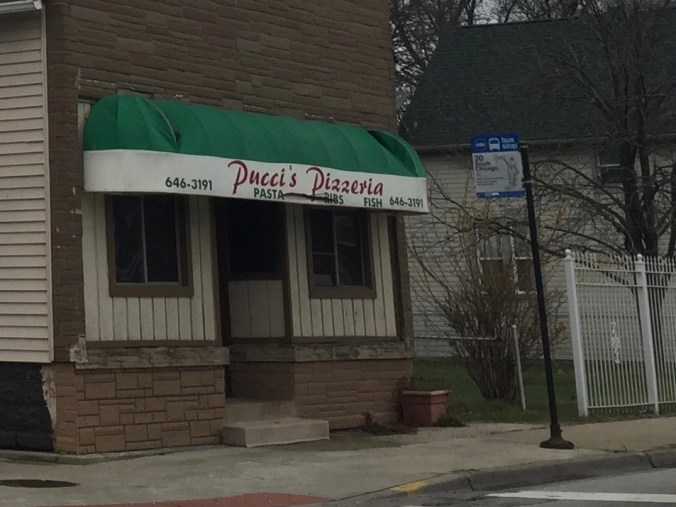
At another point in our conversation Bob mentioned a customer whose son just came back from the service, “and the first thing he wanted was Pudgy’s pizza.” And Bob did not forget about his favorite hangout in Hegewisch when he was stationed overseas, either. “I missed [Bus Stop Pizza] terribly, and ‘the guys,'” he said. Wally and Marge “were great people.”
He must have been dreaming of pizza, because against the odds he found a way to make it himself in Vietnam.
The first pizzas he ever made were dressed-up canned biscuits. But he kept going, even when stationed at a base for fighters and bombers.
There are ovens back there.
His pizzas, made of canned rations and dehydrated cheese, were so popular that they were demanded by fellow soldiers. It was “bread mix, kind of smooshed down in the pan, canned tomatoes (hand squeezed), whatever spices I found, and dehydrated cheese mixed with water and splattered on top.”
To making biscuit pizzas drenched in ketchup as a kid, to going to John’s, Mama D’s, and Bus Stop in his youth, then making pizzas in a war torn country, Bob was proving that pizza was a lifelong passion. It wasn’t his first profession, though. Like many people in Hegewisch and Southeast Chicago, steel was a way of life. “I spent a lot of years in a steel mill,” Bob said. “I worked at Republic Steel,” the mill that used to stand in that nearly empty lot along Avenue O (the one Ernie and I passed in our way to Hegewisch). “And then, that was going down the tube. I worked in the seamless tube mill, and that was supposed to be forever. Oil exploration! ‘Man, we got orders to last us for twenty years,’ which would have got me to my pension, you know? And, that went downhill.” Republic, or LTV, unlike Wisconsin Steel, slowly disappeared, but he left before it closed for good in the early 2000s. Still, a dependable source of work for residents of Hegewisch was gone forever, and many people needed to find other avenues to make ends meet. Bob smartly identified his passion early.
After he left Republic, he found more heavy blue-collar work. “I got on with an industrial contractor and I became a field superintendent for them, and worked a lot of the other mills that were still running. But it was. . .dirty work. I mean, filthy work, and it was okay, money was fantastic, but I wasn’t happy with it.” He did this while he lived in the blue house almost directly across the street from Pudgy’s, a two-and-a-half story frame worker cottage. “I’d get up in the morning–four o’clock in the morning–get dressed, got to work, sometimes come home–”
Just then a customer walked in, and Bob said brightly, “Hi, how are ya?!
“Good. How are you?” the customer replied.
“I am well, thank you,” Bob said with a big smile.
This happened over and over again the evening. Customers coming through door loved talking to Bob, and he loved talking to them. And just like he would do throughout our conversation, he turned back and started right where he left off. “I would come home [at] six or seven o’clock at night, and Pudgy’s was here,” he continued. “Like I said, they were here for about a year and a half. I’d call from across the street, order a pizza, and ask them to deliver it, because I’d jump in the shower. About the time I got out of the shower, I’d throw on a pair of shorts and a t-shirt, my pizza would get there, and I’d answer the door. I’d have my beer in my hand. Eat my pizza, go to bed, and do the same routine, same routine, same routine.”
Was that the best part of the day? “Oh, yeah, you betcha! Oh, besides payday, of course, you know?” Bob said with a big smile.
From the window on the front door of Pudgy’s you see can the blue house where Bob lived, located on the left, as well as another building that means a lot to the business. In the red brick building on the right (Andrew Zajac’s original tavern space and later offices of the Ryan Car Co.), one of the few three-story buildings in Hegewisch, a lady named Donna lived. Donna had worked at Mancini’s, which no doubt appealed to Bob’s pizza-loving heart. The rest is history. You’ll have to ask them for the details, though.
A self-described “pizzaholic,” Bob could eat pizza every day. He said that one time, after he and Donna had been together for just a while, she called him to make possible dinner plans. “I’ll never forget that she says, ‘Are you hungry?'” Yeah, he said. “She says, ‘You want something?’ Nah, I said I’m probably [going to] order a pizza. She says, ‘Well, you had pizza three days in a row.’ And I stopped and I thought about it, I said, I had pizza four days in a row, technically, really.” Realizing he might need to change things up a bit, he altered his plan for the evening. “So I called Pudgy’s [and] I ordered a taco pizza.” You know, to change things up big time! “So, I mean–heck, yeah, I could do it! I could do it five, six, seven days a week.”
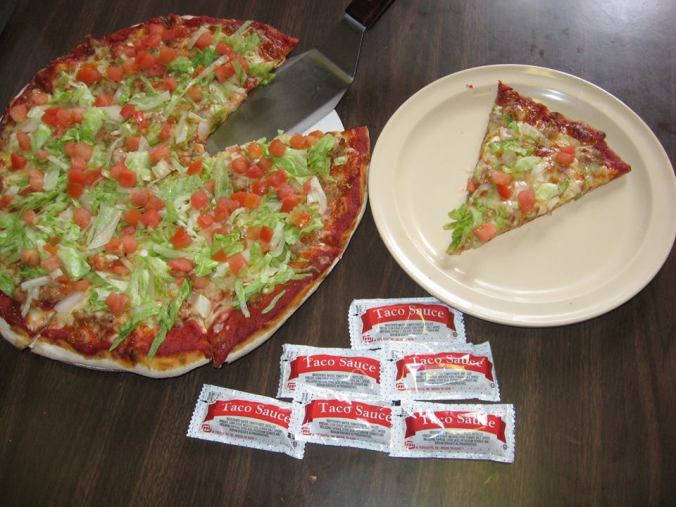
Pudgy’s Taco Pizza. Source: Pudgy’s Official Facebook.
Bob loved Mama D’s, so it makes sense that he ordered from Pudgy’s so much. Pudgy’s didn’t come along 1990s, and was run Barbara Skalka her husband. Skalka and her sister, Snookie, had both previously worked at Mama D’s. Snookie, in fact, ran yet another pizzeria in Hegewisch named, well, Snookie’s. Pudgy’s had two prior locations in the neighborhood before settling at 13460 South Baltimore in mid-90s. The business’s distinctive name came from a nickname Skalka developed as a child. It was actually the name of her childhood dog! How about that?!
Bob, as one of Pudgy’s most consistent customers, understandably started working for the business. “I was the delivery guy here! That’s how I started here. I was delivering pizzas. And at the same time, a pizzaholic, okay?”
“And, like I say, there were personal things going on in their lives and it was affecting everything.”
Eventually, he saw how he could do things better, and wanted to take over the business. “And it was one of those things where I seen it going and they weren’t happy. And I remember asking [Pudgy’s husband], I says, What are you gonna do? I says, Are you just gonna keep doing what you’re doing until you take it on the chin and you have to close the doors, or what? (doing voice) ‘Well, I wanna hang on to it. She don’t.’ And it was like the last common thread they had in their lives, you know? And it would be like saving a marriage for the sake of the children, and watching the children go bad because the relationship sucked, you know?”
“[At the] last minute she backed out. She didn’t want to sell. So, I bought him, and then her and I became partners. And that didn’t work,” Bob recalled. “That was not gonna work. Because now I’m the new kid on the block and I’m hungry.” Business was slow early on, but Bob did his best to drum some up by getting the product–and the Pudgy’s name–out there. There were, after all, other pizza options in town. Doreen’s had already been established for a about a decade at this point. Bob’s strategy? Give the pizza away, and make sure a menu went with it. “I’d send one to this bar. Send one to that bar. Send one to this bar.” He probably sent plenty over to Old Time Tap and Mugs Bunny.
Those menus were a big deal, too. “When I started and before I took this place over, if you came in here and asked for a menu, they would hand you the menu and say, ‘But I need that back,'” Bob said laughing. “Honest to god! They had one menu!”
“And that’s the way it was run,” Bob continued. “My first year into this,” when Pudgy was still a partner, “this place had no sign in front. It had little lace curtains in these windows. It had a little yellow sign about this big, ‘open’ and ‘closed,’ that was missing the corner,” Bob said holding his hands up, making a small shape. “And I happened to be down at Aniol’s Hardware. You familiar with that? About a block away.”
“I knew Mike. Mike and I played little league ball together. We’re the same age. And some guy Mike was taking care of [said] ‘Who is the guy in the next aisle?’ And Mike says, ‘That’s Bobby Zajac. He’s got Pudgy’s Pizza.’ And the guy said, ‘Pudgy’s Pizza. Where the hell is that?’ And the guy was like six doors away from it! That’s how distant this place was.”
“And I said, well,” Bob laughed. “Gotta get a sign. Gotta buy a sign.”
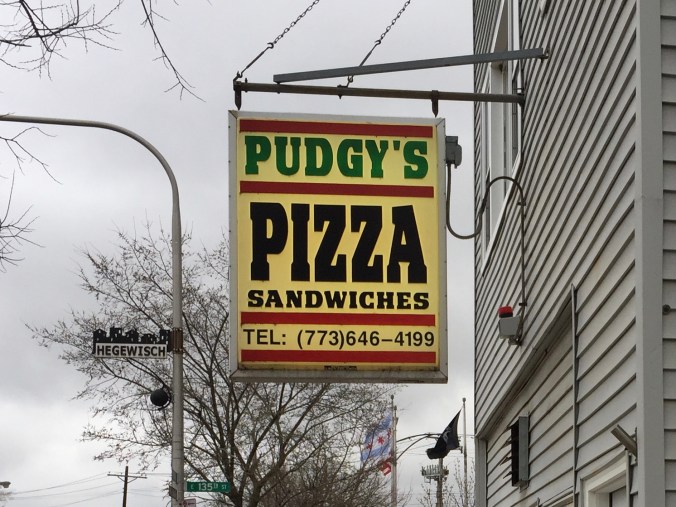
“And, you know what, it was one of those things that was good because this was the first business I’d ever owned. I have no business skills. I have no college education. All I know is hard work. That’s all I know. I know hard work, make people happy, give them a good product. That’s all I know!”
“And if I make dollar on it, too–god–god, that’s great!” While Pudgy’s wasn’t hugely successful at first, Bob continued to send pizzas with menus to bars–“there were a few more bars around”–and every day somebody got a free pizza and a Pudgy’s menu. “And pretty soon it started to develop.”
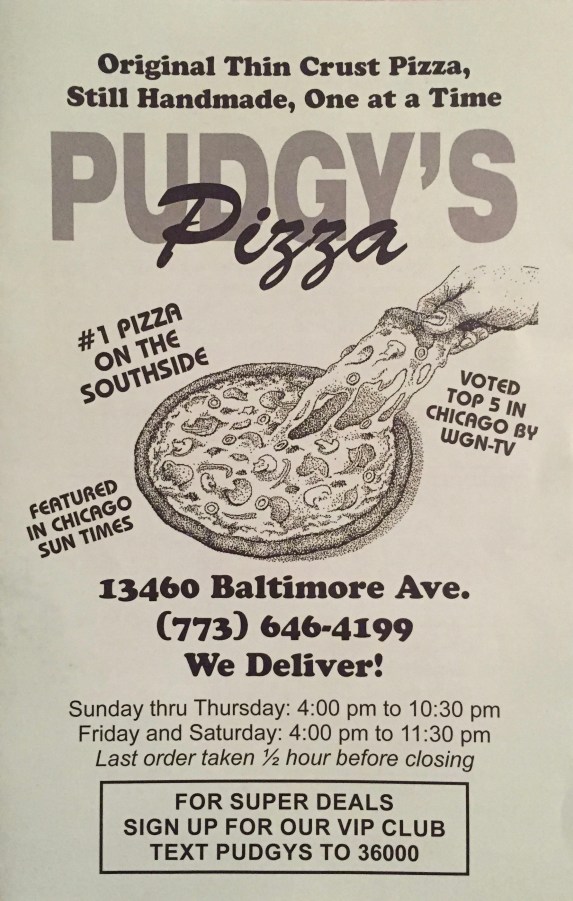
“And, you know what? You’ve got–if somebody’s sitting at the bar and they’re drinking and say, “Hey, where can I get a pie? Where can I get a sandwich?” You know, bam! First thing that’s gonna come to their mind, you know?”
“Tonight is Friday,” Bob started, just then remembering something. He turned to the kitchen staff said, “Oh, don’t forget Steve’s tonight.”
“You know where Steve’s Lounge is?” he asked, turning back to me. “We trade food with Steve’s on Friday. About seven o’clock, I’ll go down there, take a couple extra large pizzas, a bag of sandwiches–beef sandwiches or meatball sandwiches. And, afterwards, about nine o’clock, when their kitchen’s closed, they’re cleaning up, Steve will send food down here and feed my crew. It’s so cool!”
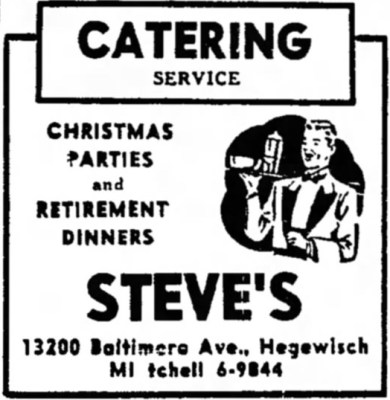
Source: Hammond Times, November 29, 1957.
Steve’s is a neighborhood institution, in business since at least the late 1950s, originally run by Steve Ziemeck. “And his dad had it,” Bob said. “And I became friends with Steve about quite a few years ago. We share common things. We share a love for the town. We share supporting the community and the churches and what have you. We both love hockey, you know?” We know Bob loves hockey because of the official red Pudgy’s shirts that sport a clever Blackhawks theme. By the way, what is this? The Hockey Club?
“When I took Pudgy’s over—again, this was the end of the pizza place, that wall right there,” Bob said pointing to the back of the kitchen. “It was all apartment back there. As we grew, we had to take it over—kind of cannibalize it—to take a couple of rooms, then we eventually took the whole thing because we needed it. We were very blessed.”
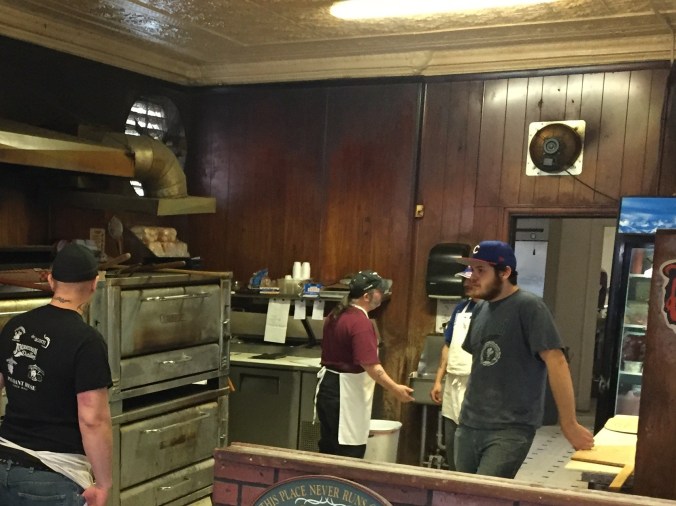
“Again, it had the one oven. If they got a big order for three pizzas, oh my god! ‘Oh! Oh! What are we gonna do?’”
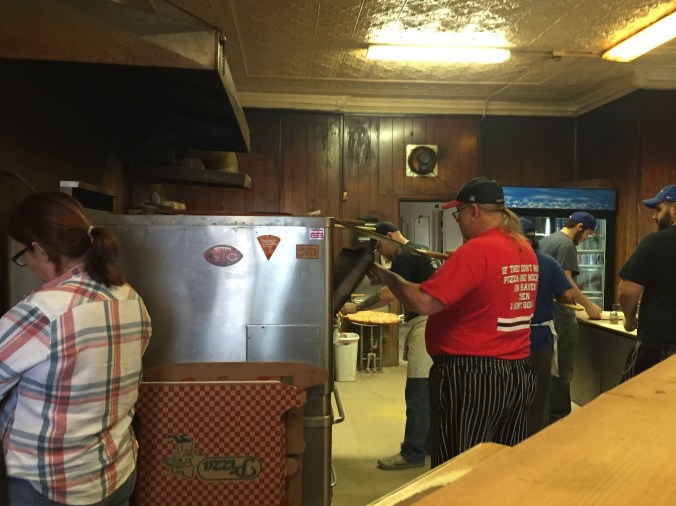
“And before I even signed the papers on this–I knew I was gonna buy it–I had another oven set to go. In fact, I had it delivered; it was out in the garage here. We eventually brought that in.”
Taking a leap and buying Pudgy’s was “[. . .] just an opportunity to do something I drempt of. It was an opportunity to be someone I worshiped as a child that was a hero, a business owner, in this tight little community,” he said.
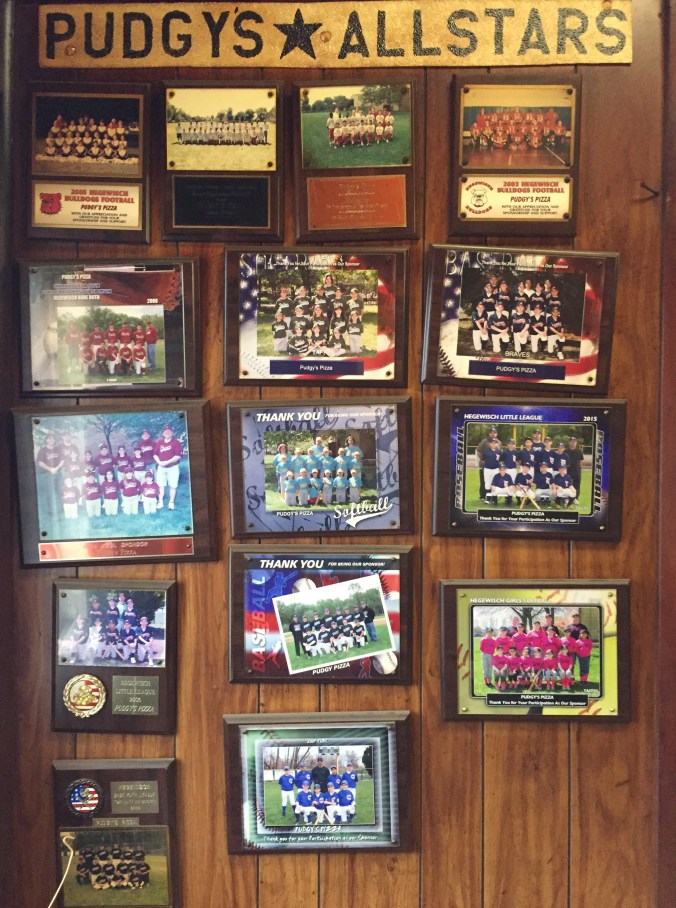
“When I was a young boy, playing Little League ball in Hegewisch, I was in awe of businesses that had their names on those uniforms.” Here’s Bob and his friend Eddie Meyer ready for a game.

Their team, the Yankees, was sponsored by Baltimore Supply Co. Businesses that supported local teams were “kind of like heroes if you will. I never forgot that”

“When I got Pudgy’s, I wasted no time sponsoring not only Little League, but also Babe Ruth and Hegewisch Bulldogs football and girls’ softball. Kind of like a childhood dream come true.”
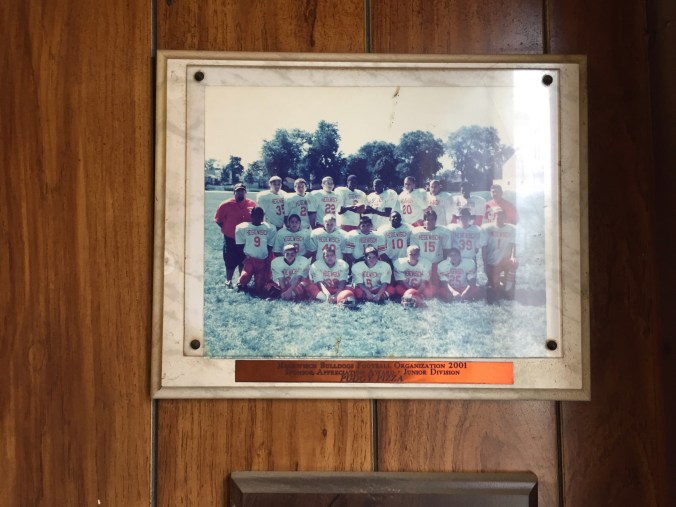
Bob relishes being a part of the Hegewisch community, and giving back when he can. “It was also known as the pumpkin house,” referring to his old blue house, which has an empty lot next to it on the corner of Baltimore and 135th Street. “On Halloween, the whole yard was filled with pumpkins and hay bales and cornstalks. One year we had 700 pumpkins in the yard. We’d call all the kids at the schools, and they’d bring their first and second grades down. We’d hand them bags and every kid would take a pumpkin. And, [the kids would say] ‘Which one can I have?’ I said, if you can carry it, you can take it,” Bob recalled with a big smile. “And we had those big giant princess pumpkins, that, you know, every kid wanted to try—hell, I couldn’t pick that up. But it was just things we used to enjoy. Got us—got us live on television one year. Channel 9 came out, and it was Bob the Pumpkin Guy now, you know? It was the Pizza Guy and the Pumpkin Guy, you know?”

Now, Pudgy’s is starting to connect different generations of customers, and it makes Bob proud. “We have a tradition here when a little kid comes in, underneath there I’ve got a thing of Tootsie Roll Pops, and each kid gets a Tootsie Roll Pop. Then we go through the spiel, ‘Now every time you come in, you have to take one. If you don’t take one, I could lose my job,’ kind of thing, you know? Making them feel important. And now, kids I was giving those suckers to back in the early days are bringing their kids in now.” Man, that’s cool. “Oh yeah,” Bob said with a laugh and a huge smile. “That’s cool as hell!”
Helping make Hegewisch a great place to live is important to Bob. He loves helping local schools and churches, and definitely Hegewisch Little League. “Hegewisch Little League has a soft spot in my heart, because I played it, you know?”
Clipboards just under the counter highlight primary issues. Today, it’s sign-up for little league and the Babe Ruth League, too!
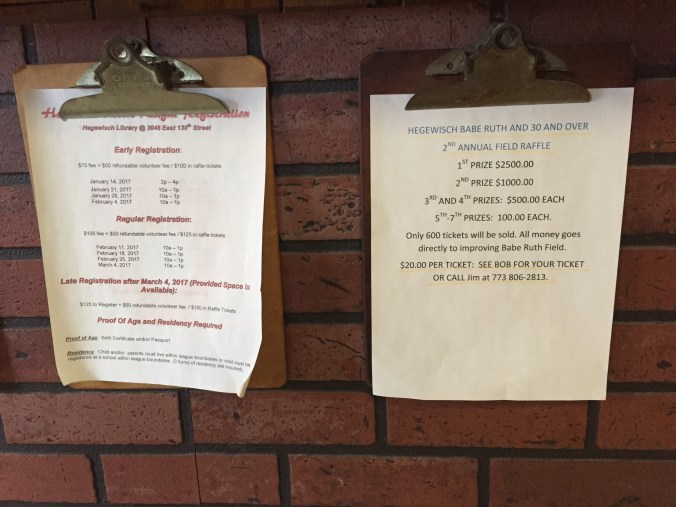
There are six clipboards in total. This one advertises the Lebanon Lutheran Church Youth Group fundraiser.
And he loves giving his pizza as part of that support, be it for kids or coaches or teachers. “I’m doing to it support my community. I’m supporting the community that supports me. And that’s what it’s all about: small town living, you know? If—again, if I don’t give back to the town, I have no business taking their money. And that just—it’s been, again, a labor of love since day one.”
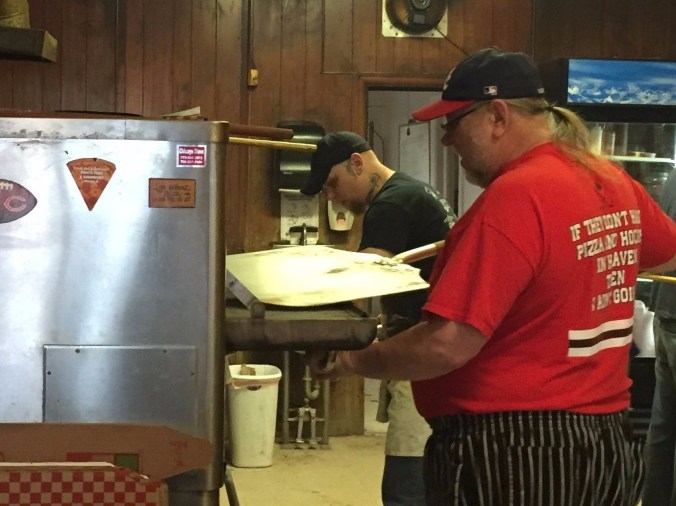
Despite being so isolated from big portions of Chicago, Pudgy’s has garnered mainstream attention. With a big smile and obvious pride, on the wall he pointed at a framed newspaper article with a photo showing Bob in a Bears jersey working one of the pizza ovens. “Chicago Sun-Times! We were voted the thing that people loved about Hegewisch the most. It was us, it was Wolf Lake, and then it was Club 81.” That’s a pretty big deal. Chicago’s biggest media outlets rarely report on Hegewisch, that includes our beloved Alison Rosati and Rob Stafford.
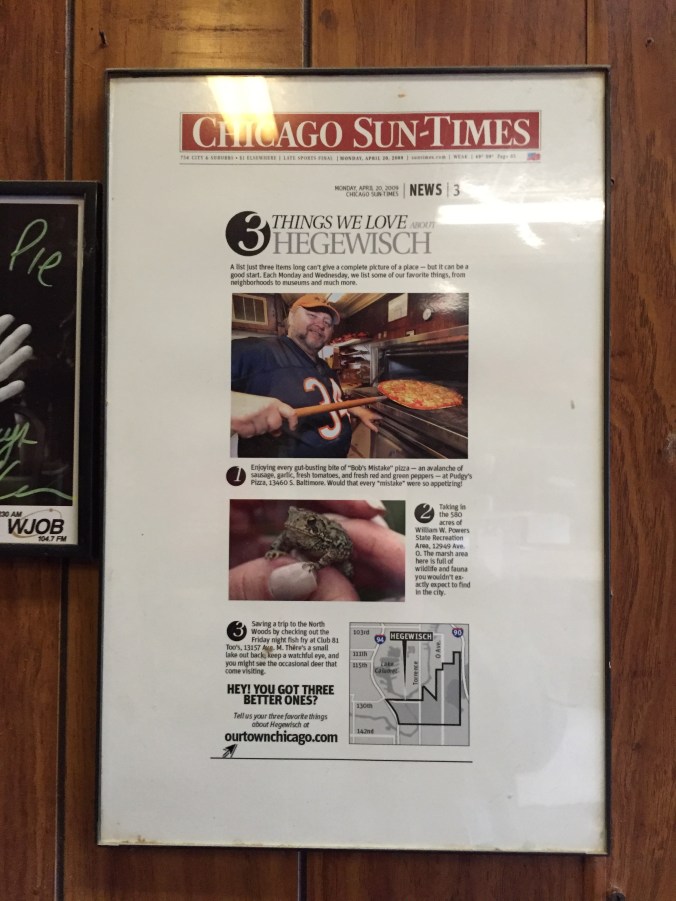
Bob has a funny story about Pudgy’s and another legendary Chicago media outlet, WGN. A few years ago, the station was running special stories about National Pizza Month and Chicago’s local eateries. “And they did a thing on the WGN morning show. Said call us and let us know what your favorite place. And, at the same time, they were running a little thing in the local newspaper–a contest–tell us what your favorite pizza is,” Bob said. These separate media features caused some confusion. “I didn’t listen to the radio. I just didn’t like the talk and I didn’t do mornings, and somebody came in and said, ‘Hey, Bob, you were voted number four–best pizza!'” Thinking each customer was talking about the newspaper feature, he was perplexed. “And I though, hmm-mmm-mmm, there are three other pizza places in Hegewisch. How did the all beat me?”
“And a little while later, another customer came in and said, you know, ‘Hey, congratulations. You were voted number four.’ And now I was really kind of angry.” His pride was hurt. Number four in Hegewisch? “Yep, that’s what I was thinking! Then somebody came in and says, ‘Hey, Bob, congratulations. I heard you on the WGN show. They mentioned your place.’ I said, Get outta here. Come on, we’re small potatoes here, you know?” Bob recalled with a suspicious smile.
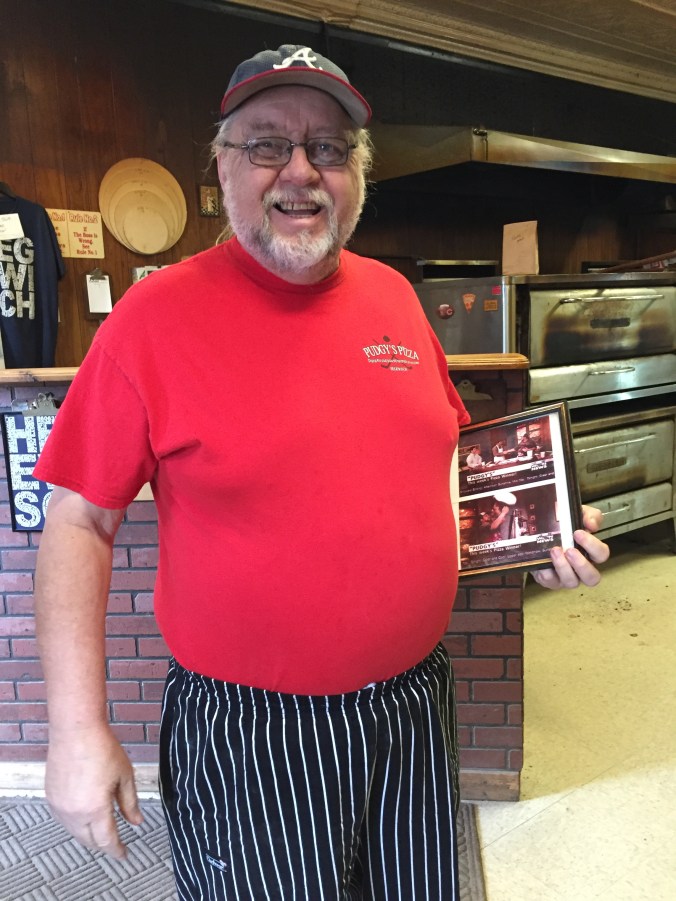
“So I called WGN and I asked them–again I lived right here–I called WGN and they said, you know, ‘You gotta talk to the people that run the morning show.’ And, you know, I called the next morning and they put me through and they were winding up the programming for the next day, and the girl said, ‘Is this Bob from Pudgy’s Pizza?’ And I’m still thinking somebody’s pulling my chain, you know?” How could a tiny pizza shop lost in the sea of Chicago-area pizza shops get noticed by one the city’s biggest and most famous media outlets, he wondered? “And she said, ‘We’ve been trying to get ahold of you! We didn’t know how to get ahold of you. How would you like to be on television?’ Oh, okay, I’d never been on television before. I said, When? She said, ‘Tomorrow morning.'” And with a laugh Bob recalled, “You know the first thing that hit my mind: What am I gonna wear, you know?”
Bob settled on a Harley-Davidson shirt. “And we moved on to WGN studios, and we got on the air live making pizzas,” on a show he’d never seen because the pizza business is often an afternoon through late night business. Pudgy’s doesn’t open until 4 pm. “We got here like at three o’clock in the morning making pizzas [at Pudgy’s].
Bob got a little surprised by one question, but he didn’t flinch. “‘Hey, can you toss dough?’ Oh, yeah, I can toss dough. And I’d never tossed dough in my life! We rolled dough [at Pudgy’s]. And I thought, what if I’d screwed that up? Live–on live TV.”
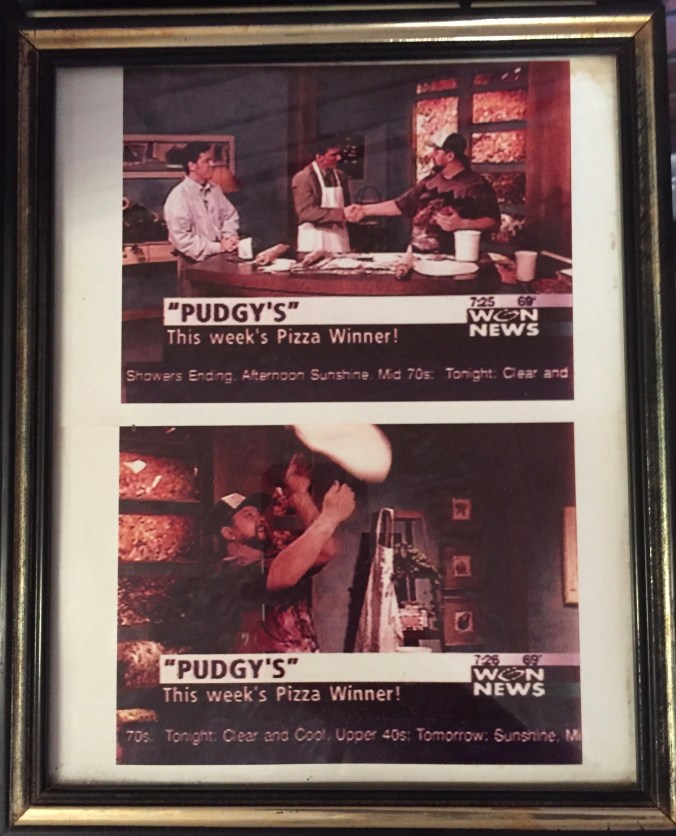
But the pizza master of Hegewisch nailed it.
Of course, he was asked how Pudgy’s got its name, so he had to tell the story about Barbara Skalka’s nickname that actually came from her childhood dog. “When I said that on television, I thought Barbara was gonna shrink into herself. What?! What’d I say?!” Bob laughed.
“It was a nice boost for the business, [. . .] and it was a nice boost for me. It made me feel well. You know, knowing that there’s probably, what, ten thousand pizza places in the Chicago and suburbs, and we came in the top five? I don’t know how many times my mom called,” he said laughing. “I’m sure it was a lot, you know?”
“Because I was always a mama’s boy,” Bob reflected as he pointed the beautiful framed photograph on the wall, perfectly placed eye level above our table. “That’s Mom in her car.”
“My mom always said, ‘Before I die, I want an old car in my driveway.’ My parents had a very beautiful, but modest home here in Hegewisch. It was right on the corner. And it was always some kind of—people who say, ‘Oh, turn at the pretty house.’ You know? ‘Turn at the house with the nice lawn. Turn at the house with the nice trees,'” typical vestiges of working-class pride.
“And, when my mom got sick, when my mom, you know, got the big C, with my wife’s blessing and almost her insistence we bought this car,” a 1951 Buick Roadmaster. “We had it shipped up from–I think it was from in Missouri–we got it. And we hid it in the garage back here. And on a perfect night, we took it to Mom’s house and we left it in her driveway, and that’s what she woke up with. And we got about a year and a half, two years with her before she–we lost her. And every time I got a chance, I’d pick her up and went for ice cream or if there was something going on at the VFW–she was in the lady’s auxiliary–I would pick her up and that’s how she would arrive. People would say, ‘Oh, you son’s got such a nice car.’ My mom [would say], ‘It’s not his car. It’s my car,'” Bob said with proud, sincere warm smile. “The license plate was, her name, Flossie. F-l-o-s-s-i-e.” Every once and a while, he still pulls it out for a parade.

Before talking to Bob, we had no idea that the quick stop at Mugs Bunny we had made months before was connected to Pudgy’s, just like we had no idea that Georgie’s was once Krupa’s Tavern. Mugs Bunny was once owned by Bob’s parents, and known as Flossie’s.
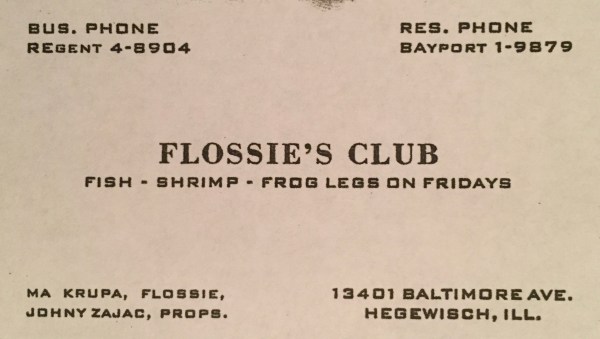
Just like the call I got from Pudgy’s while sitting at Mugs Bunny, I wonder if Flossie, Johnny, or Ma Krupa ever had to take a call from Mama D’s and tell a lazy customer to go and pick up his pizza!
Here’s Baby Bob with is Busia outside of Flossie’s Club in the 1950s.

Did his mom like eating the pizza? “Oh god yes! She loved coming in here.”
“My mom was eighty years old and every now and then she would cook for the entire crew here,” Bob said with pride. “She’d show up with a big thing of mashed potatoes and gravy, and, like, 35 breaded pork chops and stuff for the crew. And she would just feed everybody, you know?”
After several years being single after his first marriage, “She was proud of the fact that I had found a soul mate—a good woman—,” Bob said, as he looked to his right, at Donna working behind the counter.
“And she was also proud of the legacy I was creating here as far as the respect of the community.” Making his mother proud clearly meant a lot to him. Recalling one of his mom’s favorite stories, Bob said, “She met the wife of a guy my dad knew from–it was either the VFW or the American Legion. Well, she had never talked to this woman before. And the gal said—was telling my mom—she said, ‘I was at a CAPS meeting the other day,'” referring the local police community outreach program, “‘And this one guy got up and he was talking, and he was so good,’ she said. ‘And he was telling the people what they need. He should run for mayor of this town. And he was this, and he was that!’
“And my mom says, ‘Who was it?'”
“And she says, ‘It was that Bob guy from Pudgy’s,’ Bob said with a laugh. “And–why I could just imagine, you know? It was–beaming you, you know?”
After the airport debacle, Mayor Daley must have known he had to make things right with Hegewisch. If he hadn’t, we may have called Flossie Zajac’s son “Mr. Mayor.”
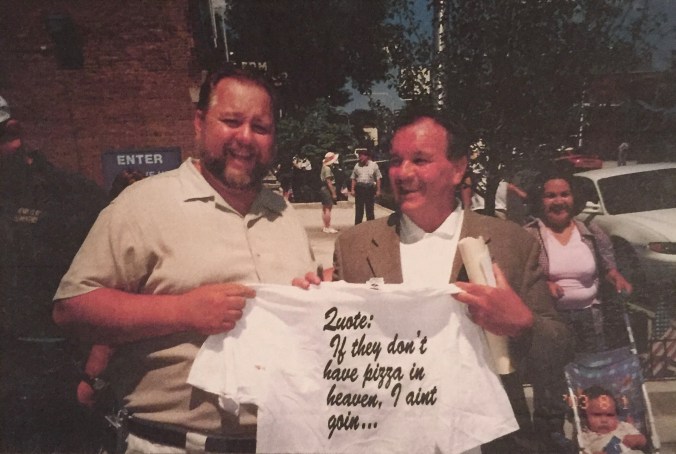
“That wig of hers–that Zsa Zsa Gabor wig was probably spinning.” And that’s another example of the beauty of small town living. “Everybody knows everybody, you know?” Bob said. “It’s a bonus.”
Bob routinely had to jump up from our interview to take a call from a delivery driver, grab the phone for an order, or attend to the oven, all the while giving out commands on different pizzas. He did all of this with a sort of sixth sense. His cell phone ringing just once or twice meant a driver was on his way back from a delivery; more than a couple of rings meant the driver needed his assistance. If Bob heard the main phone ringing once or twice two many times it meant Donna was tied up with a customer at the counter. Other sounds and sights triggered him to get up from our conversation. All of these signals were invisible to me, but sure enough Bob would politely say, “Excuse me,” then walk over and direct traffic. Then, seemingly unprompted, he’d walk back over and finish his sentence, rarely missing a word.
Including to Bob and Donna, Pudgy’s had a staff of a least eight for this night, that I could count.

The kitchen was busy with all kinds of sounds speeding up. The front door creaked often as it opened and closed for customers. Meanwhile, Bob continues running the kitchen. “Okay, I need you to keep an eye on these ovens. . .”
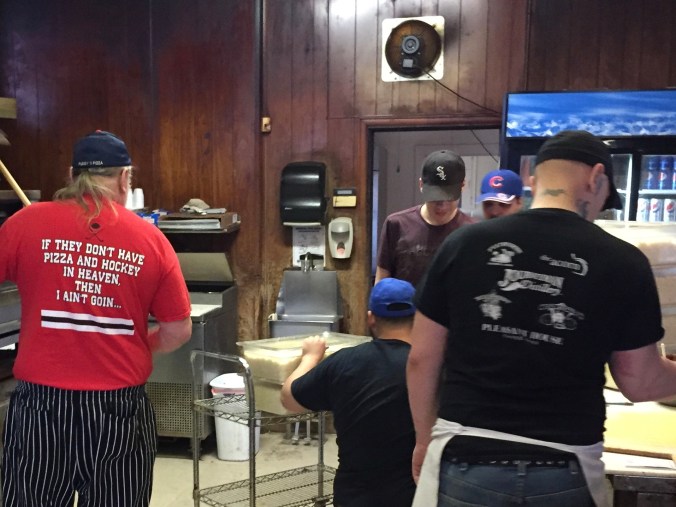
As the Friday night got busier and busier, Bob got up more and more. There was an undeniable magic of being there at this time. The work week was done, and for many in Hegewisch it was time to relax and enjoy a fun, delicious meal with friends or family or even the TV. I once worked at a pizza place and can confirm that there’s nothing like a Friday night. There’s an amazing amount of teamwork going at Pudgy’s on a busy night like tonight.

Pizza is the centerpiece. Here, Bob cuts thin crust pizzas in to squares and boxes them up for delivery or pick-up orders.

Bob does all of that, but also acts as Pudgy’s goodwill ambassador, probably his most important role. Donna runs the show face-to-face at the counter, taking and filling orders for the many customers who walk through the door. But if she has to take a phone order–or if Bob just wants to assist or say hi to customers–he steps over.
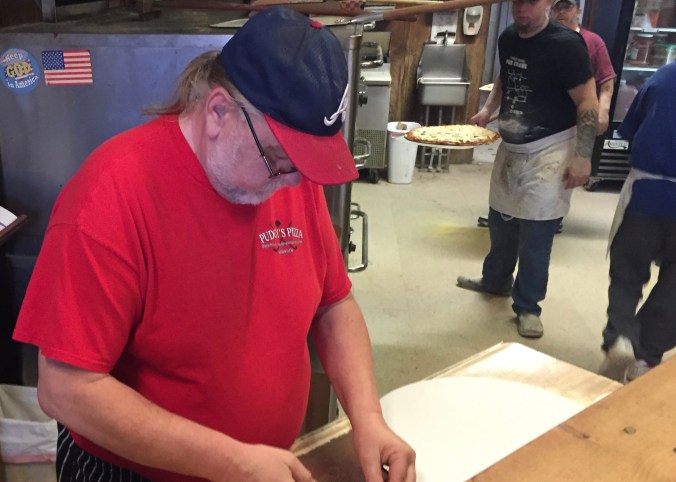
Bob always happily holds the door for his customers. He does this. . .all night.
Donna and Bob work together closely. Is that a Bob’s Mistake?
Bob’s Mistake is one of Pudgy’s most unique specialty pizzas. We’ve gotten it a few times before.
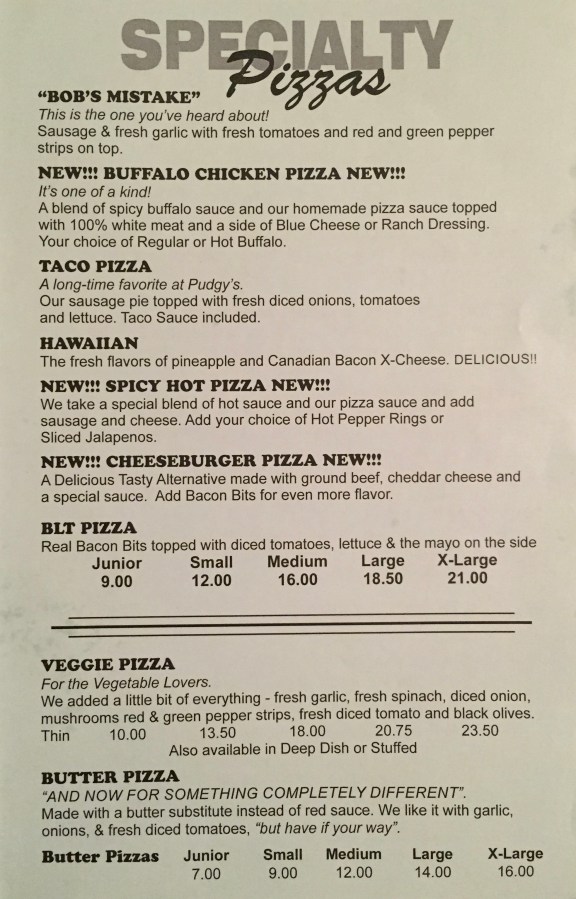
One pizza that is on the regular list is the Polish Sausage & Kraut Pizza. It’s one of those menu items that reflects Bob’s–and Hegewisch’s–Polish heritage. Pudgy’s only serves it on occasion, including during the annual Pierogi Fest in Whiting. This sign, decked out in the red and white of the Polish flag, including the coat of arms, stands outside Pudgy’s when the pizza is available.
Source: Pudgy’s Official Facebook.
“The last fundraiser we did was for Grissom School here in Hegewisch, and that was on Fat Tuesday. Which was also Paczki Day, okay?” Paczki Day is a traditional Polish holiday that is widely celebrated in Chicago, home to a large community of people possessing Polish ancestry. “We didn’t really put this all—all our ducks in a row. We didn’t know what we were doing. And, so, we had a boost in business because of the fundraiser, and on Paczki Day, we give a free paczki with every pizza,” Bob said laughing. He gets them from bakeries in Calumet City and Lansing, and a huge number were given away. “And people were on Facebook, because I was kind of following the feedback on it, and ‘oh, geez, I didn’t get my paczki today, I don’t feel good about it.’ I said I got some at Pudgy’s. Come on get a paczki, you know?”
Are there a lot delivery options around here? Doreen’s is one option, but are there more? “You’ve got a couple that are out of town that will deliver to the area here. You’ve got–there’s Jason’s in north Hammond. But it’s a tavern that will deliver food,” Bob said. “Probably half our business is delivery. Half of it is pickup.”
Delivery drivers wait at the tables, or in the window sill with hot bags ready to go for long orders. Pudgy’s has a pretty significant delivery area, one of which covers a diverse bit of terrain that might give a typical Chicago delivery driver pause.

“I have two delivery drivers tonight,” Bob said. And they seemed like they were going in and out a lot. “Yeah. And what it is, we do a much bigger range now than [Pudgy’s orignally] did.”
Maps of the trailer park, Harbor Pointe Estates, are on the wall as guide to the drivers.
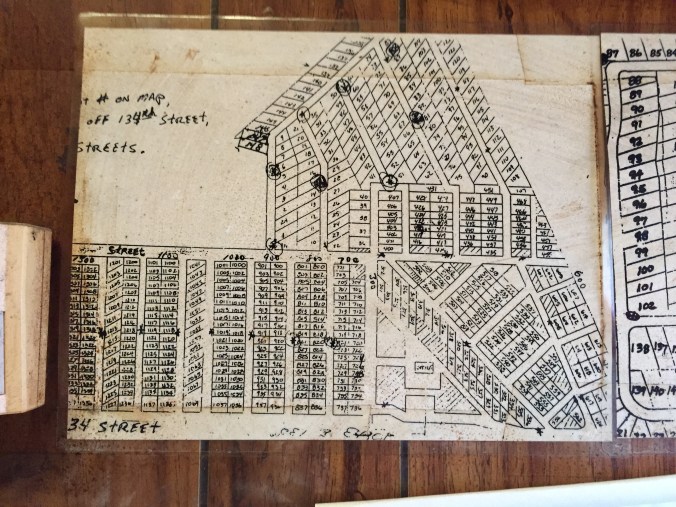
There are far fewer trailers there now.
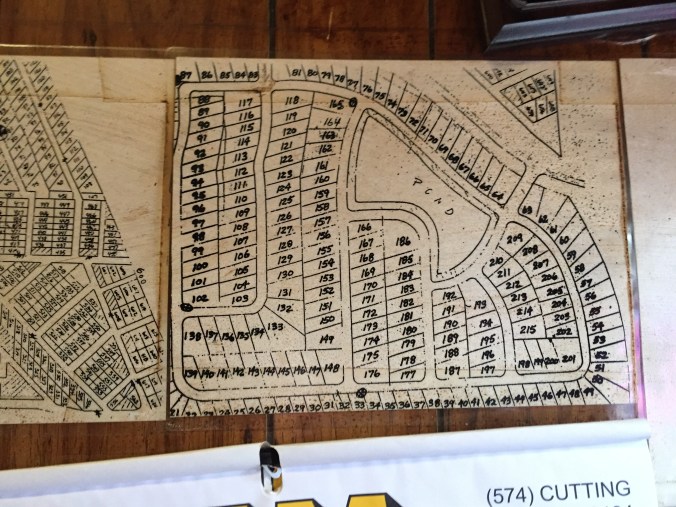
Scott the delivery driver asked about an order, and Bob immediately responded with detailed knowledge about the customer at a local industrial workplace. “He’ll be at the front. He will be there.” Bob even recalled the customer’s full phone number. “Usually [he] is working the scale.”
It’s another reminder that industry still surrounds Hegewisch, as is the calendar for the concrete drilling and sawing company based in nearby Whiting. In plenty of other pizza places, that calendar might be sponsored by an insurance agency or a hair salon.
Bob came back over and continued his thought without skipping a beat. “But again, it’s just small town living. That’s what I like about it,” Bob said as he sat at the table along the wood-paneled wall, one of the three small ones in the restaurant.
What about the three tables at Pudgy’s? They’re more for Bob and the other workers at Pudgy’s. Customers rarely use them. “Well, police do. We get the coppers in and they come in and eat.”
“But, you know, when you start doing dine-in, it’s a whole different license, it’s a whole different insurance, it’s a whole different everything. So, you know, we stick with what we do best. Again, our menu–you look at our menu, you couldn’t get a french fry here on a bet. You couldn’t get a–you couldn’t get a spaghetti noodle here on a bet. Pizza and sandwiches, period.” He asked Donna for a menu, then had me take a look at it. “Again, we stick with what we do best. You can go through a Burger King drive thru and get a frozen french fry that somebody stuck in hot oil.” But good pizza? That takes more work.
“We are obviously doing okay,” Bob said, alluding to the clearly busy evening. “The phone hasn’t stopped. With the smallest menu of any place you’ve ever seen. You’ll will never see—I don’t think you will ever see a pizza menu of an operating place. ‘What kind of sides do you have?’ None. You know?”
Do they get that question a lot?
“Oh, constantly! ‘How about—do you have any French fries?” We have no fryers here, just pizza and sandwiches. ‘Uh, how about jalapeno poppers?’ No, we don’t have that, we just have pizza and sandwiches. We have no fryers here. “No onion rings, too?”
They do have a few types of bread.

Referring to Donna, “God bless her, look at her, the patience of a saint on that phone. And I’ve got my kitchen tore up at home because I’m remodeling the kitchen, so that’s more stress on her now.”
Pudgy’s takes pride in its pizza, but its sandwiches are a big deal, too. “The sandwiches: all made by hand.” “Look at the sandwiches,” Bob said as pointed at the nice list of sandwiches, which includes a few classics such as a beef, sausage, and meatball, as well as few unique chicken vesuvio and the Ryno’s Ranch. “We made those up. We sat here and we created those, and they’re actual boneless, skinless chicken breasts. No, it’s not a pattie or, the way the commercial was years ago was parts of parts or something.”

When touring Hegewisch you have to wonder who Pudgy’s customers are. It’s so far away from other parts of Chicago, and it feels so isolated. Are they local residents who live just a few blocks away? Are they Ford plant workers who pick a pie up on their way home to some other neighborhood or town? Do people take them on the train?
“Our customers are very local. Our customers are on the East Side of Chicago,” Bob said. “Our customers are from parts of Calumet City and Burnham. North Hammond, right here. We have customers as far away as Valpo, Indiana–Valparaiso, Indiana–that will come in–now these were former Hegewischites, as we call them, that will come into Hegewisch, and they’ll call a couple of neighbors and say, ‘Okay, going to Hegewisch. I’m picking up Pudgy’s. Do you want some? They will order, like, five or six pizzas, and we’ll have to mark all the boxes ‘cause this is getting dropped off for this one, or this is getting dropped off for this one–.”
Customers also come from the local industries, including the Ford plant. “We have quite a few friends and customers at Ford and always go out of our way to take extra care of them.”
I couldn’t help but wonder if there were other North Siders like Ernie and me that loved making the drive down to Pudgy’s. Maybe Bob’s customer base is bigger than he thinks.
WJOB DJ Rick Kubic, host of Region After Dark, paid Pudgy’s a visit. Earlier in his career, Kubic played drums for New York City-based ’90s alternarock band Madder Rose, in which he was also known as Johnny Kick. As a Hegewisch native with Polish heritage, he remembered listening to polka broadcast from Club 505 as a kid. His father told him about the Memorial Day Massacre, too. “He didn’t want me to work in the mill,” Kubic said in a recent Tribune interview.
John Mallee, batting coach for the Cubs, made a visit. He grew up in Hegewisch, and his father, John Malle, Sr., was a Chicago police officer. Looks like somebody covered up that logo.
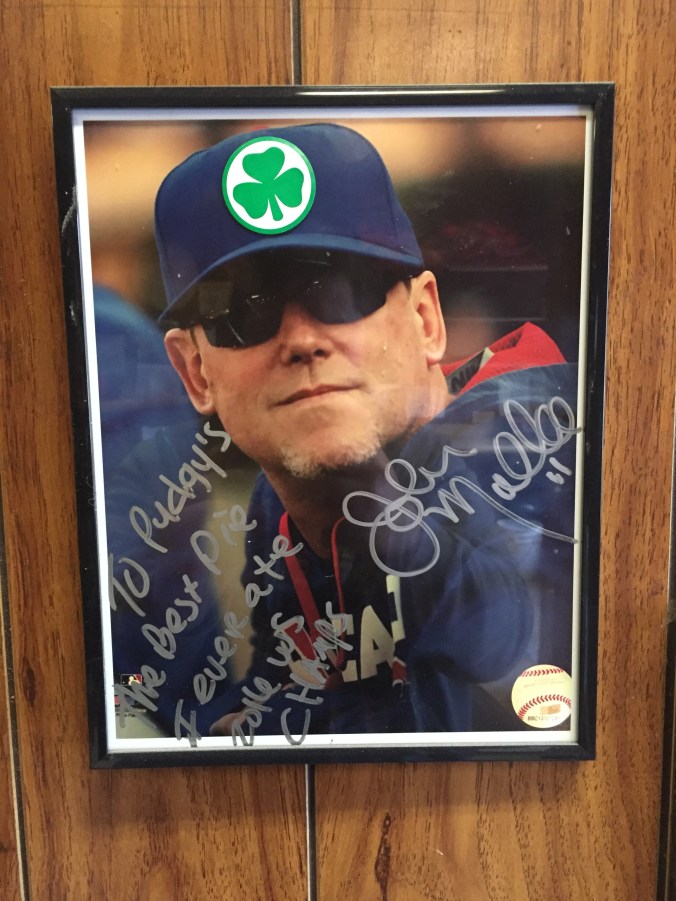
Bob loves “building memories” for his customers, and in return they can be fiercely loyal. “And people will come in and say, ‘Oh, Bob, we just came back from vacation. You know where you gotta open up a pizza joint?’ You know? And I’ve heard Indianapolis, I’ve heard Florida, I’ve heard New York–.” St. Louis maybe? Bob laughed, “St. Louis? Okay!” He even had a customer suggest that he open a pizzeria in Italy. “They don’t know what they’re doing there!” the customer said. But what sets Pudgy’s apart from so many pizzas across the country and maybe the world is “the secret ingredient that we call–it’s made with love. It’s made with passion,” Bob said.
So, is it a pretty common story people that have moved away that still feel like they keep coming back? Like maybe they still wished they lived there. Hegewisch’s population has slowly been dropping, after all. “Oh, absolutely,” Bob answered. Bob himself didn’t really want to move out of Hegewisch, but, for personal reasons, he felt it was the right decision for his family.
“But my mom and dad were still here. And my mom and dad were getting up in age and I was concerned about that. Even though I was 35 minutes away from here. When I did that, my mom told me–she says, ‘You’re not gonna like it out there.’ We’re in a beautiful little subdivision–gorgeous. It’s–it’s tucked away. You have to be totally lost or totally know where you’re going to find this. You’re never just gonna happen upon it, you know?” (Kind of like Hegewisch.) Even though he describes his home and subdivision with pride, you get the feeling that, compared to Hegewisch, it doesn’t really compare to his true love.
“[I]t’s kind of what it’s all about. You know, just making people happy. This is nice. Making pizza’s good. Selling pizza’s good. Putting a couple of Benjamins in your pocket is good. But if you don’t feel it in here,” pointing at his chest. “If you don’t feel the reward–.” Bob had made his point.
“You know, you carry that kind of mentality on through whatever you do, you’re gonna be a success. You gonna be rich? Nah, never gonna be rich. But I’m gonna be a lot happier than a lot of people, you know? I’ve seen people work less for more money that just hate their lives. I’m all about pizza. It just–it’s golden, you know? I’m all about Hegewisch. This–that’s home. I’m so rooted here it’s pathetic!” he said laughing.
One example of how rooted Bob is in Hegewisch can be found in the unbelievable story behind two faded 35 mm pictures on Pudgy’s wall. The woman, who hailed from Wisconsin, picked up a pizza at Pudgy’s while visiting relatives and friends in Hegewisch. “She commented on the pic of the ’51 Buick. I told her the car’s name was Flossie. She responded her cat’s name was Flossie–Flossie Krupa, in fact. I was shocked. I had never met her and here she is telling me her cat had my mother’s maiden name, Flossie Krupa. We looked at each other amazed. She said her mother always spoke of her childhood friend, ‘Flossie Krupa this, and Flossie Krupa that.’ And until that very moment, she never knew there really was a Flossie Krupa.”
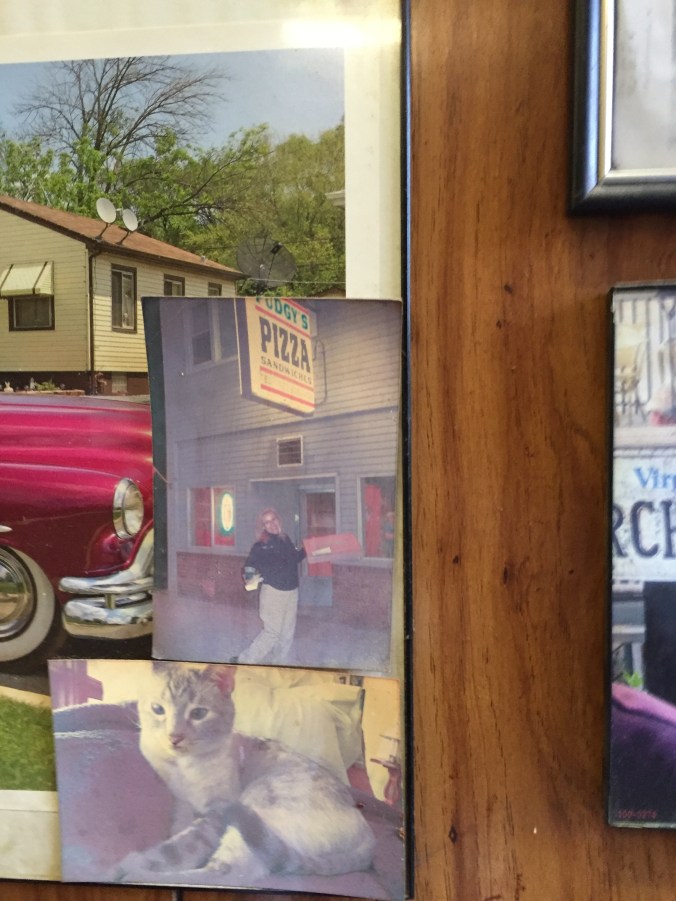
Hegewisch has a way of sticking with Bob. “When my mom and dad passed, I thought, would I lose my–my taste for here. Would I lose my connection with it? Would I lose my love for it? Nah. I still have the memories, you know? In the summer, getting up in the morning, taking my bicycle going to Mann Park and going to Wolf Lake. Playing in the swamps. Playing in the dump. Made it home by four o’clock before Dad got home from work. My mom had no idea where I was all day, and it was cool, because it was fun to grow up here. Played little league ball. Played fast pitch against the school. You know, just draw a little strike zone, and–.”
“But when I was a kid, the tallest building in Chicago was the Prudential Building. We would drive down the expressway and at a certain point you could see the Prudential Building. Wow, dude. Now you can’t even find it. It’s just so dominated.” Chicago has changed a lot, but Hegewisch? It’s hard to say. The dilemma we’ve felt trying to understand the community it is still there. “But, again, as things remain the same here, as they seem to just change all the way around us,” Bob said.
Just a breath later it went the other way. “I wish it were [the same]. I wish it were. I try and keep my part of this world exactly the same as the way I grew up. And by that [I] mean [being] a part of the community that I love. I love where I do business. I love the people I do business for. I love what I do, obviously. I love this. I love writing those checks and sponsoring those teams. I love throwing out the first pitch at Little League Day. I love driving one of my old cars in the Little League parade. My whole crew comes with us! My whole crew comes with us and we hand out candy and stuff. And whatever team we’re sponsoring, they make sure all my guys get a hat. We parade with our team and stuff. And it’s just very, very cool.“
His workers are “[. . .] proud to be associated with Pudgy’s Pizza because of the things we do. We work with community–the churches, the schools, the civic organizations, sponsoring the teams,” Bob said. “You support the community that supports you. If I can’t give back to the community, I’ve got no business doing business here. I should be out of here.“

It’s part of what makes Hegewisch a tight-knit community, but the isolation contributes, too. “Because as much as you’re here in Chicago here, if you hit a golf ball across those railroad tracks, you’re in Burnham, Illinois. If you drive about three quarters of a mile, half-mile down the road, you’re in Hammond, Indiana. This is kind of lost little area here.” When asked if he ever felt like Hegewisch was in Chicago or if Hegewisch was simply Hegewisch he responded immediately: “No, no never.” It was clear: “I’m in Hegewisch.” He then pointed to one of the official Pudgy’s shirts he was wearing–the same red one that Ernie and I picked up on one of our previous visits. “Pudgy’s Pizza and Sandwiches, Hegewisch. And it’s just my choice, you know?” Do a lot of people in the community feel that way, I asked. “Sure, sure, a lot of the old timers do. In fact, I think a lot of even the newer people [who] come in [do]. Not that I’ve ever heard out of town somebody say, ‘Hey, where do you live?’ You know, ‘I live in Hegewisch.’ But people down here–people that live here–and if somebody asks them while they’re here, you know, they don’t say Chicago. It’s that far removed.”
This fantastic shirt was designed by former Hegewisch resident (currently living in Florida) Michael Lukas in collaboration with his friend Kathy Fox and the staff of the The Hegewisch Times, as a fundraiser for that newspaper. Could this be the best quick reference for the history of business in Hegewisch? Numerous churches, schools, restaurants, stores, taverns, neighborhoods, and local institutions. . .all in 60633. As the shirt quietly notes in the bottom right corner, Hegewisch has been in business since 1883. It’s clear that many people in the community consider Hegewisch to be a distinct place.
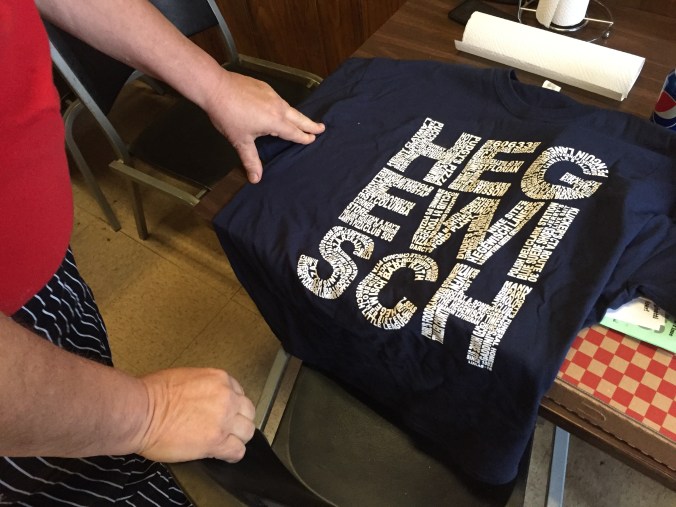
There’s so much to learn, especially if you have a guide that loves the subject.
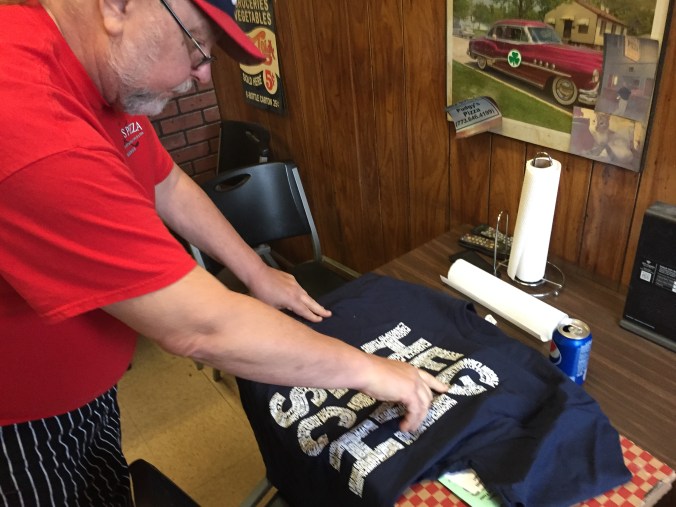
But officially and legally, Hegewisch is located within the Chicago city limits, and it is a fact that a business owner cannot ignore. It might feel like a separate small town, but, as Bob notes, “We pay the Chicago taxes, we pay the Chicago fees, and all the little added costs of being a business in Chicago.” But that doesn’t matter to Bob. “I wouldn’t do anything else.”
And Bob goes above and beyond for his customers, honoring special requests. Just get to know Bob and you’ll realize he loves making people happy.
“Howdy, sir!” Bob exclaimed to customer who just walked through the front door.
“Hey, how’s it going?” the customer replied.
“It’s going well, my friend. How y’all? It’s–what?! What’d I do? What?”
He loves to kid around, too. While talking to Bob, the customer’s wife came in from the car. “What? She checking up on you? You haven’t been gone that long! Come on!” Bob said as they all laughed.
Bob’s pizza was the star of get together with friends across the state line. “Everybody loves them,” the customer said. “Don’t have no good pizza in Indiana,” he continued with a laugh. But returning to the large future order the customer requested, Bob reassured, “But we’ll take care it for you. Not a problem.” Then as they left Bob ran over and grabbed the door. “I’ve got your door. You go ahead. Thank you! Give me a call, I’ll take care of that for you.”
Hegewisch walks through the door of Pudgy’s, and it’s pretty awesome.
“Excuse me,” he said to me he walked over to happily chat with a customer who had just walked in. “How you been girl?!”
After she left with her order–“You tell the boys I said hello, would ya?” After Bob helped yet another customer, he came back over to continue our talk. “Her father used to own what is now Baltimore Foods,” referring the business we had been to a few times, one of the many places where you can buy Heinie’s hot sauce in to-go containers. “The home of the shish kabob down the street.” Really? “It used to be Drago’s–and DragoBob’s.” This was a nearly unbelievable coincidence, and a testament to the small town environment that Bob had been talking about. In my notes before our meeting, I had actually written a question about Drago’s. I couldn’t believe it. I don’t know how that could have worked out any better.
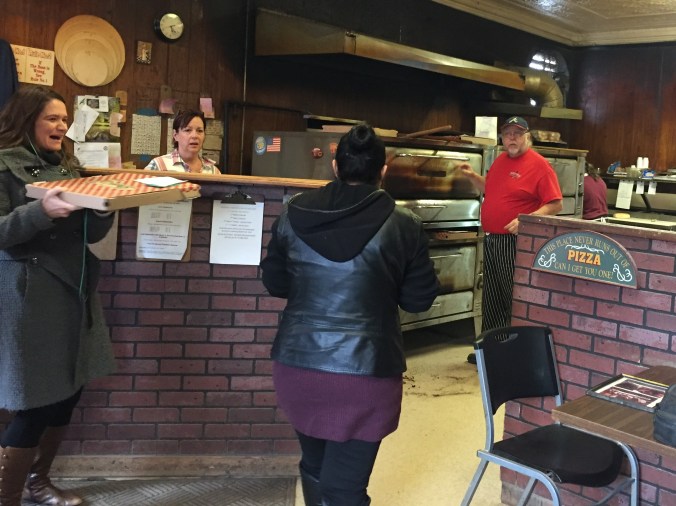
Then another customer walked in, this time a young Latino kid, and Bob responded immediately. “What’s up, brother?! How are ya?! How’s that Hawks gonna do tonight, man?
“They’re gonna win,” the kid said.
“Jesus Christ, they’ve been blowing some games, ain’t it? What the other night they had what that four to one. They come and tied it up. Lost it in overtime. 30 seconds left in overtime!” They discussed the state of the Blackhawks briefly, and Donna chimed in, too. “But they needed [a recent win] after taking that seven and o shot in the chin, ain’t it? Man, oh man,” Bob said.
“He’s one of the greatest customers we’ve had here,” Bob said, referring to the teenager. “Smart, sports-oriented, focused kid.”
Then Bob and one Pudgy’s kitchen workers had a discussion that could only happen in the Chicago area. “By the way, the Green River, they still got ’em five for five over at Jewel’s where I shop,” Bob said. “Hang on, let me get that phone. Hi! Can I help you?”
I snapped a few pictures and asked Donna if she minded. “Why? Am I in them?” she responded with a light smile. We joked about some poses she could do.
Meanwhile, Bob was on the phone taking an order.
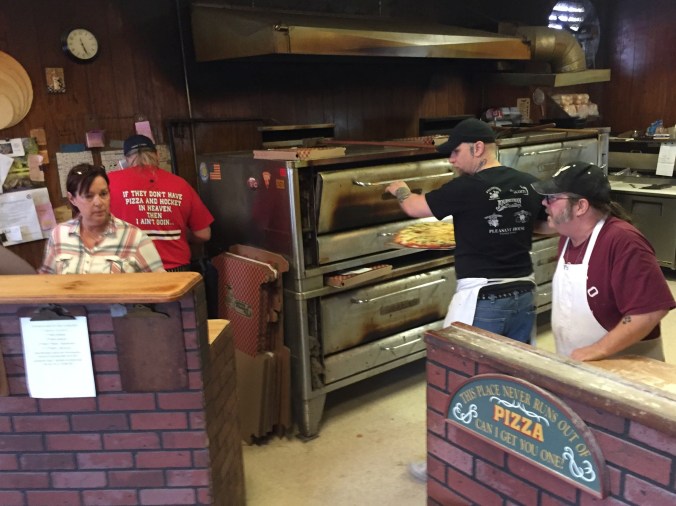
“Okay, let me make sure I got this right,” Bob said on the phone. “I’ve got a medium cheese pizza thin crust, I’ve got a large deep dish with mushrooms, green peppers, extra cheese all over. . .Your total’s gonna be $38.35 brought to your room,” he continued. “And if you have any coupons–”
We talked some more, but in no time Bob had to head back to the counter. “Excuse me, I gotta get up here.” And just like that, he grabbed the phone.”Hi, can I help you?” The customer wanted to know the difference between the deep dish and the stuffed pizzas, two Chicago classics. “Stuffed and the deep dish: the deep dish, you see the cheese, with little strips of dough on it.” Typical of many neighborhood shops in Chicago, Pudgy’s deep dish does not have sauce or crushed tomatoes on top of the cheese like the more famous downtown places. Instead you see a beautiful thick layer of mozzarella, with sauce underneath. The strips of dough, however, are a touch we’ve never seen at anywhere else. We can confirm from personal experience that Pudgy’s deep dish–thick crust, thick layer of cheese, and extra strips of dough–is delicious.

Source: Pudgy’s Official Facebook.
“The stuffed,” Bob continued to the customer on the phone, “[is] a layer of dough and a layer of sauce on top of that. . .” That’s a massive pizza.
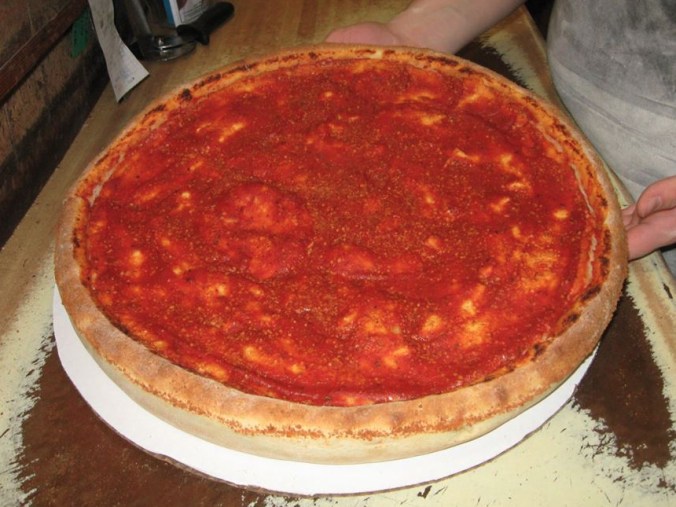
Source: Pudgy’s Official Facebook.
“Okay, what size on that?” Bob asked, wrapping up the order. “Okay. . .You’ll be number 9. Be about 40 minutes. See you then.” As Bob hung up the phone, he happily announced to the kitchen staff, “Medium deep dish! Bah, bah, bah, buh, buh, buh!”

It was a busy Friday, but it was time for the pizza we ordered, too. “Have some pizza while your sitting here!” Bob exclaimed. Then he headed back to the ovens, whistling, to continue his work. You could tell that Pudgy’s and his delicious pizza make him very, very happy. It’s an opportunity to spread the joy and make people in the community happy, too. “I don’t know what I’d do if I didn’t do this.”
“Look at that crust!” Bob said proudly of his pizza.
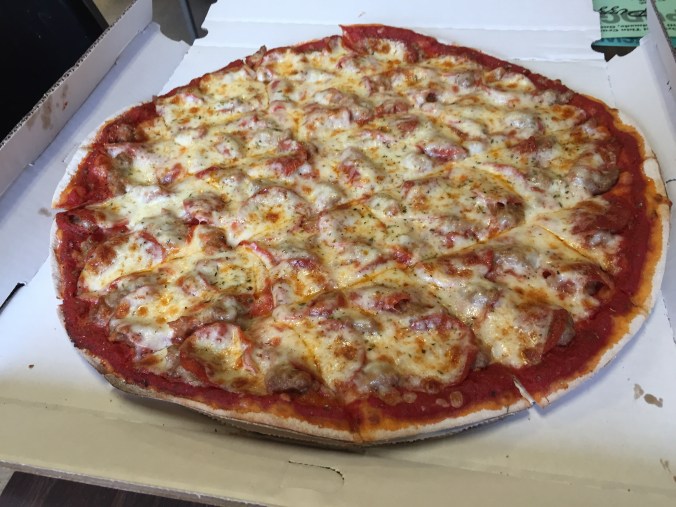
A perfect portion of ingredients.
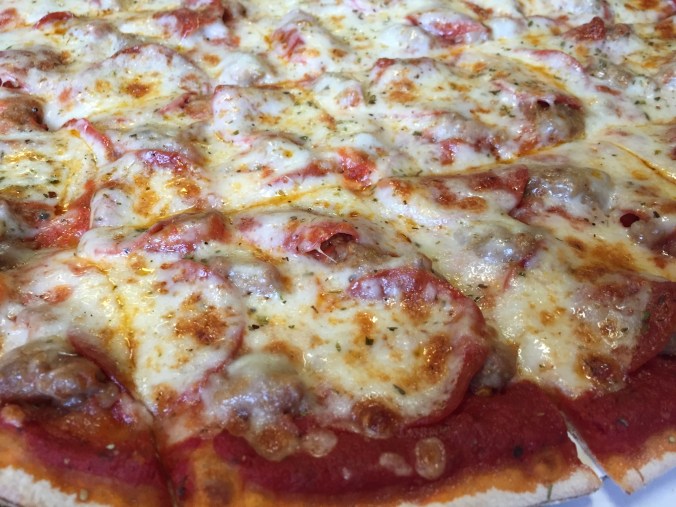
A beautiful dark red ring of sauce around the edge.
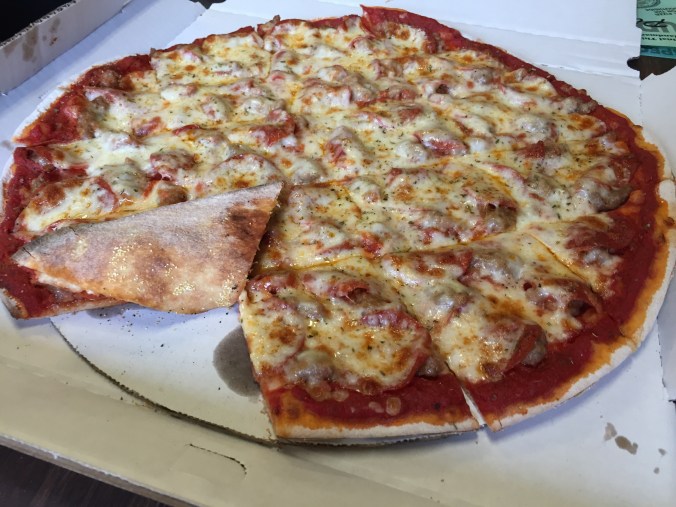
Soft, very thin crust, evenly browned on the bottom. Crispy just at the edge.
This is why we came in the first place, and why we kept coming back.
I relayed to Bob the story of how I met my wife when we both worked at a pizza place. “Oh, cool. No kidding! Wow. Wow! So pizza crosses many bridges,” Bob quipped. “But, you know, basically that was our common thread, too–was pizza.”
Bob tells the story of how they got together with a sly smile, and he tells it with pride. You can tell he’s proud of his wife. They worked side by side at Pudgy’s, but running a pizza place seven days a week took it’s toll on both of them.
“We just started closing on Sundays about a year ago.” They needed a break. “It was almost a borderline burnout. There’s a difference between working for a living and living to work, and, you know, we were kind of towing that fence. And, you know, people will say, “Well, you know, why not Monday or Tuesday. They’re slower days. And they’re right, they are. Sunday’s a busier day. But Sunday’s family day. And that’s what I based it on.”
But one day off is just enough to get a pizzaholic going again. “And when I come in here on Monday, man, I got the powerful hankering. I walk in and once we start going and I’m smelling pizzas and cooking sandwiches. . .oh, I just–!”
Bob’s nickname was Pizza Dude, and he even had plates made up. The old Pudgy’s t-shirts were green and said, “If they don’t have pizza in heaven, I ain’t going.” One of Bob’s old PZADUDE license plates can be found in Myrtle Beach at burger joint with an ocean view.

He temporarily lost the other one, thinking some local kids took it. “And all I could think of is a couple of teenagers in their mom’s basement going,” Bob said, pretending to smoke. “‘Pizza Dude!’ You know?” Bob laughed. But after he thought about it, he realized something else caused him to lose the plate. “What had happened, I remembered hitting a big ass puddle on Boy Scout Road–134th Street going to Indiana. I hit a big ass puddle. Son of a bitch, I wondered. It was like a week I went there and I found my license plate in that puddle. It paid to go to church!”
Pudgy’s kept getting busier and busier, making it clear why they needed at least one day to relax. A steady stream of one customer after another walked through the door. “Howdy, y’all! How are ya?” said to one customer who just walked in.
“Good,” said the customer.
“Whadya have?”
Giving her order number, she said, “48.” If the day’s orders started with number one, 48 sounds too big for this early in the evening. Bob just took number nine on the phone a few minutes ago.
“48?” Bob asked, as he looked around for the orders available.
“I mean,” the customer remembered, “number 8.”
“Number 8? Okay.” Bob said as he happily looked for the order. Wait a second. . .you mean it’s not a big deal if you get your number mixed up?!
“Just a few minutes,” Bob said. “They’re in the oven, they’re cooking, they’re happy. If you like, I’ll take your hard-earned money while you wait.” The customer obliged. Then, Bob quickly helped another customer, an older man. “Hey, what’s up, buddy?!
“Pick up my sausage sandwich.”
“How you been?” Bob said. “Five dollars with your veterans discount.”
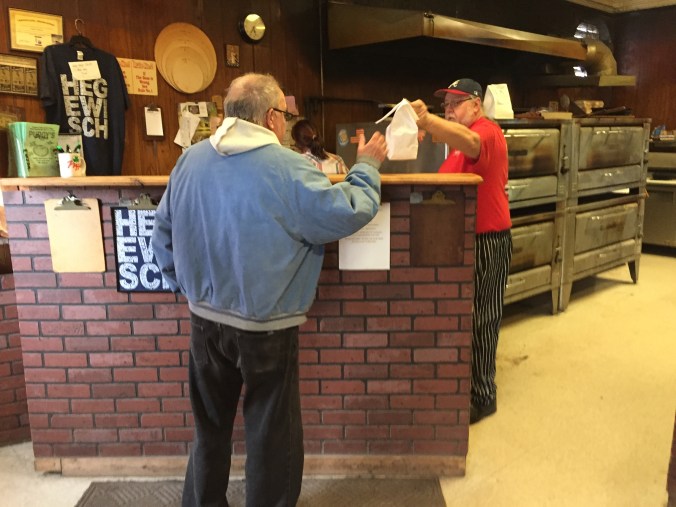
Veterans are not forgotten in Hegewisch. There’s a huge, recently-constructed memorial right next to Pudgy’s at the corner of Baltimore and Brainard, the former site of Palas Service Station. Marked in part by the American, Chicago, and POW/MIA flags, memorial includes a tank, which is appropriate considering Hegewisch’s tank-producing past.

Like many small towns in America, Hegewisch sent many of its best away to fight. Some of them are honored on Pudgy’s “wall of fame.” And their descendants are still connected to Hegewisch. The 1940 census shows a young Edward Glazewski, age 18, lived with his parents, four brothers, and two sisters in the 8300 block of Bond Avenue, or South Shore Drive, in South Chicago, and worked was a laborer for the CCC, while his father and one of his brothers were steelworkers.


Despite living on about five or six blocks from South Works, Glazewski’s father Stanley instead worked about 35 blocks south at Republic Steel, more than halfway to Hegewisch.

Source: National Archives.
Ed Glazewski served in the Navy during World War II, and now is honored on Pudgy’s wall of fame. His son is a Pudgy’s customer.
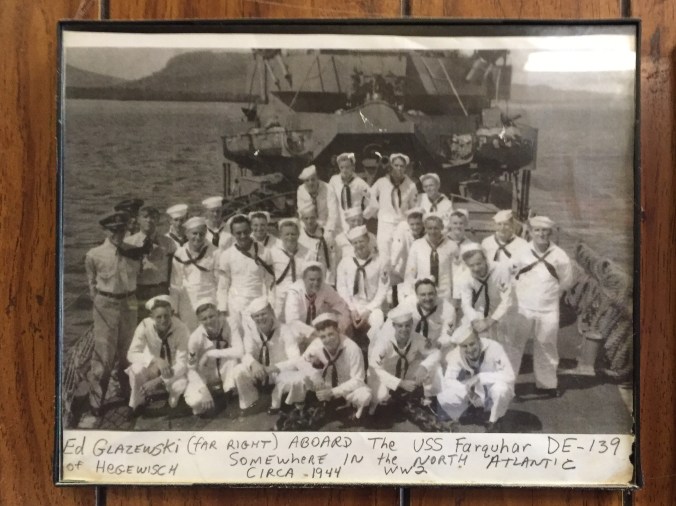
And some served first, then came to Hegewisch from Poland and other parts of the world. One of those was Wietold Sielchanowicz.
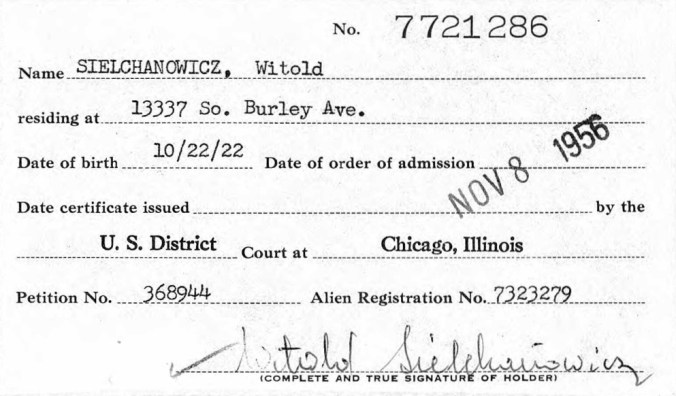
Source: Illinois, Northern District Naturalization Index, 1840 – 1950.
Born in Kamionka, Poland, Wietold, or Victor, as he was commonly known, was a survivor of Auschwitz came to the United States in 1949 in search of safety, community, and opportunity. He found it in Hegewisch, and was one of Pudgy’s “all-time favorite customers.” After settling in Hegwisch, he “became friends with my parents at Flossie’s Club, as they both spoke fluent Polish. Whenever he would walk in Pudgy’s he was greeted by a loud ‘VICTOOOR’ by the entire crew. He is missed!”
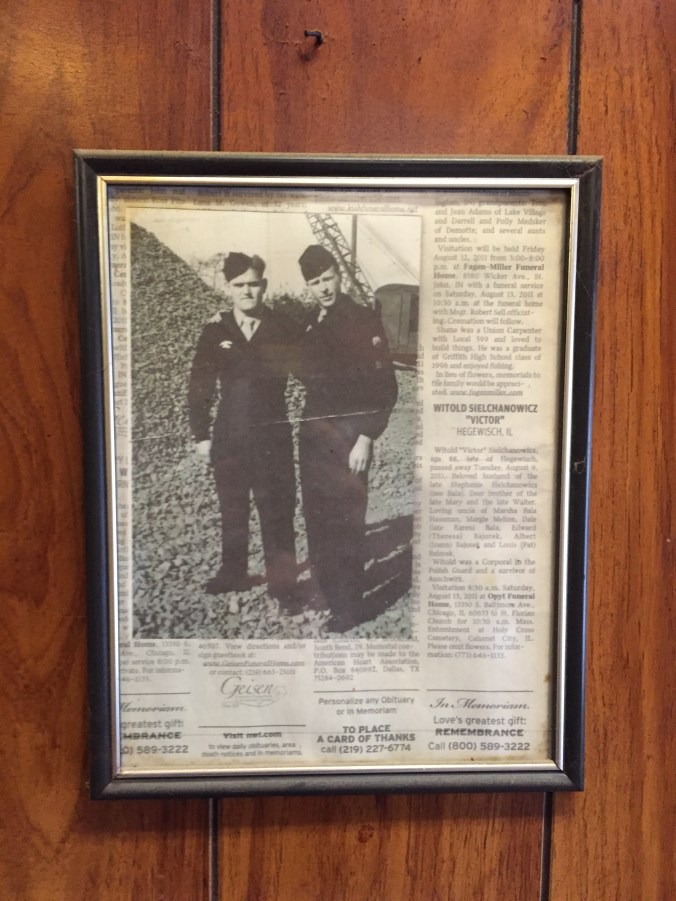
Family connections are represented on the wall, too. American men were required to register for the draft, even most “old men.” Bob’s grandfather, a son of Poland, did his duty and registered.
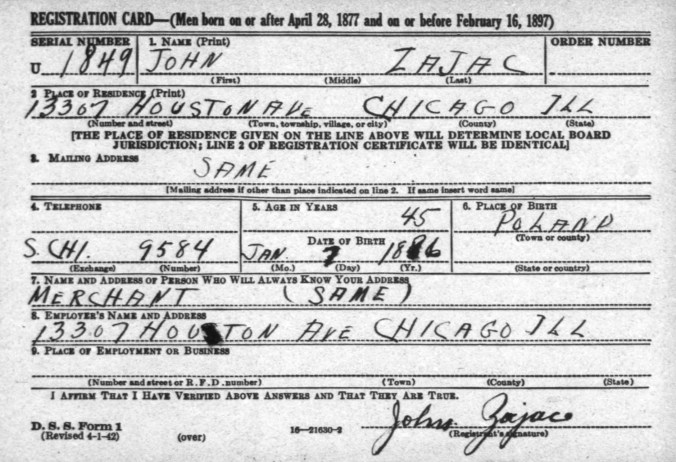
Source: National Archives.
His son, John Jr., served in the Army Air Corps, flying on a B-17 known as the Lewd Angel. They flew over 30 bombing missions. “The last one was on Friday the 13th,” Bob said. “They all returned safely.” A photo of him with the rest of his flight crew occupies a special place on Pudgy’s wall.
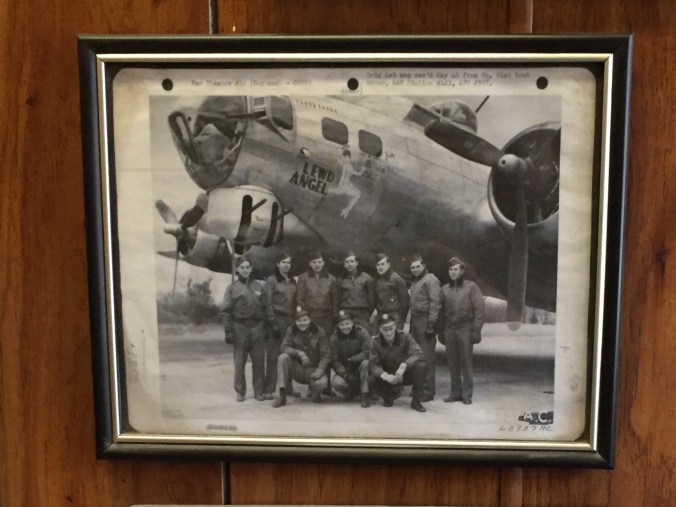
“But–you know, the food industry has come a long, long way. It’s changing. It’s becoming tougher and tougher and tougher for the little guy, the independent. This is what we’ve got. This is the only one we have. It’s becoming tougher for the independent to make nickel or a dime, because we’re being taxed to death. We’re being taxed to death. There’s so many little loopholes you gotta run through. It all adds up. The amount of checks that this little mom and pop joint writes every month, every quarter, every fiscal year is mind boggling.”
Opportunities have called in other places, too; places with likely fewer restrictions. Bob had an opportunity to open another Pudgy’s in the rapidly growing suburban community of St. John, Indiana, which is about a 35 minute drive from Hegewisch. Other Southeast Chicago businesses have followed their old customer base across the state line such as Capri’s, Gayety’s, and more have done well. Not all have successfully made the transition. Bob & Jack’s Pizza, originally on the East Side, made its way to Indiana and, after a brief run, faded away. Doreen’s opened another location in Dyer, Indiana that seems to be doing well, though. The son of John Harris, one of the earliest residents of Hegewisch, moved to Hammond. Before becoming a boxing star, Bat Nelson worked in Hammond. This movement across the state line has been going on for a long time.
In St. John, the market for new businesses was hot. “Any place where there was a wooded area, any place where there was a farm, any place where there was just a property, is now a subdivision,” Bob said. “Every one of them. And it’s just building and building and building.” Even though the self-described pizzaholic knew he could compete with the product there and would love contributing to the local community there, running both would be too much.
And in the end, Hegewisch is where he wants to run his business. “I couldn’t give this up. This is where my heart is.”
So, just in this small community and the same old building? “Sure, exactly!” It just wouldn’t be the same place.
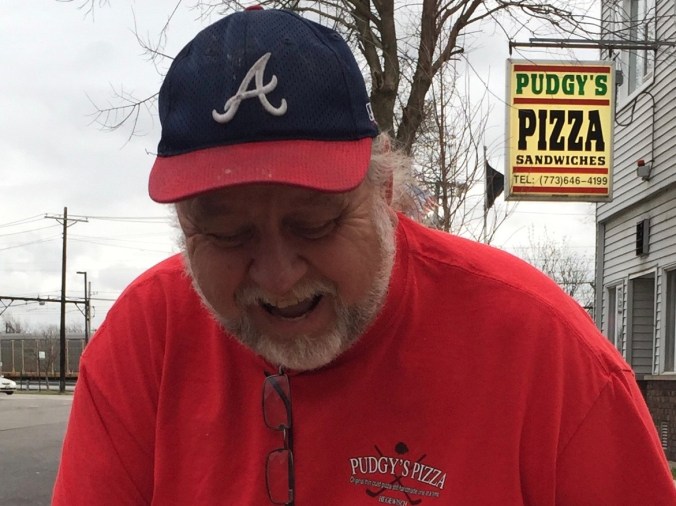
“It would be the same recipe,” Bob noted. “I would have probably even came and got Chicago water to make my dough and my sauce and stuff because that’s a part of it, you know?” he said with a laugh. “But, this is where my heart is at.” Bob continued, thinking, “That probably does not make me a good businessman in a sense, because he would go where the big bucks are naturally.” But “I mean, would I be any happier there? I don’t think so.”
And the reality of time and change sets in. “I’m 66 years old. I’m probably looking at hanging up the apron soon,” Bob said. When asked if Pudgy’s would continue, he answered quickly, yet reflectively, “I hope so. I would hope that if I decide to. . .walk away, that I can find somebody who loves it like I do, and not look at as a get rich situation, but something that’s just gonna provide for a good living.” Save your pennies, Ernie!
Just then Bob’s cellphone rang. The business was still going strong, especially on this Friday night. The kitchen was popping with energy as the workers make dough, cover pizzas in toppings, and attend to the ovens. Donna was taking countless phone and counter orders, each one right after the other. “Excuse me. It’s a driver. Yes?” Bob said to his driver on the phone. “Okay, I’ll give ’em a call,” as Bob steps away to attend to business.
Things were really picking up, but Bob still came back to continue our conversation. “Well, Bob,” I said, realizing that it was time to relinquish this fantastic, Pizza Hound-defining conversation for the flow of the Friday pizzeria business. “I know things are getting kind of busy. Maybe if I could get a picture of you just there. Maybe of you and your wife?”
“Sure!” Bob said.
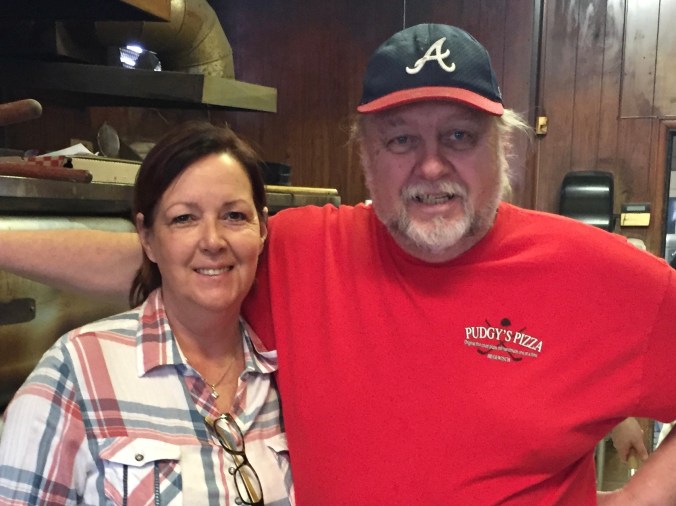
But there was one more thing. “I’ve got a question: Do you like dogs?”
“Yeah!” Bob exclaimed.
“Would you mind getting a picture of you with my dog?”
“Not at all, not at all!”
So, we stepped outside so the Pizza Hound could meet his hero.


I mean, come on. It’s pure magic!
✶ ✶ ✶ ✶
Pizza has always been the centerpiece of our story–the reason there is even a story in the first place–but could there possibly be any better setting than the little neighborhood on the edge of Chicago?
We don’t think so.
Today, as it was over a century ago, Hegewisch remains an isolated community surrounded by rivers, lakes, wetlands, and industry. Heavy industry, however, does not dominate the economy as it once did. If steel is involved, it’s more likely to be a scrap recycling center or a commute to a mill in Gary or East Chicago, or (thankfully still) a job at Ford. As in most neighborhoods of the Southeast Side, the steel scar is one that won’t fully heal, no matter how much the area changes. Steel and other heavy industry were just too important to the area’s identity to fade away forever, and they certainly continue to occupy a place the cultural identity. But how long before they fade from the cultural memory altogether? What happens when all that is left is the pollution? What happens when a place loses it’s original reason for being?
We suppose it learns to evolve, and in Hegewisch’s case, evolve slowly, as it has for the last three and a half decades. The neighborhood’s population dropped to 9,781 in 2000, and dropping to 9,426 in 2010. Certainly, despite a 2004 Tribune profile of young adults who chose to buy homes in the community rather than move away (CoJack and his wife recently bought a house in Avalon Trails, for instance), residents choosing to move to larger houses and lusher lawns in the suburbs contributed to this modest decline, just as it had across the nation in the prior decades. Meanwhile, the percentage of foreign-born residents increased from 8.3% in 1980 to 9.1% in 1990, then to 13.5% in 2000, with a slight drop to 12.7% in 2010. This overall increase–about 400 residents between 1980 and 2000–can be attributed the growing Latino population. Instead of about half of the residents claiming Polish heritage as they did 50 or 60 years ago, a similar percentage claims Mexican heritage today. In a way, it’s a fascinating, though often overlooked, move full circle: Adolph Hegewisch, with Spanish roots, came from Mexico.
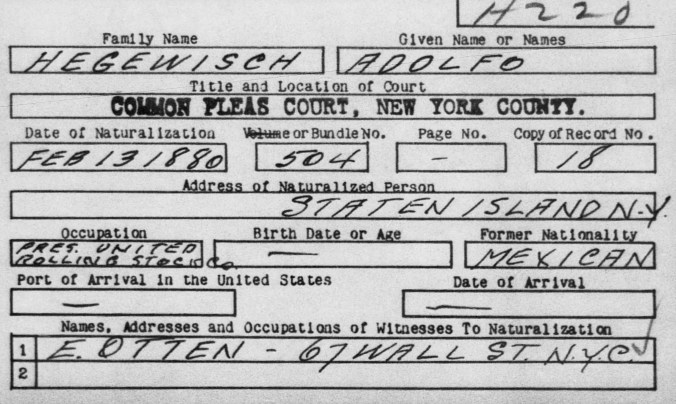
Source: Naturalization Index – New York City Courts. Soundex Index to Petitions for Naturalizations Filed in Federal, State, and Local Courts in New York City, 1792-1906. National Archives.
Like Pucci’s (which Bob remembered as Bus Stop Pizza), some longstanding businesses have disappeared. Sadly, Mugs Bunny–the old Flossie’s Club–is one of those. The sign–we loved that the rabbit is wearing a turtleneck sweater–is gone, too. We’re glad we got to try it before it passed on. On the positive side, the building today shows the evolution of the Hegewisch to a neighborhood with a large Mexican population: Mugs Bunny, a common “American” bar, once run by a Polish immigrant, then run by first generation Americans with Polish roots, is now Bandero Produce.
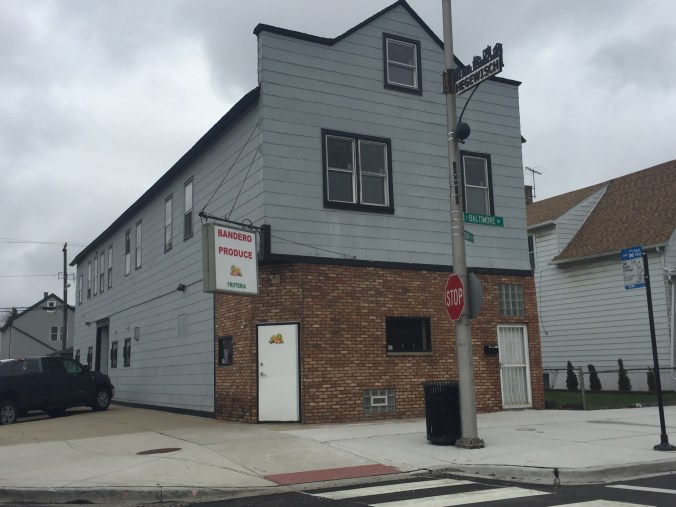
Old Time Tap has sold off its local sports loyalty. The Old Style sign is gone, too. After all these years, is Ike Silverman’s tavern finally gone?
There are conflicting signs regarding work in Hegewisch. The Ford plant remains open, and manufacturing still can be found. There’s still a chemical plant in the community, too. Still, many work as civil servants, including police officers and firefighters, as well as those who commute downtown–or to Indiana–for white collar jobs in government and business. Meanwhile, the service sector grows by leaps and bounds across the country as manufacturing continues to decline. That said, services are often reliant of on people with incomes to pay for them. Without good paying manufacturing jobs, many people look elsewhere to work, live, and spend money. The ripple effects of the loss of manufacturing in many industrially-focused communities likely helped lead to the demise of places like Pucci’s, Mancini’s, and Mugs Bunny. Hopefully, Pudgy’s can withstand the change, or, even better, new economic opportunities arrive in Hegewisch.
There are signs that that is happening. In the mid-2010s the Chicago Assembly Plant, one of the neighborhood’s oldest and most consistent employers, continued to employ about 4,200 workers, according to corporate numbers. Encouragingly, Ford has spent millions to update the plant on separate occasions in the last decade, showing a now-rare commitment to Southeast Chicago from a corporate entity. In 2011, a new storage facility was constructed on part of the old Wisconsin Steel site. Rather than thousands of workers, it only employed about 45 people permanently. Still, more has happened. An auto parts company planned to spend $30 million on an manufacturing facility in Hegewisch, employing around 300 workers. Parts made in the factory would supply the Ford plant. The plant itself added a third shift in 2016, reportedly about 1,100 workers, part of what Crain’s called a “mini-industrial boom on the Southeast Side.” Maybe Old Time Tap, if it’s still in business, will adjust its morning hours to welcome customers after the overnight shift.
Additionally, rail car production will soon return to the community, tying today’s Hegewisch to its founding.
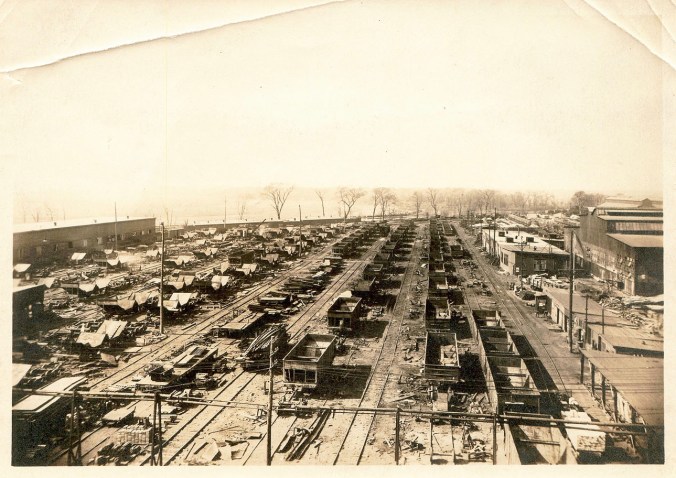
Western Steel Car Works, 1918. Courtesy Southeast Chicago Historical Society.
In early 2017, political leaders announced that a soon-built $50 million facility in Hegewisch will produce the CTA’s new generation railcars., the 7000 Series. The 381,000-square-foot factory will employ 169 workers, and will be located on Torrence south of the Ford plant, not far from the old Pressed Steel site.
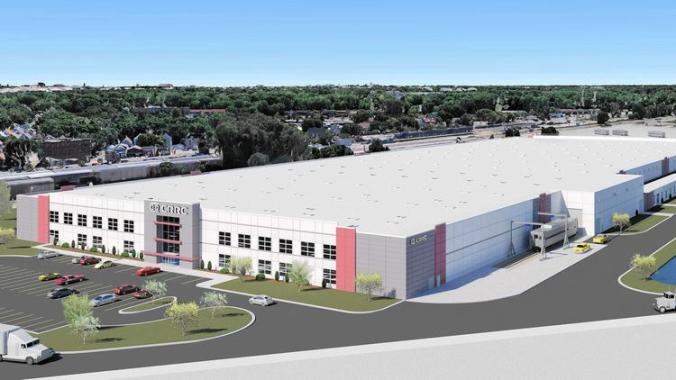
Source: Chicago Tribune, March 16, 2017.
Interestingly, the car manufacturing history of Hegewisch has been somewhat forgotten to many. “It has been more than 30 years since the last rail car rolled off the Pullman assembly line on the South Side and over 50 years since Chicago Transit Authority’s rail cars were produced in Chicago,” Senator Dick Durbin declared. Pullman still gets all the attention. “Today’s groundbreaking represents a new beginning for Chicago manufacturing–one that will help attract much-needed business and development to this area.” The number of jobs created by these projects and several others, however, is far fewer than the several thousand that the steel mills provided. And, interestingly, continuing to show Hegewisch’s disconnection from Chicago, the cars made there will not link the neighborhood to the Loop, as the L lines don’t travel that far south yet (there are plans of extending the red line to 130th Street, but the station would be on the opposite side of the Bishop Ford Expressway). But, at the same time, in a fascinating twist of fate, Hegewisch–the little hamlet that needed Chicago’s help so badly over a century ago, and the same community that only got that help reluctantly–will provide Chicago with an essential bit of its infrastructure.
Source: Chicago Tribune, March 16, 2017.
Furthermore, Hegewisch is increasingly affected by–and reliant on–globalization. Outside investment is not new. Ford has always been based in Detroit, and the Pressed Steel headquarters was in Pittsburgh (with investors in London), and many of the steel mills were related to companies based in other American cities, so outside investment has long been a thread in the community’s history. Interestingly, showing how globalization can effect the local economy, even in an “isolated” community, the CTA car-producing facility will be owned by a company based in China.
Many want Hegewisch’s future to be focused not on industry, but on its natural environment. Parent company of Hegewisch’s longest-standing industry, the Ford Motor Co., donated $6 million to help make that transition. The winning design for the Ford Calumet Environmental Center is a striking departure from the old, dirty factories of the Southeast Side. The bird’s-nest design, produced in part with salvaged steel and recycled slag, highlights how the marsh serves as a resting stop for migratory birds, while reclaiming the environment from pollution.
Source: Studio Gang.
The world could come to Hegewisch, not as workers, but as visitors. That’s what Ernie and I were when we drove to Hegewisch. We needed to get away for a bit, go somewhere interesting, and have a meal. That reporter who came to check out the neighborhood in 1905 apparently only spent. . .

He traveled from the offices of the Inter Ocean in downtown Chicago, but he made it sound like he voyaged far into the wilderness. Honestly, scores of towns and cities with less character and charm have managed to reinvent themselves as either vacation destinations, or at least as a getaway for night or weekend. Aside from a lack impressive architecture, there’s no reason why Baltimore Avenue can’t have Pudgy’s, Steve’s, Aniol’s, and all the local businesses that make it special, but also have coffee shops, a craft brewpub, a couple of clothing boutiques, a small hotel, and a ramen place.

Source: Studio Gang.
It would be a delicate balance. But Hegewisch seems just isolated enough–and just close enough–to be that place for a lot people exhausted by everyday life in the densely-populated neighborhoods throughout the city. Many Chicagoans always seem to be chasing the next new hot place to hang out and have a fancy cocktail, so why not direct them to Hegewisch where they can have fried fish and “real” Chicago-style pizza.
That is, of course, if the people of Hegewisch want that.
Chances are, that’s not going to happen. And maybe that’s for the best. The people Hegewisch always seemed very unimpressed with pretense, so maybe that’s not a good fit. And to be honest, one of the main reasons we have always been attracted to the neighborhood is the fact that culturally seems to have no need to be hip. Being hip is easy; being interesting and unique while still being good place to live is a lot harder.
But the proposed environmental center (though it seems stalled or maybe dead at the moment) certainly could be a catalyst for a sustainable type of tourism. The surrounding wetlands predate any time of heavy industry, and they will, with the right care, be there should industry leave forever. Hegewisch’s industrial past may end up being just a footnote in its much longer history, perhaps making it understandable that the Acme Steel Coke plant site slipped away from the preservationists who had hoped it would become a museum dedicated to the local steel heritage. It just might be time for the steel narrative to give way to something different. Pittsburgh has nearly done it. Maybe its time for the story of Hegewisch and Southeast Chicago to move forward, too, without completely forgetting its steel past, of course.
Politically, like almost all of Chicago, Hegewisch went blue in 2016, with a majority of voters supporting the Democratic nominee. Only in places like Clearing, Garfield Ridge, Mt. Greenwood, and Edison Park–generally considered “cop neighborhoods”–did majorities of voters support the Republican candidate. As the map shows, Hegewisch, on the southeast edge of sea of blue, was much closer to purple; a distinction shared with places like Bridgeport, Beverly, and the far Northwest Side. Hegewisch is changing, and politically it’s likely getting bluer, but it is taking some time. Take from that what you will.
Of course, the people of Hegewisch are the ones who get to decide what road they want it to take. It’s their community, not ours. We’re just fans. Honestly, sometimes we’ve felt enthralled by our trips there, and other times we were confronted by a sobering dose of reality. The area wears its pain. You can just tell that it’s waiting. . .waiting for something to fill the void lost long ago. But its clearly a place that doesn’t give up.
In the least, the people of Hegewisch have a history they should be proud of. And they have great pizza, too, to enjoy all those things that make Hegewisch on the most unforgettable neighborhoods in Chicago: a Friday night with the kids after the Little League game; a gathering with friends out at Wolf Lake; waiting at the station on a train headed for the Loop; having some beers at the bar with a buddy while the big fight is on; driving home from work at the Ford plant; fighting for the table hockey championship in the basement; listening to some local rhymes and soldiering through the ups and downs; placing a bet on locally-connected racehorse; as the first thing coming home from military service overseas; while taking closer look at your hometown; or sitting around with Mom and Dad after church as they talk about the polka dance they met at.
That’s the Hegewisch we got to know. It is in Chicago, but it is also a place that stands on its own.
✶ ✶ ✶ ✶
Having just experienced our best trip ever to Hegewisch, it was finally time for us to leave. So, we got on 134th Street–Old Hegewisch Road, or commonly-known as Boy Scout Road–and headed east to our other pizza destinations in Northwest Indiana (we were trying to make the most of this already amazing trip). Just as we left, at Leon’s Auto Repair on Baltimore Avenue and 134th Street, we couldn’t help acknowledge the 1970s Chevrolet pickup truck. We were thinking of my dad, or, as Ernie knows him, Paw Paw.
Passing through Arizona, we continued east passing by the remnants of Harbor Point Estates, the city of Chicago’s only trailer court. Formerly known as Island Homes and Island Village, the community in 1988 housed 850 families. Far fewer are there today, as many were bought out for a planned residential development. That development included a number of acres of previously unimproved land south of 134th Street, including about 950 total units at a projected cost of $40 milliion. At the time of its proposal, some saw it as a positive move forward for Hegewisch. Interestingly, the project was moving forward just three weeks before the 2008 housing market crash. Development never occurred, and today roads constructed through the area are overgrown. Hegewisch may be isolated to some degree, but it is not immune to larger economic swings.
After the trailer court, we crossed a set of tracks, a reminder that without the railroads, the Hegewisch we know today may not exist.
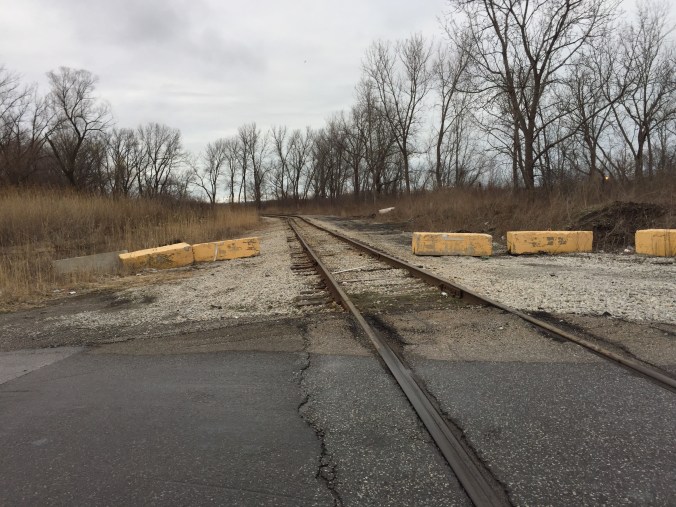
And if there is any doubt as to the natural geography of the Calumet Region, it was becoming readily apparent.
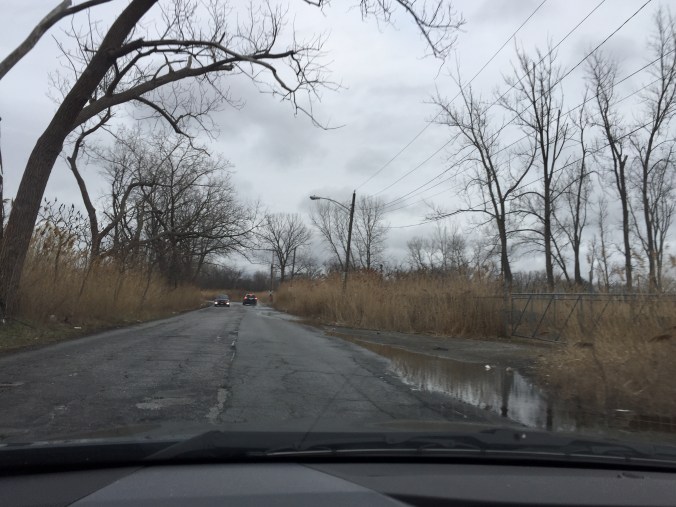
But we continued east 134th Street, thinking this couldn’t get much worse. Is this where Bob lost his license plate?
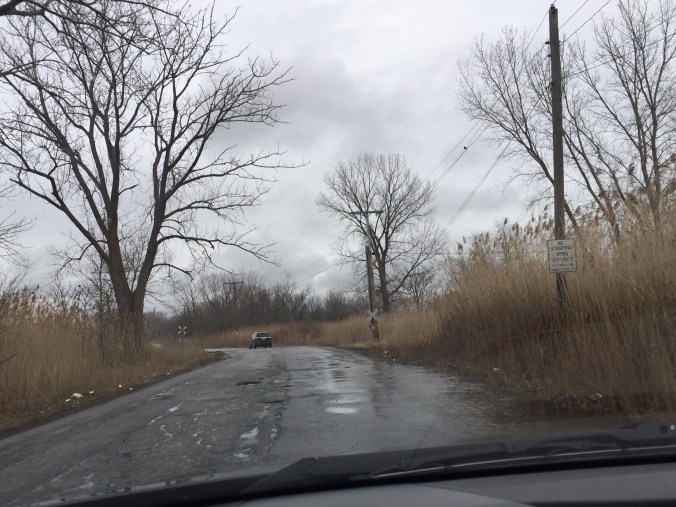
I grew up near the Mississippi. Floods aren’t that big of a deal, right?
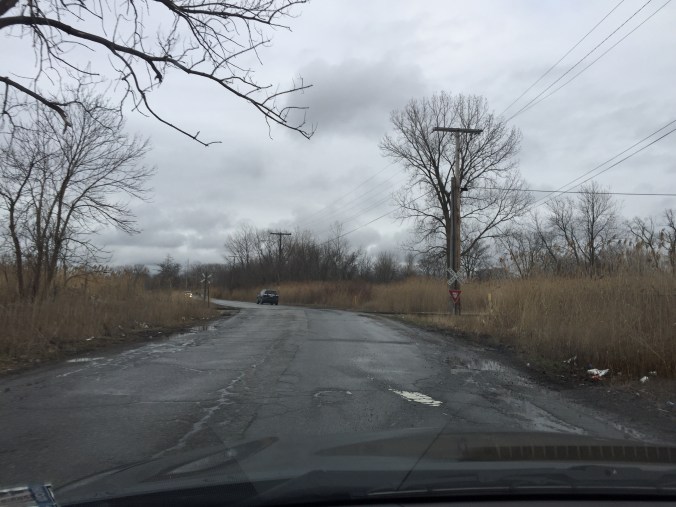
Oh, dear god. Would this be the end? Just as we decided to turn around, we saw a beacon of hope coming toward us. A 1990s Ford Escort–not produced in Hegewisch, but just like our old Pizza Houndin’ car. If that car could make it through this, then our new bigger, fancier one could. We thought.

We made it through! Onward to East Chicago, Indiana to continue our biggest pizza hounding trip ever!
✶ ✶ ✶ ✶
Back at home hours later, the Hound and I could not help but reflect on our good fortune. We had once again visited one of the most fascinating neighborhoods in all of Chicagoland, but this time we had met someone really, really cool.
And we had an amazing pizza, too.
The Hound loves Pudgy’s and Hegewisch.
We moved far away to a new city, but like all those people who left Hegewisch that keep coming back, some day we’ll return to explore one of America’s most interesting towns, enjoy some delicious pizza, and visit our friend. We hope you do, too.
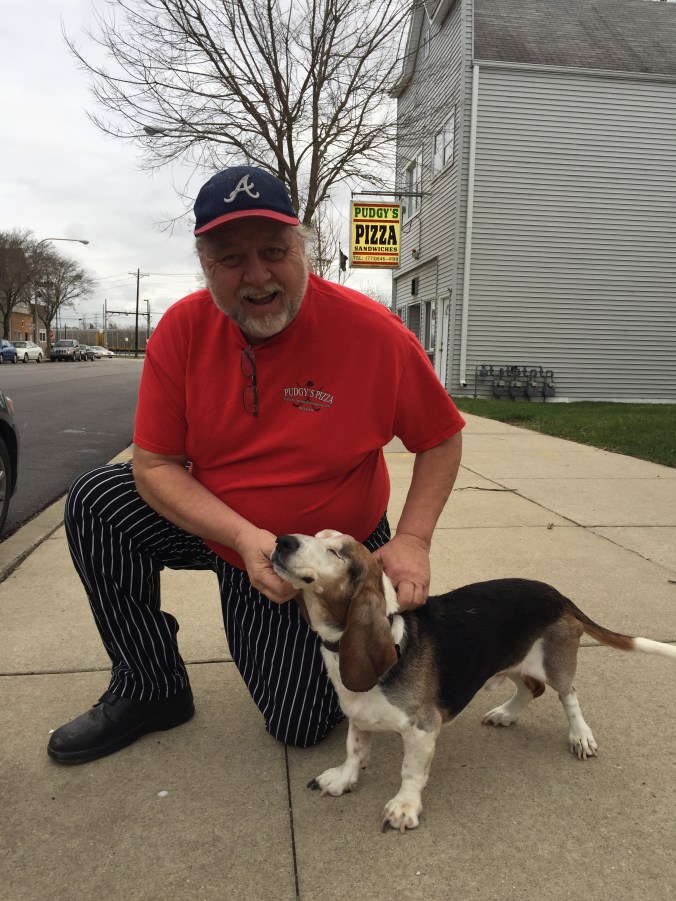
[We could not have been more honored that Bob welcomed us into to Pudgy’s. Special thanks to him and to Donna for taking Ernie and me in for a fun discussion. Also, we would like to thank Rod Sellers for his assistance and historical information, and the board of the Southeast Chicago Historical Society for their generosity. Without their assistance, this post would not have been possible.]
Pudgy’s Pizza & Sandwiches is located at 13460 S Baltimore Ave, Chicago, Hegewisch, IL 60633
(773) 646-4199
 Pizza Hounds
what a history lesson! great read! thanks for the mention of Johnny Vomit. 2 members were born and raised in Hegewisch. the rest did time time there, here and there.
LikeLiked by 1 person
Fantastic! Thank you for taking look at the site, and thanks for the additional info about the band. Featuring Johnny Vomit was important in showing a full picture of Hegewisch, so we’re honored that you paid us visit!
LikeLike
I spent my young life in Alex’s tap my grand pa was Bobbie joe blue an iron worker from local 1 . I really miss the trips to the games and the people. Love
LikeLiked by 1 person
What a great story! I lived in Hegewisch from 1959 until 1971. Learned more about the history by reading the article. The pictures brought back so many memories. I know both Mike Aniol and Bob Zajack and loved hearing about them! My family knew the two sister’s Snooki and Pudgy and they truly were awesome people! Would love a Pudgy’s Pizza down here in FL.
LikeLiked by 1 person
Hi Debbie! Wonderful! Thank you so much for taking the time to leave a message. It makes me happy to hear from someone from Hegewisch, truly one of my favorite places on Earth. Isn’t Bob great? He was so generous and open to talking to me. When I left our interview, I couldn’t believe how lucky I was to have been sitting there for that conversation. He’s the one who introduced me to the pizza sisters, and to so many of the other pizzerias throughout the years in Hegewisch. If I could get Pudgy’s every Friday night (we’re in St. Louis now), I would. Thanks again for reading and leaving such a nice message!
LikeLike